









Hemme Milch Uckermark Farm
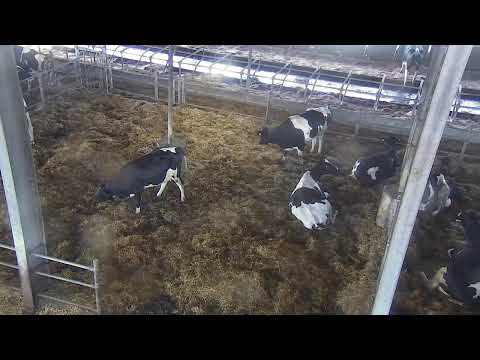
This live view looks over Hemme Milch, a working dairy farm in the Uckermark region, capturing the daily rhythm of cows moving through the barns and open yards surrounded by quiet Brandenburg countryside. The camera shows the simple routines of feeding, resting and farm activity that define this family operated dairy known for producing fresh local milk on site. With changing weather, shifting light and the calm atmosphere of rural Germany, this stream offers a peaceful look at everyday farm life at Hemme Milch.
Angermünde, Brandenburg, Germany
 DE
DE- Schmargendorf (Angermünde)
- Wilmersdorf (Angermünde)
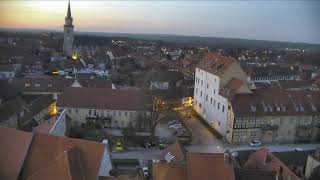
Angermünde is a town situated in the Uckermark district within the state of Brandenburg in north-eastern Germany. It lies approximately 69 kilometers northeast of Berlin, the national capital, positioning it within the game-filled forests and numerous lakes characteristic of the Uckermark region. As an administrative sub-centre of its district, the municipality holds significant regional importance while maintaining its identity as a federally declared resort town since 2010.
The settlement's origins are linked to the older town of Tangermünde, initially named New-Tangermünde before adopting its current name derived from the German word for a central square. Historically, it witnessed a 1420 victory by Frederick I of Brandenburg over the Pomeranians and later hosted French Huguenot settlers from 1687, who utilized the Holy Spirit Chapel as their church. The town served as a Prussian circle seat from 1815 to 1947 and endured World War II forced labour subcamps before becoming part of East Germany's Bezirk Frankfurt until reunification.
The municipality comprises an inner city and 23 adjacent districts, including Greiffenberg, Schmargendorf, and Wilmersdorf, alongside forty registered neighborhoods. Its architectural heritage features several Protestant churches, a former Franciscan church, and a recently refurbished historic marketplace anchored by an old town hall. The area is defined by its integration into the surrounding natural landscape, offering a blend of urban administrative functions and rural resort characteristics within its extensive boundaries.
Tourism and associated revenue sources now heavily support the local economy, replacing the traditional industrial base of enamel-working which has declined in prominence. Visitors are drawn to the region's forests and lakes, which provide ample opportunities for recreation and leisure activities. The town also boasts a number of schools of higher learning, contributing to its cultural and educational landscape while serving as a hub for those seeking relaxation in the Uckermark's natural environment.
The population stood at 14,233 as of 2024, having previously been around 14,000 before experiencing a decline linked to economic shifts. Transport access was historically facilitated by railway links to Berlin and Stettin, with the station serving as a junction for branch lines to Prenzlau, Bad Freienwalde, and Schwedt. Today, the town continues to function as a key administrative and residential center in north-eastern Germany, balancing its historical legacy with modern resort status.
 The EARF Engine