








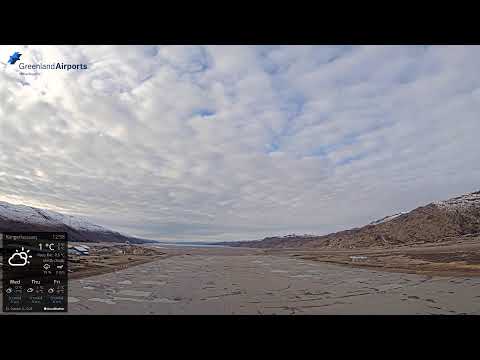


Kangerlussuaq Airport West
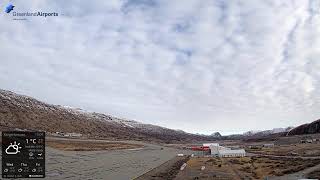
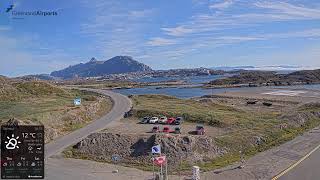
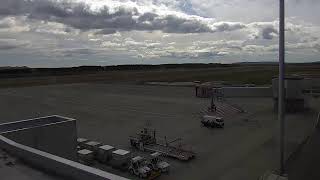
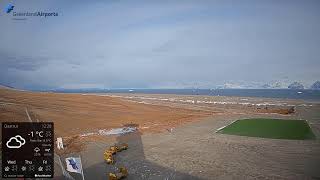
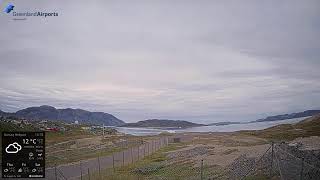
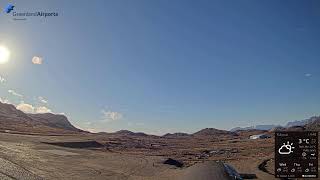
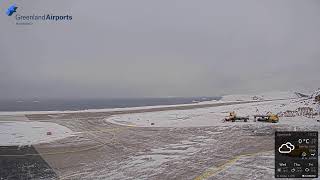
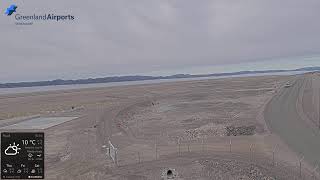
This live stream shows the western approach to Kangerlussuaq Airport (SFJ), Greenland's main Arctic gateway. The camera captures the runway, taxiways, and surrounding tundra, offering views of aircraft operations and Arctic scenery. Located at the head of Søndre Strømfjord, the airport is a hub for international flights and Arctic research, originally established as a U.S. Air Force base during World War II.
Kangerlussuaq, Greenland
 GL
GL- Storfjord
Kangerlussuaq is a settlement located on the west coast of Greenland, situated near the end of a fjord that shares its name. The area is administratively part of the Sermersooq municipality, which also encompasses the nearby Kangerlussuaq Fjord in eastern Greenland. This fjord marks the southern limit of the Blosseville Coast and is the second-largest on the southeastern coast, fed by the massive Kangerlussuaq Glacier. The settlement itself lies near the Denmark Strait area of the Atlantic Ocean, positioned roughly midway between Scoresby Sound and the Sermilik Fjord.
The region has a deep history, with Paleo-Eskimo people inhabiting the eastern coast 4000 years ago and Inuit living in the area from the late 13th to early 19th centuries. The fjord was named by Georg Carl Amdrup in 1900 during an East-Greenland Coast Expedition that discovered Inuit dwelling remains. During World War II, Kangerlussuaq became a crucial stopover for aircraft between North America and Europe. It later served as a U.S. early warning facility known as Bluie West Eight until the base closed in the early 1990s.
The town is divided into two halves: the original settlement and the former military area across the airfield. Key landmarks include the Greenland Ice Sheet, which begins east of town and is accessible via a gravel road leading to Russel's Glacier about 20 kilometers away. The Kangerlussuaq Museum, located across from the airport, displays local history. The surrounding geography features towering cliffs, high mountains like Batbjerg, and the Skaergaard intrusion, a unique geological site known for magma intrusions discovered in 1931.
Visitors are drawn to the area for its spectacular Arctic scenery, including the Greenland Ice Sheet and frequent displays of the Aurora Borealis, which has a 99% visual chance between November and March. The town serves as a staging area for scientific personnel and offers excursions such as dog sledding, hiking, and northern lights watching. The nearby Arctic Circle Trail is popular among hikers, while the region's stable weather conditions and proximity to the ice sheet provide unique opportunities for observing wildlife like caribou and musk ox.
Kangerlussuaq Airport serves as the primary access point, with Air Greenland operating scheduled flights to Copenhagen and other domestic destinations. The town also hosts a weekly coastal ferry connection and is used by Hurtigruten for Disko Bay cruises. Ground transportation is limited but includes a circular bus route. The climate is tundra, with an average annual temperature of -11 °C and July being the warmest month at 2 °C. Current activities include drilling explorations for gold, palladium, and platinum in the broader area.
 The EARF Engine