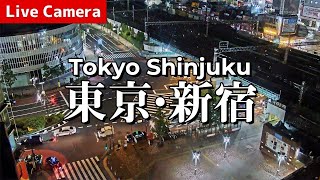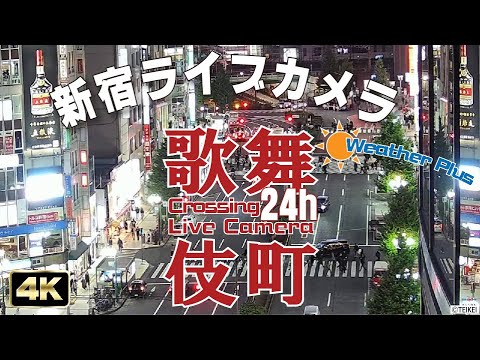


Kabukicho Crossing
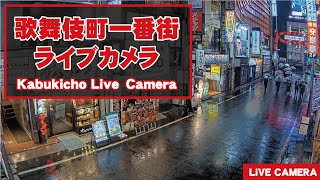
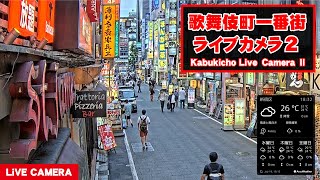
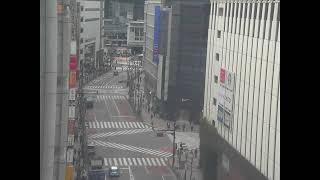
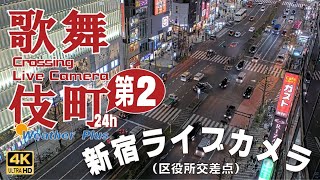
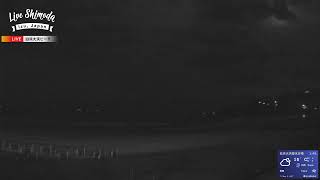
This live view captures the bustling Kabukichō Crossing in Shinjuku, Tokyo, Japan, where waves of neon-lit storefronts, dense pedestrian traffic and vivid urban energy converge in one of Tokyo’s most iconic nightlife intersections. The camera sweeps across the crowded crossroads surrounded by glowing signage, restaurants, game centres and towers, offering an immersive look at the vibrant heart of the city’s evening scene.
Shinjuku-ku, Tokyo, Japan
 JP
JP- Shinjuku
- Shinjuku City
- 新宿区
Shinjuku-ku is one of the twenty-three special wards of Tokyo, Japan, officially designated as Shinjuku City. It serves as a major secondary center, or fukutoshin, for the metropolis, rivaling the original city center in Marunouchi. Geographically, most of the ward occupies the Yodobashi Plateau, with the Kanda River running through lower-lying areas near sea level. The highest point is Hakone-san in Toyama Park, standing 44.6 meters above sea level. It is bordered by Chiyoda to the east, Bunkyo and Toshima to the north, Nakano to the west, and Shibuya and Minato to the south.
The area's development began in 1634 when temples moved to the Yotsuya area during the construction of Edo Castle's outer moat. By 1698, Naitō-Shinjuku had emerged as a new station on the Kōshū Kaidō highway. The present ward was established on March 15, 1947, through the merger of the former wards of Yotsuya, Ushigome, and Yodobashi. Following the Great Kantō Earthquake in 1923, the seismically stable area attracted significant development, while post-war reconstruction retained the pre-war road and rail network as the foundation for modern growth.
Shinjuku is defined by its distinct east-west divide, with the west side hosting Tokyo's largest concentration of skyscrapers, including the Tokyo Metropolitan Government Building. The east side is devoted to shopping and nightlife, featuring Kabukichō, a renowned red-light district, and Golden Gai, a block of tiny bars. Other notable areas include Shinjuku Gyoen, a large park blending Japanese, English, and French garden styles, and Shinjuku Ni-chōme, Tokyo's best-known gay district. The ward also contains the historic Hanazono shrine and the Mode Gakuen Cocoon Tower.
The ward has a rich cultural history, serving as an epicenter for artistic avant-gardes in the 1960s and the Japanese New Wave cinema movement. It was home to influential underground venues like the Scorpio Theatre and the Modern Art Theater. Today, it attracts visitors with its diverse dining options, including authentic French and Italian restaurants in Kagurazaka and numerous Asian eateries in Ōkubo. The area also hosts the Shinjuku Convention and Visitors Bureau, which provides tourist information for the region.
As of 2021, the ward had a population of 346,115 residents living within a total area of 18.23 square kilometers. It functions as a major economic hub, housing headquarters for companies such as NTT East, Olympus Corporation, and Square Enix. Access is facilitated by Shinjuku Station, the northern half of which lies within the ward and is the busiest railway station in the world. The climate is humid subtropical, with mild winters and hot, humid summers, making it accessible year-round for business and leisure.
 The EARF Engine