








Mierloseweg
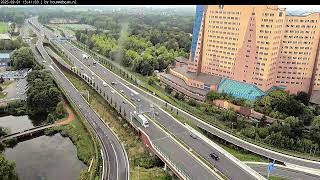
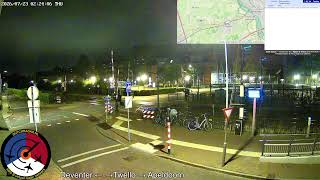
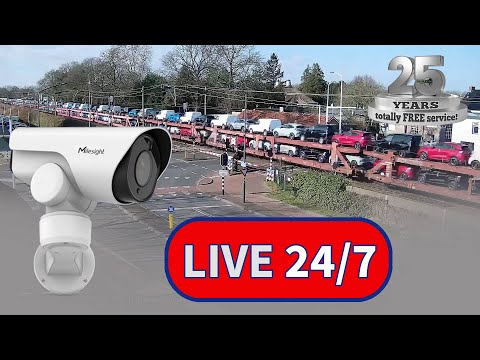
The live camera at Mierloseweg is positioned at a railway level crossing in the Mierlo-Hout district of Helmond, North Brabant, Netherlands. It overlooks the intersection where the Venlo–Eindhoven railway line crosses Mierloseweg (also known as Hoofdstraat at this spot). The camera’s vantage point provides a direct view of the crossing gates and tracks, allowing viewers to see approaching trains and the road traffic on Mierloseweg. This intersection is a busy area, as both passenger and cargo trains pass through frequently on the way between Eindhoven. When the safety barriers come down for a train, you can typically see cars, bicycles, and pedestrians waiting on either side of the tracks, giving a real-time sense of local traffic conditions.
Helmond, North Brabant, Netherlands
 NL
NLHelmond is a city and municipality located in the province of North Brabant within the Southern Netherlands. It forms part of the Metropoolregio Eindhoven metropolitan region, situated at coordinates 51.4833 north latitude and 5.6500 east longitude. The Zuid-Willemsvaart canal runs directly through the urban area, connecting the city to other regional centers. As a significant municipal entity, Helmond serves as an administrative hub for its surrounding quarters and neighborhoods, maintaining distinct local governance structures within the broader provincial framework.
The settlement originated during the Merovingian period at a convergence of streams that eventually silted over, allowing habitation by the year 1000. A precursor to Helmond Castle, known as 't Oude Huys, was constructed around this time, with feudal documents mentioning Lord Hazelo von Helmond in 1108. Pope Alexander III donated the area to the Abbey of Floreffe in 1179, and Duke Henry I of Brabant formally founded the town in 1225, granting it city rights in 1232. The name likely derives from Proto-Germanic roots meaning low-lying ground and secure place, though its coat of arms features a canting helmet.
The city is subdivided into numerous quarters including Helmond-East, Mierlo-Hout, and the modern Brandevoort district, which was built between 1993 and 2017 using New Urbanism principles. Brandevoort features cohesive architecture adapting to traditional Brabant styles with varied colors. Historical landmarks include the 14th-century ramparts and Helmond Castle, originally a stone keep started in 1325 by Jan II Berthout van Berlaer. The city retains typical street names ending in wal, pointing to former fortifications, while prominent modern projects like the Cube Houses contribute to its contemporary image.
Helmond possesses a rich industrial heritage, particularly in textiles and metal production, with the Vlisco factory located near the canal. The spoken language is Helmonds, an East Brabantian dialect, and the city hosts local media outlets such as Omroep Helmond and newspapers like De Traverse. The VVV Helmond tourist office provides information on cycling trails and regional products. Notable residents include Flemish Renaissance painter Lucas Gassel and various political figures, reflecting the city's cultural depth and historical significance in the region.
The municipality had a population of 92,627 as of 2021, having reached 80,000 residents in 1999. The economy is supported by textile companies, metal manufacturers, and grocery chains like EDAH. Transport access includes four railway stations on the Eindhoven-Venlo line, with Helmond station serving intercity trains. The A270 highway connects the city to Eindhoven, while regional buses operated by Hermes link surrounding areas. Eindhoven Airport provides nearby air connectivity for domestic and international travel.
 The EARF Engine