Live stream unavailable
This camera is offline or temporarily unavailable. It may be under maintenance, having technical trouble, or it may have been removed by the provider. Listings are monitored continuously and this page updates when the stream returns.


Mackinac Island, Michigan, United States
 US
USMackinac Island is a city located in Mackinac County within the U.S. state of Michigan, situated on an island in the Straits of Mackinac that connect Lake Michigan and Lake Huron. The municipality encompasses all of Mackinac Island as well as the nearby, unpopulated Round Island, which is federally owned and part of the Hiawatha National Forest. The city serves as a unique administrative entity where the state park and national forest make up the majority of its territory, governing 82 percent of the island's land area through the Mackinac Island State Park Commission.
The island was originally inhabited by the Mi-shi-ne-macki naw-go tribe, who were later affiliated with the Ottawa. French Jesuit missionaries recorded traders at the site in 1654, and it became an important fur trading center in the eighteenth century with a predominantly French-speaking population. After the War of 1812, the United States restricted non-citizen participation in the fur industry, attracting Anglo-American residents. The city was incorporated as the Village of Mackinac in 1847 and later became a special charter city in 1899, having previously served as the county seat from 1818 until 1882.
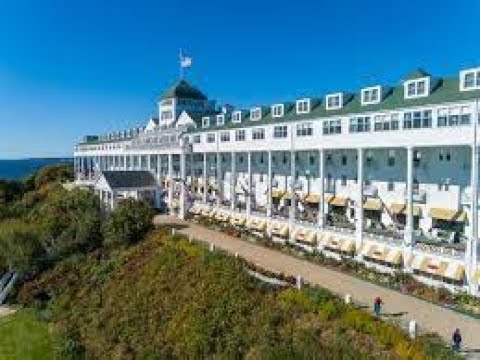
The island is famous for its colonial to Victorian-era character and is home to the Grand Hotel, built during the late nineteenth century when the area became a summer destination. A unique local ordinance passed in 1895 prohibits personal motor vehicles to protect horses and residents, with exceptions only for emergency and service vehicles. The primary modes of transportation are by foot, bicycle, horse, or horse-drawn carriage, preserving a pre-twentieth-century atmosphere that defines the island's historic and cultural sights.
Mackinac Island offers distinct experiences ranging from the posh resort areas exemplified by the Grand Hotel to historical shopping districts and active outdoor opportunities like bicycling and hiking. The island once hosted the world's second national park before the land was transferred to the state, losing its national status. Visitors can explore Fort Mackinac, Arch Rock, and the Surrey Hills carriage museum, while the seasonal peak in summer mirrors the earlier cycles of the fur trade with festivities and entertainment.
The population was 583 in the 2020 census, though the summer population swells with thousands of tourists and service workers. Access is primarily via commercial ferryboats from Mackinaw City and St. Ignace, with regular service from May through October and limited winter operations until ice forms. The economy relies heavily on tourism, supported by the island's unique ban on automobiles and its status as a resort destination for travelers from major cities like Chicago and Detroit.
 The EARF Engine