
Soo Locks – Sault Ste. Marie
StreamTime Live
303K subscribers
Sault Ste. Marie, Michigan, United States

Soo Locks – Sault Ste. Marie
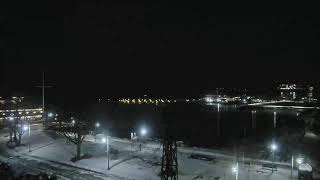
This live stream overlooks the Soo Locks in Sault Ste. Marie, Michigan, capturing vessel traffic moving between Lake Superior and the lower Great Lakes. The camera provides a clear view of commercial freighters, tugboats, and other maritime traffic as they enter and exit the lock chambers, navigating the 21-foot elevation difference along the St. Marys River. A continuous look into one of North America’s most important freshwater shipping corridors.
Sault Ste. Marie, Michigan, United States
 US
US- Sault Sainte Marie
- Baawitigong
Sault Ste. Marie is a city situated in the Upper Peninsula of the U.S. state of Michigan, serving as the county seat of Chippewa County. It holds the distinction of being the only city within this county and functions as the primary urban center for the Sault Ste. Marie Micropolitan Statistical Area. The city lies along the St. Marys River, which flows from Lake Superior to Lake Huron and forms a segment of the international border between the United States and Canada.
Founded in 1668 by French missionaries Claude Dablon and Jacques Marquette, the settlement is recognized as the oldest city in Michigan and one of the oldest permanent European settlements in the United States west of the Appalachian Mountains. For over 140 years, it operated as a single community under French and British colonial rule before the War of 1812 established the current border. The area later developed into a significant fur trade hub, attracting diverse populations including Ojibwe, Ottawa, and Métis peoples alongside European traders.
The city is defined by its strategic geography, with downtown located on an island formed by the Sault Ste. Marie Power Canal and the St. Marys River. Key landmarks include the Soo Locks, which facilitate ship travel between Lake Superior and the Lower Great Lakes, and the Sault Ste. Marie International Bridge connecting to Ontario. The area also features Lake Superior State University and historical sites such as Fort Brady, reflecting its military and educational heritage.
Cultural life in Sault Ste. Marie is influenced by its history as a cosmopolitan fur trade center and subsequent influx of Yankee culture from New England. The city preserves its heritage through institutions like the Pullar Community Building, which opened in 1939 and houses an historic indoor ice rink. The local identity is shaped by the legacy of early settlers like John Johnston and his Ojibwe wife, Susan, whose family played a prominent role in bridging European and Indigenous communities during the nineteenth century.
According to the 2020 census, the city has a population of 13,337, making it the second-most populated city in the Upper Peninsula. The broader micropolitan area had 36,785 residents that year. Sault Ste. Marie experiences a humid continental climate with cold, snowy winters, averaging 120 inches of snow annually, and warm summers. The economy has historically relied on shipping, leather processing, and steel, supported by the region's position as a critical choke point for Great Lakes transportation.
 The EARF Engine