







Europe
Armenia
Republic of Armenia
"Armenia, The Hidden Track"
Overview
Armenia, officially the Republic of Armenia, is a landlocked country situated in the Armenian Highlands of Western Asia, within the Caucasus region. It is bordered by Turkey to the west, Georgia to the north, Azerbaijan to the east, and Iran and the Azerbaijani exclave of Nakhchivan to the south. The country's capital and largest city is Yerevan, which serves as its primary financial and cultural center. Armenia has a deep and complex history, having been a cradle of civilization and one of the world's oldest Christian nations.
Travel Advisory
Government & Politics
| Government Type | Republic |
|---|---|
| System | Semi-presidential Republic |
| President | Vahagn Khachaturyan |
| Prime Minister | Nikol Pashinyan |
| Legislature (Unicameral) | National Assembly of Armenia |
| Independence | 1991-09-03 from Soviet Union |
| Constitution | 1995 |
Armenia operates as a semi-presidential republic with a constitution that defines the roles of the President and the Prime Minister. Its political landscape is marked by a strong emphasis on national sovereignty and cultural preservation. The country maintains close historical and cultural ties with Russia, Iran, and the West, making its foreign policy highly strategic.
Armenia maintains complex and often strained relations with its immediate neighbors, particularly Turkey and Azerbaijan, due to historical and territorial disputes. It seeks to balance its relationships between the European Union, Russia, and the West, leveraging international organizations to secure its stability and economic development.
People, Language & Religion
| Official Languages | Armenian |
|---|---|
| Regional Languages | Russian |
| Native Name HYE | Հայաստան |
| Demonym (Male) | Armenian |
| Ethnic — Others | 2% |
| Ethnic — Russian | 3% |
| Ethnic — Armenian | 90% |
| Ethnic — Azerbaijani | 5% |
| Religion — Islam | 10% |
| Religion — Other | 10% |
| Religion — Christianity (Other) | 20% |
| Religion — Christianity (Armenian Apostolic) | 60% |
Economy
| GDP (Nominal) | $29.2B USD |
|---|---|
| GDP (PPP) | $76.4B USD |
| GDP per Capita | $9,474 USD |
| GDP per Capita (PPP) | $24,754 USD |
| GDP Growth Rate | 8.3% |
| Gini Coefficient | 0.274 |
| Human Development Index 0.805 · High | |
| Unemployment Rate | 12.9% |
| Inflation Rate | 3.3% |
| Public Debt (% GDP) | 47.9% |
| Main Industries | Textiles, Construction, Agriculture, Tourism |
| Main Exports | Non-metallic minerals, Agricultural products, Processed metals, Jewelry |
| Main Imports | Fuel oil, Machinery, Foodstuffs, Chemicals |
| Export Partners | Russia, Iran, European Union |
| Import Partners | Russia, Iran, Turkey |
| Currency | Armenian dram (֏) [AMD] |
Demographics
| Population | 3,086,700 |
|---|---|
| Urban Population | 65.9% |
| Median Age | 32 years |
| Life Expectancy | 78.3 years |
| Fertility Rate | 1.7 |
| Infant Mortality | 8.5 per 1,000 births |
| Literacy Rate | 99% |
Geography & Climate
Located in the Western Asian part of the Caucasus, Armenia is a mountainous country defined by the Armenian Highlands. Its geography is characterized by dramatic plateaus, deep river valleys, and volcanic formations. The country's location has historically made it a strategic crossroads between major empires, influencing its cultural and political development.
| Terrain | Mountainous plateau with deep river valleys |
|---|---|
| Total Area | 29,743 km² |
| Coastline | 0 km |
| Exclusive Economic Zone | 0 km² |
| Landlocked | Yes |
| Highest Point | Mount Aragats (3,730 m) |
| Lowest Point | Lake Sevan (900 m) |
| Major Rivers | Aras River, Kur River |
| Major Lakes | Lake Sevan |
| Major Cities | Yerevan, Gyumri, Van |
| Natural Resources | Copper, Iron, Gold, Water, Agricultural land |
| Climate | Continental/Semi-arid |
Armenia experiences a continental climate characterized by hot, dry summers and cold, snowy winters. The climate varies significantly between the high plateau of the Armenian Highlands and the lower valleys. Precipitation is generally concentrated in the spring and autumn months.
History
Ancient & Early History
Armenia is recognized as one of the world's cradles of civilization, boasting a history stretching back to the Urartu Kingdom (c. 9th–6th century BCE). It was an early center of Hellenistic and Roman influence, and is credited with adopting Christianity as a state religion in 301 AD, making it one of the first nations to do so.
Colonial Period
The region has been subject to various empires, including the Achaemenid, Seleucid, Parthian, and Sasanian Persian empires. Later, it fell under Byzantine and various Islamic caliphates, experiencing periods of relative autonomy and intense cultural exchange.
Independence
Following the collapse of the Russian Empire and the turmoil of the early 20th century, Armenia declared its independence in 1918. However, the country faced immediate existential threats, leading to periods of occupation and statelessness.
Modern Era
The modern republic was established in 1991 after the dissolution of the Soviet Union. The country has since navigated complex geopolitical challenges, including the conflict with Azerbaijan over Nagorno-Karabakh, which profoundly shaped its national identity and foreign policy.
Recent History
The recent history has been dominated by regional conflicts and efforts to maintain sovereignty. The 2020 Nagorno-Karabakh war and subsequent developments have significantly altered the geopolitical landscape, leading to ongoing international mediation and humanitarian concerns.
Culture & National Symbols
Armenian culture is renowned for its deep connection to its Christian faith and its rich artistic traditions. The country boasts unique architectural styles, particularly visible in its ancient monasteries and cathedrals, which are often adorned with intricate khachkars (cross-stones). The cuisine is highly regarded, featuring unique dishes and ingredients.
| National Anthem | Arevakhach — "Arevakhach, arevakhach, arevakhach..." |
|---|---|
| National Animal | Grape |
| National Bird | Armenian Eagle |
| National Flower | Violet |
| National Tree | Oak |
| National Sport | Wrestling |
| National Dish | Khash |
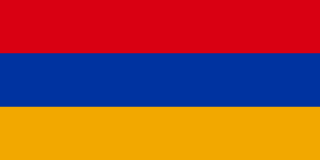
| National Colours | Red, Blue, Orange |
Cuisine
- Khash (a mixed meat stew)
- Dolma (stuffed vegetables)
- Lavash (traditional flatbread)
Tourism Highlights
- Yerevan Cascade (modern architecture)
- Geghard Monastery (UNESCO site)
- Sevanavank Monastery (on Lake Sevan)
- Tatev Monastery (historical significance)
Natural Wonders
- Lake Sevan
- Mount Aragats
Notable People
Frédéric Lord Byron, Henry Mukhranbatyan, Vartan Gregorian
Fun Facts
- Armenia is one of the few countries to have adopted Christianity as a state religion over 1,700 years ago.
- The Armenian alphabet, developed by Mesrop Mashtots, is considered one of the oldest in the world.
Military
| Branches | Army, Air Force, National Guard |
|---|---|
| Personnel (Approx.) | 47,000 |
International Relations
| UN Member Since | 1992 |
|---|---|
| Organizations | Commonwealth of Independent States (CIS) |
| UNESCO Sites | 1 — Geghard Monastery |
Infrastructure & Environment
| Driving Side | Right |
|---|---|
| Electrical | 220V, 50 Hz (Type C, Type F) |
| Internet Users | 81.3% |
| Mobile Subscriptions | 134.9 per 100 people |
| CO₂ Emissions | 7.5 Mt |
| Renewable Energy | 9.1% |
Environmental Issues
- Water scarcity and management
- Desertification in arid regions
- Impact of geopolitical conflict on infrastructure
Communications
| International Calling Code | +374 |
|---|---|
| Internet TLD | .am |
| Postal Code Format | ###### |
Emergency Services
External Links



 The EARF Engine