










Caribbean
Aruba
Country of Aruba
"Paradise Island"
Overview
Aruba is a constituent country within the Kingdom of the Netherlands, located in the southern Caribbean Sea. It is known for its beautiful beaches, vibrant tourism industry, and unique blend of Dutch, Spanish, and local cultures. Geographically situated near Curaçao and Venezuela, Aruba has developed a strong economy based on services and tourism, maintaining a high quality of life despite its small size.
Travel Advisory
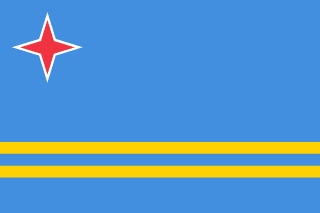
Government & Politics
| Government Type | Constituent Country |
|---|---|
| System | Decentralized Kingdom Status |
| King | Willem-Alexander |
| Legislature (Unicameral) | Aruban Parliament |
| Independence | 1986-03-01 from Kingdom of the Netherlands |
Aruba operates under a high degree of autonomy within the Kingdom of the Netherlands. Its political system is designed to balance local self-governance with adherence to Dutch constitutional law, allowing it significant control over its internal affairs and economy.
Its foreign relations are primarily focused on maintaining strong economic ties with the Netherlands and the United States, while also fostering robust trade relationships throughout Latin America and the Caribbean region.
People, Language & Religion
| Official Languages | Papiamento, Dutch, English |
|---|---|
| National Languages | Papiamento |
| Native Name ENG | Aruba |
| Demonym (Male) | Aruban |
| Ethnic — Creole | Majority |
| Ethnic — Indigenous | Minority |
| Ethnic — European Descent | Significant |
| Religion — Judaism | Small community |
| Religion — Hinduism | Minority |
| Religion — Christianity | Dominant (Catholicism, Protestant) |
Economy
| GDP (Nominal) | $4.2B USD |
|---|---|
| GDP (PPP) | $5.6B USD |
| GDP per Capita | $38,591 USD |
| GDP per Capita (PPP) | $51,712 USD |
| GDP Growth Rate | 9.5% |
| Human Development Index 0.8 · High | |
| Unemployment Rate | 5% |
| Inflation Rate | 4.3% |
| Public Debt (% GDP) | 30% |
| Main Industries | Tourism, Financial Services, Retail Trade |
| Main Exports | Services (tourism), Financial services revenue |
| Main Imports | Fuel, Foodstuffs, Construction materials |
| Export Partners | Netherlands, United States |
| Import Partners | China, Germany, Colombia |
| Currency | Aruban Florin (ƒ) [AWG] |
Demographics
| Population | 108,785 |
|---|---|
| Urban Population | 61.7% |
| Median Age | 32 years |
| Life Expectancy | 76.5 years |
| Fertility Rate | 1.61 |
| Infant Mortality | 8 per 1,000 births |
| Literacy Rate | 98% |
Geography & Climate
As a small island in the Caribbean Sea, Aruba is surrounded by turquoise waters and features dramatic coastal landscapes. The terrain is generally low-lying with sandy beaches, backed by arid scrubland and some rocky formations.
| Terrain | Sandy Beaches, Coastal Plains |
|---|---|
| Total Area | 187 km² |
| Coastline | 125 km |
| Landlocked | No |
| Highest Point | Arikok Mountain (120 m) |
| Lowest Point | Caribbean Sea (0 m) |
| Major Cities | Oranjestad, Palm Beach |
| Natural Resources | Sandstone, Marine life, Tourism potential |
| Climate | Tropical Savanna/Maritime |
Aruba has a tropical climate characterized by hot temperatures and high humidity year-round. It experiences distinct wet seasons (influenced by trade winds) and drier periods, making it ideal for tourism.
History
Ancient & Early History
The island has been inhabited by various groups over millennia. Early evidence suggests occupation by indigenous peoples who utilized the natural resources of the Caribbean Sea.
Colonial Period
Aruba was historically claimed and influenced by several European powers, including Spain and the Netherlands. The Dutch presence solidified its status as a key trading post in the Caribbean basin for centuries.
Independence
While it has maintained strong ties to the Kingdom of the Netherlands, Aruba achieved significant self-governance and constitutional autonomy in 1986, solidifying its modern political identity.
Modern Era
The modern era saw rapid development driven by tourism and financial services. The island successfully leveraged its strategic location and natural beauty to become a major economic hub in the Caribbean.
Recent History
Recent history has focused on maintaining economic stability amidst global shifts, particularly adapting to changes in international travel patterns and diversifying its service sector beyond traditional tourism.
Culture & National Symbols
{"Vibrant nightlife and beach culture","Unique blend of Dutch colonial architecture and Caribbean flair","Strong emphasis on outdoor sports and leisure activities"}
| National Anthem | Aruba |
|---|---|
| National Animal | Sea Turtle |
| National Bird | Brown Pelican |
| National Flower | Bougainvillea |
| National Sport | Beach Volleyball |
| National Dish | Stobá |
| National Colours | Red, White, Blue |
Cuisine
- Stobá (a local stew)
- Fresh seafood dishes
- Caribbean rice and beans
Tourism Highlights
- Eagle Beach and Palm Beach resorts
- The colorful Dutch colonial architecture of Oranjestad
- Snorkeling and diving in the clear Caribbean waters
Natural Wonders
- Aruba National Park
- Crystal-clear Caribbean beaches
Notable People
Fun Facts
- The island is famous for its stunning, pristine white-sand beaches.
- It serves as a major financial services and tax haven in the Caribbean.
Military
| Branches | Police Force, Coast Guard |
|---|---|
| Personnel (Approx.) | 1,500 |
International Relations
| UN Member Since | 1968 |
|---|---|
| Organizations | Caribbean Community (CARICOM) |
| UNESCO Sites | 0 |
Infrastructure & Environment
| Driving Side | Right |
|---|---|
| Electrical | 230V, 60 Hz (Type A, Type B) |
| Internet Users | 97.2% |
| Mobile Subscriptions | 130.6 per 100 people |
| CO₂ Emissions | 0.6 Mt |
| Renewable Energy | 8.8% |
Environmental Issues
- Coastal development pressure
- Waste management from tourism influx
- Coral reef degradation
Communications
| International Calling Code | +297590 |
|---|---|
| Internet TLD | .aw |
| Postal Code Format | #### |
Emergency Services
External Links


 The EARF Engine