





Europe
Austria
Republic of Austria
"Arrive and revive"
Overview
Austria, officially the Republic of Austria, is a landlocked country situated in Central Europe, characterized by its diverse geography and rich cultural heritage. It is a federal republic comprising nine states, with Vienna serving as the capital and the most populous state. Bordered by Germany, Czechia, Slovakia, Hungary, Slovenia, Italy, Switzerland, and Liechtenstein, Austria's strategic location has historically made it a crossroads of major European civilizations. The country maintains a stable political structure and a highly developed economy, drawing on its Alpine landscapes and historical significance.
Travel Advisory
Government & Politics
| Government Type | Federal Republic |
|---|---|
| System | Federal Republic |
| Federal President | Alexander Van der Bellen |
| Chancellor | Christian Stocker |
| Legislature (Bicameral) | Austrian Parliament (Bundesrat and National Council) |
| Independence | 1955-10-27 from Nazi Germany (Treaty of Austrian State Treaty) |
| Constitution | 1920 |
Austria operates as a federal parliamentary republic with a multi-party system. The political landscape is dominated by established parties, including the ÖVP (Austrian People's Party) and the SPÖ (Social Democratic Party). The government structure is designed to balance regional autonomy with federal oversight, ensuring that the nine constituent states have significant political representation.
Austria maintains strong economic and cultural ties with its immediate neighbors, particularly Germany and Italy. It is a committed member of the European Union and participates actively in international forums, emphasizing multilateralism and diplomatic stability. Its foreign policy often balances its neutrality tradition with its deep integration into Western European economic structures.
People, Language & Religion
| Official Languages | German |
|---|---|
| Regional Languages | Italian |
| Native Name BAR | Österreich |
| Demonym (Male) | Austrian |
| Ethnic — Italian | Significant minority in South Tyrol and Carinthia |
| Ethnic — Austrian | Majority |
| Religion — Islam | Minority |
| Religion — Judaism | Small community |
| Religion — Christianity | Majority (Catholicism and Protestantism) |
Economy
| GDP (Nominal) | $579.5B USD |
|---|---|
| GDP (PPP) | $707B USD |
| GDP per Capita | $62,930 USD |
| GDP per Capita (PPP) | $76,778 USD |
| GDP Growth Rate | -0.8% |
| Gini Coefficient | 0.312 |
| Human Development Index 0.95 · Very High | |
| Unemployment Rate | 5.6% |
| Inflation Rate | 3.5% |
| Public Debt (% GDP) | 65% |
| Main Industries | Tourism, Manufacturing (machinery, vehicles), Finance and services |
| Main Exports | Machinery and equipment, Motor vehicles, Chemical products |
| Main Imports | Energy sources, Raw materials, Foodstuffs |
| Export Partners | Germany, Italy, France |
| Import Partners | Germany, Italy, France |
| Currency | Euro (€) [EUR] |
Demographics
| Population | 9,208,163 |
|---|---|
| Urban Population | 69.7% |
| Median Age | 41 years |
| Life Expectancy | 82 years |
| Fertility Rate | 1.31 |
| Infant Mortality | 2.8 per 1,000 births |
| Literacy Rate | 99% |
Geography & Climate
Located in the heart of Central Europe, Austria is defined by its dramatic Alpine geography. The country is characterized by a mix of rolling hills, fertile valleys, and towering mountain ranges, including the Eastern Alps. Major river systems, such as the Danube, flow through the country, supporting agricultural activity. Its strategic position connects the Germanic and Slavic cultural spheres.
| Terrain | Alpine Mountains, rolling hills, and fertile river valleys |
|---|---|
| Total Area | 83,871 km² |
| Coastline | 0 km |
| Exclusive Economic Zone | 0 km² |
| Landlocked | Yes |
| Highest Point | Grossglockner (3,798 m) |
| Lowest Point | Wienfluss (Vienna River) (100 m) |
| Major Rivers | Danube |
| Major Lakes | Wörthersee |
| Major Cities | Vienna, Graz, Linz, Salzburg |
| Natural Resources | Hydroelectric power, Forestry products, Minerals (salt, iron) |
| Climate | Humid Continental / Alpine |
Austria experiences a temperate climate, transitioning to an Alpine climate in the mountainous regions. Winters are cold with significant snowfall, while summers are mild and pleasant. The climate variability is high, ranging from the warmer Pannonian Basin to the colder, more extreme conditions of the Eastern Alps.
History
Ancient & Early History
The region has been inhabited since the Neolithic period, with evidence of early settlements near the Danube River. Historically, it was part of the Roman Empire, forming key administrative units like Noricum and Pannonia, which facilitated trade and cultural exchange across the empire's frontiers.
Independence
Austria achieved a degree of autonomy following the collapse of the Austro-Hungarian Empire after World War I, leading to the establishment of the First Austrian Republic.
Modern Era
The modern history is marked by periods of intense geopolitical flux, including the rise of the Nazi regime and subsequent occupation. The country regained full sovereignty and stability through the 1955 Austrian State Treaty, which ended the Allied occupation and cemented its current federal structure.
Recent History
In the late 20th and early 21st centuries, Austria has focused on economic diversification, maintaining its role as a stable, high-income European economy. It has become a major hub for tourism, finance, and advanced manufacturing, while navigating the challenges of demographic aging and global economic shifts.
Culture & National Symbols
Austrian culture is renowned for its classical music, opera, and imperial history, particularly associated with the Habsburg dynasty. Vienna, in particular, is a global center for the arts, boasting institutions like the Vienna State Opera. The country's traditions are deeply intertwined with its Catholic heritage and its Alpine lifestyle.
| National Anthem | Land der Berge, Land der Freiheit — "Land of mountains, land of freedom" |
|---|---|
| National Animal | Alpine Ibex |
| National Bird | Alpine Chough |
| National Flower | Edelweiss |
| National Tree | Larch |
| National Sport | Skiing |
| National Dish | Wiener Schnitzel |
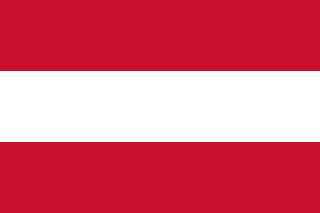
| National Colours | Red, White |
Cuisine
- Wiener Schnitzel
- Sachertorte
- Apfelstrudel
Tourism Highlights
- The Hallstatt Salt Mine and village
- The Salzburg Festival
- The Dolomites (Italian side)
- Vienna's imperial palaces
Natural Wonders
- The Grossglockner High Alpine Road
- The Danube River Valley
- The Alpine meadows
Notable People
Wolfgang Amadeus Mozart, Johann Strauss II, Sissi (Empress Elisabeth of Austria)
Fun Facts
- Austria is one of the world's most stable democracies.
- The country is famous for its high quality of life and strong social welfare system.
Military
| Branches | Army, Air Force, Navy |
|---|---|
| Personnel (Approx.) | 23,000 |
International Relations
| UN Member Since | 1955 |
|---|---|
| Organizations | OSCE, OECD |
| UNESCO Sites | 12 — Hallstatt-Dachstein, Salzkammergut |
Infrastructure & Environment
| Driving Side | Right |
|---|---|
| Electrical | 230V, 50 Hz (Type F (Schuko)) |
| Internet Users | 91.9% |
| Mobile Subscriptions | 124.5 per 100 people |
| CO₂ Emissions | 58 Mt |
| Renewable Energy | 36% |
Environmental Issues
- Alpine biodiversity preservation
- Waste management in densely populated valleys
- Climate change impact on glaciers
Communications
| International Calling Code | +43 |
|---|---|
| Internet TLD | .at |
| Postal Code Format | #### |
Emergency Services
External Links

 The EARF Engine