










Europe
Belarus
Republic of Belarus
"Hospitality Beyond Borders"
Overview
Belarus, officially the Republic of Belarus, is a landlocked country situated in Eastern Europe, bordered by Russia to the east and northeast, Ukraine to the south, Poland to the west, and Lithuania and Latvia to the northwest. With an area of 207,600 km² and a population of approximately 9.4 million people, the nation's geography is characterized by a mix of plains and heavily forested areas. The capital and largest city, Minsk, is administered separately and serves as the primary economic and cultural hub. The country's history has been deeply intertwined with the geopolitical dynamics of Eastern Europe, leading to periods of Soviet influence and subsequent efforts to maintain national sovereignty.
Travel Advisory
Government & Politics
| Government Type | Unitary Semi-Presidential Republic |
|---|---|
| System | Republic |
| President | Alexander Lukashenko |
| President | Aleksandr Turchin |
| Legislature (Bicameral) | Parliament of the Republic of Belarus |
| Independence | 1991-08-25 from Soviet Union |
| Constitution | 1994 |
Belarus operates as a unitary semi-presidential republic, with the President holding significant executive power. The political system is characterized by a strong emphasis on state control and stability. While a parliament exists, the executive branch, led by the President, maintains the dominant authority, resulting in a highly centralized governance model.
Belarus maintains deep economic and political ties with Russia, which is its primary trade partner. It also maintains complex relationships with neighboring EU members like Poland and Lithuania. Its foreign policy generally emphasizes maintaining neutrality and stability within the post-Soviet geopolitical framework, balancing its ties between East and West.
People, Language & Religion
| Official Languages | Belarusian |
|---|---|
| Regional Languages | Russian |
| Native Name BEL | Белару́сь |
| Native Name RUS | Беларусь |
| Demonym (Male) | Belarusian |
| Ethnic — Other | Minority |
| Ethnic — Russian | Significant Minority |
| Ethnic — Belarusian | Majority |
| Religion — Islam | Minority |
| Religion — Catholicism | Minority |
| Religion — Orthodox Christianity | Majority |
Economy
| GDP (Nominal) | $93.4B USD |
|---|---|
| GDP (PPP) | $315.4B USD |
| GDP per Capita | $10,279 USD |
| GDP per Capita (PPP) | $34,716 USD |
| GDP Growth Rate | 4.1% |
| Gini Coefficient | 0.244 |
| Human Development Index 0.715 · High | |
| Unemployment Rate | 3.4% |
| Inflation Rate | 6.6% |
| Public Debt (% GDP) | 33.2% |
| Main Industries | Manufacturing, Chemicals, Machinery, Agriculture |
| Main Exports | Machinery, Chemical Products, Fertilizers, Oil Products |
| Main Imports | Energy, Raw Materials, Consumer Goods |
| Export Partners | Russia, Poland, Germany |
| Import Partners | Russia, China, Germany |
| Currency | Belarusian ruble (Br) [BYN] |
Demographics
| Population | 9,085,991 |
|---|---|
| Urban Population | 79.5% |
| Median Age | 38 years |
| Life Expectancy | 74.4 years |
| Fertility Rate | 1.22 |
| Infant Mortality | 1.8 per 1,000 births |
| Literacy Rate | 99% |
Geography & Climate
The Republic of Belarus is situated in Eastern Europe, forming a land bridge between the Baltic states and Russia. Its geography is dominated by the vast, rolling plains of the East European Plain, interspersed with extensive forest cover, particularly the Białowieża Forest. The country's borders are defined by major geopolitical neighbors, giving it a strategic, yet landlocked, position. The terrain is generally flat to gently undulating, making it suitable for agriculture and forestry.
| Terrain | Plains and rolling hills, heavily forested |
|---|---|
| Total Area | 207,600 km² |
| Coastline | 0 km |
| Exclusive Economic Zone | 0 km² |
| Landlocked | Yes |
| Highest Point | Mount Osip (270 m) |
| Lowest Point | Vistula River Basin (10 m) |
| Major Rivers | Berezyna River, Neman River |
| Major Lakes | Brest Reservoir |
| Major Cities | Minsk, Mogilev, Grodno |
| Natural Resources | Timber, Potash, Mineral Fuels |
| Climate | Humid Continental (Dfb) |
Belarus generally experiences a temperate continental climate, characterized by warm summers and cold winters. Precipitation is relatively evenly distributed throughout the year, though the growing season is limited. The climate is influenced by its position in the East European Plain, leading to significant seasonal temperature variations.
History
Ancient & Early History
Historical records indicate the region was inhabited by various Slavic tribes, notably the Polians and the Slavs, who formed early principalities. The area was later incorporated into the Grand Duchy of Lithuania and the Polish-Lithuanian Commonwealth, placing it at the crossroads of early medieval European power struggles.
Colonial Period
The region was subject to various empires, including the Polish-Lithuanian Commonwealth, the Russian Empire, and the German Empire. These periods saw significant cultural and administrative shifts, with the population often subjected to different legal and economic systems depending on the ruling power.
Independence
Following the collapse of the Soviet Union in 1991, Belarus declared its independence on August 25, 1991, establishing the Republic of Belarus and maintaining a degree of political and economic autonomy from Russia.
Modern Era
The early 1990s were marked by political instability and economic transition. The country has since maintained a highly centralized political structure, resisting deep market reforms and preserving many aspects of its Soviet-era industrial base. This has led to a unique blend of socialist-era infrastructure and modern state control.
Recent History
In the 21st century, Belarus has faced increasing international scrutiny regarding its democratic practices and human rights record. Its geopolitical alignment remains closely tied to Russia, influencing its trade, security, and political trajectory within the post-Soviet space.
Culture & National Symbols
Belarusian culture is a blend of Slavic traditions and unique national identity, often influenced by its historical position between major cultural centers. The country is known for its rich folk art, traditional music, and the preservation of Belarusian language and customs. The cuisine, heavily influenced by Slavic staples, emphasizes potatoes, dairy, and root vegetables.
| National Anthem | Belarusian Anthem — "Belarus, land of the free..." |
|---|---|
| National Dish | Draniki (Potato Pancakes) |
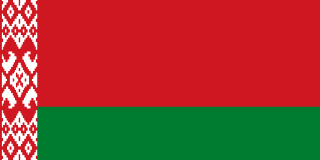
| National Colours | Red, Green, Red |
Cuisine
- Draniki (Potato Pancakes)
- Borscht
- Kasha (Buckwheat Porridge)
Tourism Highlights
- Minsk's historical center
- Białowieża Forest (UNESCO site)
- Pinsk Reservoir area
Natural Wonders
- Białowieża Forest
- Neman River Delta
Notable People
Alexander Lukashenko, Yanka Kupala
Fun Facts
- The country's name is derived from the Belarusian word for 'land of the white hares'.
- It is one of the most landlocked countries in Europe.
Military
| Branches | Ground Forces, Air Force, Navy |
|---|---|
| Personnel (Approx.) | 158,000 |
International Relations
| UN Member Since | 1992 |
|---|---|
| Organizations | CIS |
| UNESCO Sites | 0 |
Infrastructure & Environment
| Driving Side | Right |
|---|---|
| Electrical | 220V, 50 Hz (Type C, Type F) |
| Internet Users | 94.3% |
| Mobile Subscriptions | 131.1 per 100 people |
| CO₂ Emissions | 54.2 Mt |
| Renewable Energy | 8.2% |
Environmental Issues
- Deforestation (historical)
- Industrial pollution in river basins
Communications
| International Calling Code | +375 |
|---|---|
| Internet TLD | .by |
| Postal Code Format | ###### |
Emergency Services
External Links


 The EARF Engine