










Europe
Belgium
Kingdom of Belgium
"Unity makes strength"
Overview
Belgium, officially the Kingdom of Belgium, is a country located in Northwestern Europe, forming part of the Benelux region. It is bordered by the Netherlands to the north, Germany to the east, Luxembourg to the southeast, France to the south, and the North Sea to the west. With a population of approximately 11.7 million people and an area of 30,528 km², Belgium is known for its dense urban development and complex political structure. The country's major metropolitan areas include Brussels, Antwerp, Ghent, and Bruges, making it a significant economic and cultural hub in Western Europe.
Travel Advisory
Government & Politics
| Government Type | Federal Parliamentary Constitutional Monarchy |
|---|---|
| System | Federal Republic |
| King | King Philippe |
| Prime Minister | Bart De Wever |
| Legislature (Bicameral) | Federal Parliament |
| Independence | 1830-06-01 from United Kingdom of the Netherlands |
| Constitution | 1831 |
Belgium is a federal state characterized by a complex linguistic and political structure, dividing power among three main communities: Flemish (Dutch-speaking), French (Francophone), and German. The government operates under a constitutional monarchy, requiring constant negotiation between these linguistic groups. This federalism is central to its political identity and governance.
Belgium maintains deep and integrated economic and political ties with its immediate neighbors, particularly France, Germany, and the Netherlands. It is a founding and active member of the European Union, playing a central role in EU institutions and international cooperation.
People, Language & Religion
| Official Languages | Dutch, French, German |
|---|---|
| Regional Languages | Dutch, French, German |
| Native Name DEU | Belgien |
| Native Name FRA | Belgique |
| Native Name NLD | België |
| Demonym (Male) | Belgian |
| Ethnic — French | Significant minority |
| Ethnic — German | Significant minority |
| Ethnic — Belgian | Majority |
| Religion — Islam | Minority |
| Religion — Judaism | Minority |
| Religion — Christianity | Majority |
Economy
| GDP (Nominal) | $725.5B USD |
|---|---|
| GDP (PPP) | $891.8B USD |
| GDP per Capita | $60,750 USD |
| GDP per Capita (PPP) | $74,676 USD |
| GDP Growth Rate | 1.6% |
| Gini Coefficient | 0.268 |
| Human Development Index 0.93 · Very High | |
| Unemployment Rate | 5.9% |
| Inflation Rate | 2.5% |
| Public Debt (% GDP) | 105% |
| Main Industries | Chemicals, Pharmaceuticals, Logistics and Transport, High-tech manufacturing |
| Main Exports | Machinery, Chemical products, Pharmaceuticals, Automobiles |
| Main Imports | Energy, Raw materials, Foodstuffs, Machinery components |
| Export Partners | Germany, Netherlands, France |
| Import Partners | Germany, France |
| Currency | Euro (€) [EUR] |
Demographics
| Population | 11,941,781 |
|---|---|
| Urban Population | 87.7% |
| Median Age | 38 years |
| Life Expectancy | 82.3 years |
| Fertility Rate | 1.44 |
| Infant Mortality | 3.1 per 1,000 births |
| Literacy Rate | 99.5% |
Geography & Climate
Located in Northwestern Europe, Belgium is a small, highly developed country situated in the Benelux region. Its geography is characterized by low-lying plains, rolling hills, and a dense network of rivers, including the Scheldt and the Meuse. The country's borders are defined by major European powers, including France, Germany, and the Netherlands. The coastal region provides access to the North Sea, while the interior is dominated by agricultural and industrial landscapes.
| Terrain | Low-lying plains and rolling hills |
|---|---|
| Total Area | 30,528 km² |
| Coastline | 57 km |
| Exclusive Economic Zone | 200,000 km² |
| Landlocked | No |
| Highest Point | Signal de Botrange (555 m) |
| Lowest Point | North Sea (0 m) |
| Major Rivers | Scheldt, Meuse, Lys |
| Major Cities | Brussels, Antwerp, Ghent, Charleroi, Liège |
| Natural Resources | Coal (historical), Oil and Gas (limited), Agricultural land |
| Climate | Temperate Oceanic |
Belgium experiences a temperate oceanic climate (Cfb), characterized by mild winters and cool summers. Rainfall is relatively distributed throughout the year, with moderate seasonal variations. The climate is influenced by its proximity to the North Sea and the prevailing westerly winds, resulting in moderate temperature extremes.
History
Ancient & Early History
The region has been inhabited since prehistory, with evidence of Neolithic farming communities. Historically, it was part of various Celtic and Roman spheres of influence, notably during the Roman Empire's Gaul province. Later, it was influenced by Germanic tribes and the Romanized culture of Gaul.
Colonial Period
The area was incorporated into the Kingdom of the Netherlands following the collapse of the French Empire. The Belgian Revolution of 1830 led to the establishment of the independent Kingdom of Belgium, which maintained strong cultural and economic ties with its neighbors.
Independence
Belgium achieved full independence on June 14, 1830, following a revolt against the Dutch rule. This marked the establishment of the independent Kingdom of Belgium.
Modern Era
The 20th century saw Belgium play a crucial role in international diplomacy, particularly in the establishment of the European Coal and Steel Community. The country has undergone significant political evolution, notably the constitutional reforms that established its current federal structure to manage linguistic and regional tensions.
Recent History
In recent decades, Belgium has been a key player in the European Union, hosting major institutions in Brussels. Its political landscape remains complex, balancing the interests of its Dutch-speaking, French-speaking, and German-speaking communities within a federal framework.
Culture & National Symbols
Belgium boasts a rich cultural tapestry, evident in its diverse cuisine, art, and literary traditions. Brussels is renowned globally for its chocolate, waffles, and beer, while the country's historical cities like Bruges and Ghent preserve medieval architecture. The culture is a blend of Germanic, Latin, and Celtic influences.
| National Anthem | La Brabançonne — "Ô Brabant, ô terre de nos aïeux" |
|---|---|
| National Sport | Football (Soccer) |
| National Dish | Moules-frites (Mussels and fries) |
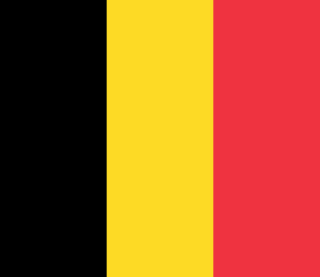
| National Colours | Black, Yellow, Red |
Cuisine
- Moules-frites (Mussels and fries)
- Belgian Waffles
- Chocolate (pralines)
- Belgian Beer
Tourism Highlights
- Bruges (Medieval city)
- Antwerp (Diamond quarter)
- Grand Place, Brussels
- Coastal resorts (Ostend)
Natural Wonders
- The Flemish Ardennes (rolling hills)
- The Belgian Coast (beaches)
Notable People
King Albert I, Paul Van Loon, Georges Clemenceau
Fun Facts
- Belgium is often considered part of the Benelux region (Belgium, Netherlands, Luxembourg).
- The country has a high concentration of international organizations in Brussels.
Military
| Branches | Army, Navy, Air Force |
|---|---|
| Personnel (Approx.) | 24,000 |
International Relations
| UN Member Since | 1952 |
|---|---|
| Organizations | European Union (EU), NATO |
| UNESCO Sites | 1 — Center of European Comic Book Art |
Infrastructure & Environment
| Driving Side | Right |
|---|---|
| Electrical | 230V, 50 Hz (Type E, Type F) |
| Internet Users | 95.8% |
| Mobile Subscriptions | 103.9 per 100 people |
| CO₂ Emissions | 86.6 Mt |
| Renewable Energy | 11.7% |
Environmental Issues
- Urban pollution (air quality)
- Water management (industrial runoff)
- Coastal erosion
Communications
| International Calling Code | +32 |
|---|---|
| Internet TLD | .be |
| Postal Code Format | #### |
Emergency Services
External Links




 The EARF Engine