





South America
Brazil
Federative Republic of Brazil
"Order and Progress"
Overview
Brazil, officially the Federative Republic of Brazil, is the largest country in South America and the fifth-largest by area globally. Spanning diverse biomes from the Amazon rainforest to the Pantanal wetlands, its geography is characterized by immense natural wealth and varied climates. The nation is a federation composed of 26 states and one Federal District, with Brasília serving as its federal capital. With over 212 million inhabitants, Brazil is one of the most populous and ethnically diverse nations in the Americas, where Portuguese is the predominant language.
Travel Advisory
Government & Politics
| Government Type | Federal Presidential Republic |
|---|---|
| System | Federation |
| President | Luiz Inácio Lula da Silva |
| President | Luiz Inácio Lula da Silva |
| Legislature (Bicameral) | National Congress |
| Independence | 1822-09-07 from Portuguese Empire (Portugal) |
| Constitution | 1988 |
Brazil is a large, federal republic with a complex political landscape. Its political system is characterized by a separation of powers among the executive, legislative, and judicial branches. The country's political history is marked by a tension between federal autonomy and central government control, alongside deep regional and socio-economic disparities.
Brazil is a key player in South American geopolitics and a major global economy. It maintains strong trade ties with China and the United States, while also participating actively in regional blocs like Mercosur. Its foreign policy often emphasizes multilateralism, environmental stewardship, and the promotion of South-South cooperation.
People, Language & Religion
| Official Languages | Portuguese |
|---|---|
| Native Name POR | Brasil |
| Demonym (Male) | Brazilian |
| Ethnic — Black | Descendants of enslaved Africans. |
| Ethnic — White | Descendants of European colonizers (Portuguese, Italian, German, etc.). |
| Ethnic — Indigenous | Descendants of pre-colonial native populations. |
| Ethnic — Mixed/Mestizo | Largest group, resulting from European, African, and Indigenous admixture. |
| Religion — Christianity | Predominant religion, including Catholicism and Protestant denominations. |
| Religion — Spiritualism | A widely practiced belief system. |
| Religion — African Traditional Religions | Significant presence, particularly in Bahia. |
Economy
| GDP (Nominal) | $2279.9B USD |
|---|---|
| GDP (PPP) | $4986.9B USD |
| GDP per Capita | $10,713 USD |
| GDP per Capita (PPP) | $23,433 USD |
| GDP Growth Rate | 3.2% |
| Gini Coefficient | 0.503 |
| Human Development Index 0.769 · High | |
| Unemployment Rate | 6% |
| Inflation Rate | 5% |
| Public Debt (% GDP) | 81.9% |
| Main Industries | Agriculture (Soy, Coffee, Sugarcane), Mining (Iron Ore, Bauxite), Manufacturing (Automotive, Aerospace), Services (Finance, Tourism) |
| Main Exports | Soybeans, Iron Ore, Crude Petroleum, Meat Products, Coffee |
| Main Imports | Machinery and Equipment, Petroleum Products, Chemicals, Vehicles, Raw Materials |
| Export Partners | China, United States, Argentina |
| Import Partners | China, United States, Japan |
| Currency | Brazilian real (R$) [BRL] |
Demographics
| Population | 212,812,405 |
|---|---|
| Urban Population | 88.2% |
| Median Age | 33 years |
| Life Expectancy | 76 years |
| Fertility Rate | 1.61 |
| Infant Mortality | 12.3 per 1,000 births |
| Literacy Rate | 94.7% |
Geography & Climate
The country's geography is dominated by the Amazon River basin, which contains the world's largest rainforest. Major physical features include the vast Amazon Shield, the Brazilian Highlands, and the Pantanal wetlands, one of the world's largest tropical wetlands. The Amazon River system is the most extensive river network globally, defining much of the country's central geography.
| Terrain | Vast tropical rainforests, plateaus, river basins, and coastal plains. |
|---|---|
| Total Area | 8,515,767 km² |
| Coastline | 7,491 km |
| Exclusive Economic Zone | 3,500,000 km² |
| Landlocked | No |
| Highest Point | Pico da Neblina (2,994 m) |
| Lowest Point | Amazon River (0 m) |
| Major Rivers | Amazon River, Paraná River, São Francisco River |
| Major Lakes | Lago de Guarapiranga, Represa de Furnas |
| Major Cities | São Paulo, Rio de Janeiro, Salvador, Brasília |
| Natural Resources | Iron Ore, Bauxite (Aluminum), Soybeans, Petroleum, Gold |
| Climate | Tropical Rainforest / Tropical Savanna |
Brazil exhibits immense climatic diversity, ranging from the humid tropical rainforests of the Amazon basin to the semi-arid climate of the Northeast and the temperate zones of the South. The climate is largely influenced by its equatorial position, resulting in high temperatures and significant rainfall throughout much of the year.
History
Ancient & Early History
The region was inhabited by numerous diverse Indigenous groups, including the Tupinambá and Guarani, who developed complex societies and sophisticated agricultural practices long before European arrival. Archaeological evidence points to advanced cultures that thrived along major river systems.
Colonial Period
Brazil was colonized by Portugal starting in 1500. The colonial period was characterized by the exploitation of natural resources, initially brazilwood, followed by the sugar and gold trades. The establishment of the plantation economy and the transatlantic slave trade profoundly shaped the nation's demographics and social structure.
Independence
Brazil achieved independence on September 7, 1822, when Prince Pedro declared separation from Portugal. This transition was relatively peaceful compared to many other colonies, leading to the establishment of the Empire of Brazil under Dom Pedro I.
Modern Era
The Empire transitioned into a Republic in 1889, ending the monarchy. The 20th century saw periods of military rule, economic boom, and political instability. The country underwent significant industrialization and urbanization, particularly in the Southeast region, while maintaining its vast agricultural backbone.
Recent History
Since the democratic transition in the late 20th century, Brazil has seen cycles of political turbulence, economic crises, and social movements. The country has focused on developing its infrastructure and maintaining its role as a global agricultural and commodity powerhouse, while grappling with issues of inequality and environmental preservation.
Culture & National Symbols
Brazilian culture is a vibrant syncretism, blending Indigenous, African, and European influences. Key cultural expressions include the Samba music genre, the Carnival celebration (especially in Rio de Janeiro), and the rich culinary traditions. The country is renowned for its tropical beauty and lively social life.
| National Anthem | Hino Nacional Brasileiro — "Ouviram do Ipiranga as margens plácidas" |
|---|---|
| National Animal | Jaguar |
| National Bird | Tucana |
| National Flower | Ipê |
| National Tree | Ipê |
| National Sport | Football (Soccer) |
| National Dish | Feijoada |
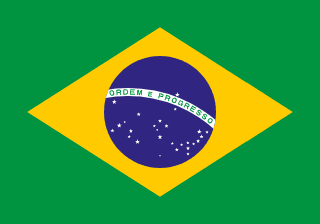
| National Colours | Green, Yellow, Blue |
Cuisine
- Feijoada (Black bean and pork stew)
- Pão de Queijo (Cheese bread)
- Moqueca (Seafood stew)
- Açaí bowls
Tourism Highlights
- Rio de Janeiro (Christ the Redeemer, Copacabana Beach)
- Amazon Rainforest (Ecotourism)
- Iguazu Falls (Natural Wonder)
- Salvador (Historical Architecture)
Natural Wonders
- Amazon Rainforest
- Iguazu Falls
- Pantanal Wetlands
Notable People
Pelé, Neymar Jr., Astronautione Brazilian, Paulo Coelho
Fun Facts
- Brazil is the only country in the Americas where Portuguese is an official language.
- The Amazon River is the largest river by discharge volume in the world.
- The country's biodiversity is among the highest globally.
Military
| Branches | Army, Navy, Air Force |
|---|---|
| Personnel (Approx.) | 762,000 |
International Relations
| UN Member Since | 1946 |
|---|---|
| Organizations | Mercosur, OAS |
| UNESCO Sites | 23 — Historic Centre of Salvador de Bahia, Historic Centre of Ouro Preto |
Infrastructure & Environment
| Driving Side | Right |
|---|---|
| Electrical | 127V/220V, 60 Hz (NEMA 5-15R, NEMA 5-20R) |
| Internet Users | 84.5% |
| Mobile Subscriptions | 101.9 per 100 people |
| CO₂ Emissions | 491.5 Mt |
| Renewable Energy | 46.5% |
Environmental Issues
- Deforestation (Amazon Basin)
- Climate Change Impact
- Illegal Mining and Pollution
Communications
| International Calling Code | +55 |
|---|---|
| Internet TLD | .br |
| Postal Code Format | #####-### |
Emergency Services
External Links



 The EARF Engine