










Europe
Bulgaria
Republic of Bulgaria
"A discovery to share"
Overview
Bulgaria, officially the Republic of Bulgaria, is a country located in Southeast Europe, situated on the eastern Balkan Peninsula. It is bordered by Greece and Turkey to the south, Serbia and North Macedonia to the west, and Romania to the north, with the Black Sea forming its eastern coast. The nation's capital and largest city is Sofia, and its economy is historically tied to its strategic position as a crossroads between the Balkans and the Aegean Sea. The country's culture is a blend of Slavic traditions and Byzantine influences, evident in its rich history and architecture.
Travel Advisory
Government & Politics
| Government Type | Parliamentary Republic |
|---|---|
| System | Republic |
| President | Iliana Iotova |
| Prime Minister | Rosen Zhelyazkov |
| Legislature (Unicameral) | National Assembly of the Republic of Bulgaria |
| Independence | 1908-03-03 from Ottoman Empire |
| Constitution | 1991 |
Bulgaria is a parliamentary republic with a multi-party democratic system. Its political landscape is characterized by a mix of nationalist, socialist, and pro-Western parties. The country has historically struggled with internal political stability, often leading to coalition governments. Its political alignment is strongly oriented towards the European Union and NATO membership.
Bulgaria maintains strong economic and political ties with its immediate neighbors, particularly Greece and Romania, and is a committed member of the European Union. Its foreign policy emphasizes regional stability in the Balkans, cooperation with Turkey, and maintaining a balanced relationship between Eastern and Western powers.
People, Language & Religion
| Official Languages | Bulgarian |
|---|---|
| Regional Languages | Turkish |
| Native Name BUL | България |
| Demonym (Male) | Bulgarian |
| Ethnic — Slavic | Various groups |
| Ethnic — Turkish | Significant minority |
| Ethnic — Bulgarian | Majority |
| Religion — Islam | Significant minority |
| Religion — Catholicism | Minority |
| Religion — Orthodox Christianity | Majority |
Economy
| GDP (Nominal) | $130.8B USD |
|---|---|
| GDP (PPP) | $286B USD |
| GDP per Capita | $20,328 USD |
| GDP per Capita (PPP) | $44,451 USD |
| GDP Growth Rate | 1.7% |
| Gini Coefficient | 0.395 |
| Human Development Index 0.73 · High | |
| Unemployment Rate | 3.5% |
| Inflation Rate | 4.6% |
| Public Debt (% GDP) | 45% |
| Main Industries | Tourism, Agriculture, Light manufacturing, IT services |
| Main Exports | Machinery and equipment, Chemical products, Agricultural goods, Petroleum products |
| Main Imports | Energy sources, Raw materials, Consumer goods, Machinery parts |
| Export Partners | Germany, Greece, Russia, EU members |
| Import Partners | Germany, Greece, Russia, EU members |
| Currency | Bulgarian lev (лв) [BGN] |
Demographics
| Population | 6,433,302 |
|---|---|
| Urban Population | 74.2% |
| Median Age | 38 years |
| Life Expectancy | 75.8 years |
| Fertility Rate | 1.72 |
| Infant Mortality | 4.6 per 1,000 births |
| Literacy Rate | 99% |
Geography & Climate
Located in the Balkan Peninsula, Bulgaria's geography is characterized by diverse terrain, including coastal plains, fertile river valleys, and extensive mountain ranges. The Balkan Mountains (Stara Planina) run across the country, forming a major geographical spine. The country also features the Rhodope Mountains and the Balkan coastal plain, which provides access to the Black Sea.
| Terrain | Mountainous, with coastal plains and river valleys |
|---|---|
| Total Area | 110,879 km² |
| Coastline | 570 km |
| Exclusive Economic Zone | 120,000 km² |
| Landlocked | No |
| Highest Point | Vihren Peak (2 m) |
| Lowest Point | Black Sea Coast (0 m) |
| Major Rivers | Danube River, Yantra River |
| Major Lakes | Black Sea |
| Major Cities | Sofia, Plovdiv, Varna, Burgas |
| Natural Resources | Fossil fuels (oil, natural gas), Mineral deposits (copper, gold), Agricultural land |
| Climate | Mediterranean/Continental |
Bulgaria experiences a transition from Mediterranean climate in the south to a continental climate in the north. Summers are generally hot and dry, while winters are cold, especially in the mountainous regions like the Balkan Mountains. Precipitation is highest in the spring and autumn months.
History
Ancient & Early History
Bulgaria's history dates back to the Thracian civilization, which inhabited the region from the 7th century BCE. Later, the area was influenced by Greek colonization and the successive empires of Macedon and Rome. The region was a key crossroads for early civilizations, notably the Thracians and later the Roman Empire.
Colonial Period
The region was subject to various empires, including the Byzantine Empire and the powerful Ottoman Empire. The Ottoman period lasted for several centuries, profoundly shaping the demographics, architecture, and religious life of the modern Bulgarian state. Resistance movements and local principalities persisted throughout this era.
Independence
Bulgaria achieved a degree of autonomy and independence from the Ottoman Empire in the late 19th century, culminating in the establishment of the modern Bulgarian state. The country participated in the Balkan Wars, which significantly altered its borders and geopolitical standing.
Modern Era
The 20th century saw Bulgaria embroiled in the complex geopolitical struggles of the Balkans, including periods of communist rule under Soviet influence. Following the collapse of communism in 1989, the country transitioned to a market economy and democracy, aligning itself with Western European institutions like NATO and the EU.
Recent History
In the 21st century, Bulgaria has focused on economic integration with the European Union, aiming to modernize its infrastructure and economy. It continues to navigate the challenges of geopolitical stability in the Black Sea region and the Balkans.
Culture & National Symbols
Bulgarian culture is deeply rooted in Orthodox Christianity and Slavic traditions. The country is renowned for its vibrant folk music, traditional dances, and the preservation of ancient customs. The art and architecture, particularly in monasteries like Rila, showcase a unique blend of Byzantine and local styles.
| National Anthem | Victoriya — "Victoriya, naša, naša, naša" |
|---|---|
| National Animal | Rose |
| National Bird | Eagle |
| National Flower | Rose |
| National Tree | Oak |
| National Sport | Football (Soccer) |
| National Dish | Shopska Salata |
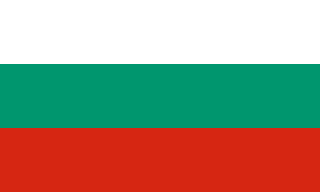
| National Colours | White, Green, Red |
Cuisine
- Shopska Salata (a fresh salad)
- Banitsa (a layered pastry)
- Kyufte (meatballs)
Tourism Highlights
- Black Sea beaches (e.g., Golden Sands)
- Ancient Roman ruins (e.g., Plovdiv)
- Balkan Mountains and monasteries (e.g., Rila)
- Sofia's historical center
Natural Wonders
- The Balkan Mountains (Stara Planina)
- The Rhodope Mountains
- The Black Sea Coast
Notable People
Vasil Levski, Ivan Vazov, Georgi Rakovski
Fun Facts
- Bulgaria is home to one of the world's largest collections of ethnographic museums.
- The country is famous for its rose oil, used in cosmetics and perfumes.
Military
| Branches | Army, Navy, Air Force |
|---|---|
| Personnel (Approx.) | 37,000 |
International Relations
| UN Member Since | 1992 |
|---|---|
| Organizations | Council of Europe, NATO |
| UNESCO Sites | 10 — Old Town of Sofia, Plovdiv Old Town, Rila Monastery |
Infrastructure & Environment
| Driving Side | Right |
|---|---|
| Electrical | 220V, 50 Hz (Type C, Type J) |
| Internet Users | 82.4% |
| Mobile Subscriptions | 118.1 per 100 people |
| CO₂ Emissions | 34.2 Mt |
| Renewable Energy | 20.4% |
Environmental Issues
- Water pollution in major rivers
- Agricultural runoff and soil degradation
- Impact of tourism on coastal ecosystems
Communications
| International Calling Code | +359 |
|---|---|
| Internet TLD | .bg |
| Postal Code Format | #### |
Emergency Services
External Links


 The EARF Engine