





North America
Canada
"From sea to sea"
Overview
Canada is a vast country located in North America, extending from the Atlantic Ocean to the Pacific Ocean and northward into the Arctic Ocean. It is the world's second-largest country by total area and possesses the longest international land border with the United States. The nation is characterized by immense geographical diversity, encompassing everything from temperate rainforests and vast boreal forests to mountainous regions and Arctic tundra. With a population of approximately 38 million people, Canada exhibits highly varied population densities, with most inhabitants concentrated in major urban centers like Toronto, Montreal, and Vancouver.
Travel Advisory
Government & Politics
| Government Type | Federal Parliamentary Constitutional Monarchy |
|---|---|
| System | Federation |
| King | Louise Arbour (Governor-General) |
| Prime Minister | Mark Carney |
| Legislature (Bicameral) | Parliament of Canada |
| Independence | null from null |
| Constitution | 1867 |
Canada operates as a federal parliamentary constitutional monarchy, meaning the King is the ceremonial head of state, while the Prime Minister holds the executive power. The federal system divides powers between the federal government and the provincial governments, leading to complex policy negotiations. The political landscape is generally characterized by a multi-party system, with major parties including the Liberals, Conservatives, and the New Democratic Party.
Canada maintains exceptionally strong economic and diplomatic ties with the United States, which is its largest trade partner. It is also a key member of the Commonwealth and a founding member of the G7. Geopolitically, Canada is committed to multilateralism, international law, and promoting human rights globally.
People, Language & Religion
| Official Languages | English, French |
|---|---|
| Regional Languages | Inuktitut, Cree, Ojibwe |
| Native Name ENG | Canada |
| Native Name FRA | Canada |
| Demonym (Male) | Canadian |
| Ethnic — Asian Descent | Growing population, particularly in major urban centers. |
| Ethnic — European Descent | Large population, primarily of British, French, and Irish descent. |
| Ethnic — Indigenous Peoples | Significant population, including First Nations, Inuit, and Métis. |
| Religion — Islam | Small but growing minority, particularly in urban areas. |
| Religion — Christianity | Largest group, encompassing various denominations (Catholicism, Protestantism). |
| Religion — Indigenous Spirituality | Practiced by First Nations and Inuit communities. |
Economy
| GDP (Nominal) | $2319.9B USD |
|---|---|
| GDP (PPP) | $2780.1B USD |
| GDP per Capita | $55,698 USD |
| GDP per Capita (PPP) | $66,746 USD |
| GDP Growth Rate | 2% |
| Gini Coefficient | 0.315 |
| Human Development Index 0.93 · Very High | |
| Unemployment Rate | 6.9% |
| Inflation Rate | 2.1% |
| Public Debt (% GDP) | 64.1% |
| Main Industries | Financial Services, Manufacturing, Resource Extraction, Technology |
| Main Exports | Crude Petroleum, Automobiles, Forest Products, Mineral Ores |
| Main Imports | Machinery, Consumer Goods, Petroleum Products, Foodstuffs |
| Export Partners | United States, Mexico |
| Import Partners | United States, Mexico |
| Currency | Canadian dollar ($) [CAD] |
Demographics
| Population | 41,651,653 |
|---|---|
| Urban Population | 82.9% |
| Median Age | 40 years |
| Life Expectancy | 82.1 years |
| Fertility Rate | 1.25 |
| Infant Mortality | 4.7 per 1,000 births |
| Literacy Rate | 99% |
Geography & Climate
The country's geography is defined by its massive shield and extensive river systems. The Canadian Shield covers much of the central area, known for its mineral wealth and rugged terrain. Major river systems, such as the Mackenzie and the St. Lawrence, drain into the Atlantic and Arctic Oceans. The western provinces feature the Rocky Mountains, forming a dramatic natural barrier, while the eastern coast is defined by the Atlantic seaboard.
| Terrain | Vast mix of shield rock, boreal forest, mountain ranges (Rockies), and coastal plains. |
|---|---|
| Total Area | 9,984,670 km² |
| Coastline | 20,200 km |
| Exclusive Economic Zone | 18,900,000 km² |
| Landlocked | No |
| Highest Point | Mount Logan (5,959 m) |
| Lowest Point | Hudson Bay (10 m) |
| Major Rivers | St. Lawrence River, Mackenzie River, Nelson River, Ottawa River |
| Major Lakes | Great Bear Lake, Great Slave Lake, Great Lakes (Superior, Huron, Erie, Ontario) |
| Major Cities | Toronto, Montreal, Vancouver, Calgary, Ottawa |
| Natural Resources | Oil and Gas, Forest Products, Minerals (Gold, Nickel, Copper), Fresh Water |
| Climate | Humid Continental / Subarctic / Tundra |
Canada exhibits extreme climatic variability due to its vast size. The southern regions generally fall under humid continental climates, supporting temperate agriculture. Moving northward, the climate transitions into subarctic and boreal forest zones, characterized by long, cold winters and short, mild summers. The far north is dominated by a harsh tundra climate.
History
Ancient & Early History
The region has been inhabited by various Indigenous groups for millennia. Archaeological evidence points to sophisticated cultures, such as the Paleo-Indian and Archaic periods, predating European contact by thousands of years.
Colonial Period
European exploration began in the 16th century, with French claims establishing New France, and later British colonization solidifying control. The fur trade was a major economic driver, leading to the establishment of settlements and administrative structures that eventually formed the basis of modern provinces.
Independence
While the colonies gradually gained self-governance, Canada's modern political structure was formalized by the British North America Act of 1867, uniting the provinces of Ontario, Quebec, Nova Scotia, and New Brunswick into the Dominion of Canada.
Modern Era
The 20th century saw Canada solidify its identity as a stable, multicultural democracy. It played significant roles in both World Wars, contributing to the Allied effort, and has since become a major global player in trade and diplomacy, particularly within the G7.
Recent History
In recent decades, Canada has emphasized its commitment to multiculturalism and reconciliation with Indigenous peoples. Economically, it has diversified away from reliance on single natural resources, while politically, it maintains a strong commitment to international law and human rights.
Culture & National Symbols
Canadian culture is defined by its commitment to multiculturalism, making it one of the most diverse nations globally. Arts and literature are highly regarded, with notable contributions in film (e.g., the Toronto International Film Festival) and music. The country celebrates its unique blend of French and English heritage, particularly in Quebec.
| National Anthem | O Canada — "O Canada, when planted with devotion" |
|---|---|
| National Animal | Beaver |
| National Bird | Canada Goose |
| National Flower | Maple Leaf |
| National Tree | Maple |
| National Sport | Ice Hockey |
| National Dish | Poutine |
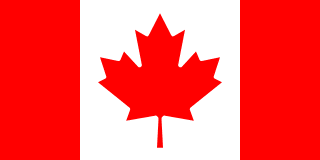
| National Colours | Red, White |
Cuisine
- Poutine (French fries, cheese curds, and gravy)
- Maple Syrup Taffy
- BeaverTails
Tourism Highlights
- Niagara Falls (shared with the US)
- Banff National Park
- The Great Lakes region
- The Cabot Trail (Nova Scotia)
Natural Wonders
- Niagara Falls
- Banff National Park
- The Arctic Archipelago
Notable People
Sir William Lyon Mackenzie, Sir John A. Macdonald, Pierre Elliott Trudeau, Justin Trudeau
Fun Facts
- Canada has the world's longest international land border with the United States.
- The national animal is the beaver, and the national tree is the maple.
- The country is composed of ten provinces and three territories.
Military
| Branches | Canadian Armed Forces (CAF), Royal Canadian Navy, Canadian Army, Royal Canadian Air Force |
|---|---|
| Personnel (Approx.) | 72,000 |
International Relations
| UN Member Since | 1945 |
|---|---|
| Organizations | G7, OECD, Commonwealth of Nations |
| UNESCO Sites | 16 — Old Quebec, Niagara Falls, L'Anse aux Meadows |
Infrastructure & Environment
| Driving Side | Right |
|---|---|
| Electrical | 120V/240V, 60 Hz (Type A, Type B) |
| Internet Users | 94.4% |
| Mobile Subscriptions | 94.1 per 100 people |
| CO₂ Emissions | 578 Mt |
| Renewable Energy | 23.8% |
Environmental Issues
- Climate Change (Arctic warming)
- Resource Management (Logging and mining)
- Biodiversity Protection
Communications
| International Calling Code | +1 |
|---|---|
| Internet TLD | .ca |
| Postal Code Format | @#@ #@# |
Emergency Services
External Links



 The EARF Engine