










Asia
China
People's Republic of China
Overview
China, officially the People's Republic of China, is a country in East Asia and the world's most populous nation alongside India. It covers about 9.6 million square kilometres, making it the third or fourth largest country by area depending on how disputed territory is counted, and borders fourteen states, more than any other country except Russia. The land falls in three great steps from the Tibetan Plateau in the west, through the basins and plateaus of the centre, to the densely settled alluvial plains and river deltas of the east, where the great majority of the population lives. China is a one-party socialist republic governed by the Chinese Communist Party, with Beijing as its capital, and since the reforms begun in 1978 it has grown into the world’s second largest economy by nominal GDP and the largest by purchasing power parity.
Travel Advisory
Government & Politics
| Government Type | Unitary one-party socialist republic |
|---|---|
| System | Unitary |
| President | Xi Jinping |
| Premier | Li Qiang |
| Legislature (Unicameral) | National People's Congress |
| Independence | 1949-10-01 |
| Constitution | 1982 |
The Chinese Communist Party holds a constitutional monopoly on political power, and party bodies run in parallel with and above state ones. Real authority sits with the Politburo Standing Committee and its General Secretary, a post Xi Jinping holds alongside the presidency and the chairmanship of the Central Military Commission. The National People’s Congress is constitutionally the highest organ of state power but meets briefly and in practice ratifies decisions already taken. There is no independent judiciary, and elections are indirect above the local level.
China is a permanent member of the UN Security Council and the largest trading partner of most countries in Asia, Africa and South America. Its foreign policy combines a stated principle of non-interference with increasingly assertive regional posture, notably its claims in the South China Sea and its position that Taiwan is a province of China. It maintains a close alignment with Russia, extensive lending and infrastructure ties through the Belt and Road Initiative, and a relationship with the United States and the European Union that mixes deep trade dependence with disputes over technology, subsidies and human rights.
People, Language & Religion
| Official Languages | Standard Chinese (Mandarin) |
|---|---|
| National Languages | Standard Chinese (Putonghua) |
| Regional Languages | Cantonese, Wu, Min, Hakka, Xiang, Gan, Tibetan, Uyghur, Mongolian, Zhuang, Korean |
| Native Name ZHO | 中国 |
| Demonym (Male) | Chinese |
| Ethnic — Yi | 0.6% |
| Ethnic — Han | 91.1% |
| Ethnic — Hui | 0.8% |
| Ethnic — Miao | 0.7% |
| Ethnic — Other | 3.3% |
| Ethnic — Tujia | 0.6% |
| Ethnic — Manchu | 0.8% |
| Ethnic — Uyghur | 0.8% |
| Ethnic — Zhuang | 1.3% |
| Religion — Islam | Approx. 2% |
| Religion — Buddhism | Approx. 18% |
| Religion — Christianity | Approx. 5% |
| Religion — Unaffiliated or folk religion | Approx. 74% |
Economy
| GDP (Nominal) | $19498B USD |
|---|---|
| GDP (PPP) | $41259.8B USD |
| GDP per Capita | $13,862 USD |
| GDP per Capita (PPP) | $29,333 USD |
| GDP Growth Rate | 5.4% |
| Gini Coefficient | 0.36 |
| Human Development Index 0.797 · High | |
| Unemployment Rate | 4.6% |
| Inflation Rate | 0.1% |
| Public Debt (% GDP) | 88% |
| Main Industries | Electronics and semiconductors, Machinery, Steel and metals, Chemicals, Textiles, Motor vehicles, Shipbuilding |
| Main Exports | Electrical machinery and electronics, Industrial machinery, Motor vehicles, Textiles and apparel, Plastics, Steel |
| Main Imports | Integrated circuits, Crude petroleum, Iron ore, Natural gas, Soybeans, Industrial machinery |
| Export Partners | United States, Hong Kong, Japan, South Korea, Vietnam, Germany |
| Import Partners | Taiwan, South Korea, Japan, United States, Australia, Russia |
| Currency | Chinese yuan (renminbi) (¥) [CNY] |
Demographics
| Population | 1,406,585,000 |
|---|---|
| Urban Population | 66.3% |
| Median Age | 40 years |
| Life Expectancy | 78 years |
| Fertility Rate | 1.01 |
| Infant Mortality | 4.1 per 1,000 births |
| Literacy Rate | 97.2% |
Geography & Climate
China’s land descends from west to east in three broad steps. The highest is the Tibetan Plateau, averaging over 4,000 metres and rimmed by the Himalaya, Karakoram and Kunlun ranges. The middle step holds the Inner Mongolian, Loess and Yunnan-Guizhou plateaus and the Tarim, Junggar and Sichuan basins. The lowest is the eastern plains, where the Yangtze and Yellow rivers deposit the alluvium that supports most of the population and farmland. The coastline runs roughly 14,500 kilometres along the Bohai Sea, Yellow Sea, East China Sea and South China Sea.
| Terrain | Mountains and high plateaus in the west, descending to plains and river deltas in the east |
|---|---|
| Total Area | 9,596,961 km² |
| Coastline | 14,500 km |
| Exclusive Economic Zone | 877,019 km² |
| Landlocked | No |
| Highest Point | Mount Everest (Qomolangma), on the border with Nepal (8,849 m) |
| Lowest Point | Ayding Lake, Turpan Depression (-154 m) |
| Major Rivers | Yangtze (Chang Jiang), Yellow River (Huang He), Pearl River (Zhu Jiang), Mekong (Lancang), Amur (Heilong Jiang) |
| Major Lakes | Qinghai Lake, Poyang Lake, Dongting Lake, Lake Tai, Hulun Lake |
| Major Cities | Shanghai, Beijing, Chongqing, Guangzhou, Shenzhen, Chengdu, Tianjin, Wuhan |
| Natural Resources | Coal, Rare earth elements, Iron ore, Natural gas, Petroleum, Tungsten, Hydropower |
| Climate | Varied: continental, subtropical, arid and alpine |
China spans almost every climate found outside the tropics proper. The southeast is humid subtropical, warmed by the East Asian monsoon and struck by typhoons between July and September. The northeast has a cold continental climate with long freezing winters, while the northwest is arid desert and steppe, including the Taklamakan and the Chinese portion of the Gobi. The Tibetan Plateau in the southwest is alpine and cold year round despite its southerly latitude. Rainfall declines sharply from southeast to northwest, and the resulting water shortage in the north is one of the country’s defining constraints.
History
Ancient & Early History
Settled agriculture along the Yellow and Yangtze rivers gave rise to one of the world’s earliest civilisations. The Shang dynasty, from roughly the sixteenth century BCE, left the oldest confirmed Chinese writing in the oracle bones, and the long Zhou period that followed produced Confucianism, Daoism and Legalism. Qin Shi Huang unified the warring states in 221 BCE, standardising script, currency and measures. The Han dynasty that succeeded him opened the Silk Road and set the imperial template that lasted, through cycles of division and reunification under the Tang, Song, Yuan, Ming and Qing, for more than two thousand years.
Colonial Period
China was never wholly colonised, but the nineteenth century broke imperial power. Defeat in the First and Second Opium Wars forced a series of unequal treaties that opened treaty ports, ceded Hong Kong to Britain and granted foreign powers extraterritorial rights. The Taiping Rebellion killed tens of millions, Japan took Taiwan in 1895, and the Boxer Uprising of 1900 ended in occupation of Beijing by an eight-nation alliance. The Qing fell in 1911 and the Republic of China was declared the following year.
Independence
The People’s Republic was proclaimed in Tiananmen Square on 1 October 1949, after the Chinese Communist Party defeated the Kuomintang in the civil war that resumed at the end of the Japanese occupation. The Kuomintang government withdrew to Taiwan, where it continued to claim to represent all of China, a dispute that remains unresolved.
Modern Era
The first decades under Mao Zedong brought land reform and rapid literacy gains alongside two catastrophes: the Great Leap Forward of 1958 to 1962, whose famine killed tens of millions, and the Cultural Revolution of 1966 to 1976. After Mao’s death, Deng Xiaoping launched the reform and opening up policy in 1978, decollectivising agriculture, creating special economic zones and admitting foreign investment. Growth averaged close to ten percent a year for three decades and lifted several hundred million people out of poverty, though the 1989 Tiananmen Square protests were suppressed by force.
Recent History
China joined the World Trade Organization in 2001 and became the world’s largest manufacturer and exporter. Hong Kong and Macao returned from British and Portuguese rule in 1997 and 1999 under the one country, two systems framework. Since 2012 Xi Jinping has centralised authority, run a sustained anti-corruption campaign and removed presidential term limits in 2018. The Belt and Road Initiative has extended Chinese infrastructure lending across Asia, Africa and Europe. Recent years have brought a property-sector downturn, a shrinking and ageing population, and sharpening technology and trade friction with the United States.
Culture & National Symbols
Chinese culture is among the longest continuously recorded in the world, and its written language has linked regions whose spoken varieties are mutually unintelligible for more than two millennia. Calligraphy, ink landscape painting, porcelain, silk and classical poetry are its best known art forms, and Confucian ideas about family obligation, education and social order remain widely felt. Regional opera traditions such as Peking and Cantonese opera coexist with a large modern film and popular music industry. Spring Festival, the lunar new year, drives the largest annual human migration on earth.
| National Anthem | March of the Volunteers (义勇军进行曲) — "Arise, ye who refuse to be slaves! (起来!不愿做奴隶的人们!)" |
|---|---|
| National Animal | Giant panda |
| National Flower | Peony (widely regarded, never formally adopted) |
| National Sport | Table tennis (by custom, not statute) |
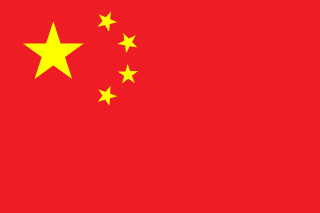
| National Colours | Red, Yellow |
Cuisine
- Peking duck
- Dim sum
- Mapo tofu
- Xiaolongbao
- Hand-pulled lamian
- Hotpot
- Kung pao chicken
Tourism Highlights
- The Great Wall
- Forbidden City
- Terracotta Army
- Li River and Guilin
- The Bund, Shanghai
- Potala Palace, Lhasa
- Zhangjiajie National Forest Park
Natural Wonders
- Mount Huangshan
- Jiuzhaigou Valley
- Zhangjiajie sandstone pillars
- Yangtze Three Gorges
- Rainbow Mountains of Zhangye Danxia
Notable People
Confucius, Qin Shi Huang, Sun Yat-sen, Mao Zedong, Deng Xiaoping, Xi Jinping, Lu Xun, Tu Youyou, Yao Ming
Fun Facts
- China spans five geographic time zones but keeps a single official time, so the sun can rise after 10am in far western Xinjiang.
- It shares land borders with fourteen countries, more than any nation except Russia, which ties it.
- The high-speed rail network opened in 2008 and is now longer than every other country’s combined.
- Roughly nine in ten Chinese people share one of about a hundred surnames, with Wang, Li and Zhang alone covering some 270 million.
Military
| Branches | People's Liberation Army Ground Force, PLA Navy, PLA Air Force, PLA Rocket Force, PLA Aerospace Force, People's Armed Police |
|---|---|
| Personnel (Approx.) | 2,535,000 |
International Relations
| UN Member Since | 1945 |
|---|---|
| Organizations | United Nations, UN Security Council (permanent member), World Trade Organization, BRICS, Shanghai Cooperation Organisation, APEC, G20, Asian Infrastructure Investment Bank |
| UNESCO Sites | 60 — The Great Wall, Imperial Palaces of the Ming and Qing Dynasties (Forbidden City), Mausoleum of the First Qin Emperor (Terracotta Army), Mogao Caves, Historic Centre of Macao, Mount Huangshan, Jiuzhaigou Valley |
Infrastructure & Environment
| Driving Side | Right |
|---|---|
| Electrical | 220V, 50 Hz (Type A, Type C, Type I) |
| Internet Users | 91.6% |
| Mobile Subscriptions | 131.8 per 100 people |
| CO₂ Emissions | 13124.7 Mt |
| Renewable Energy | 15.2% |
Environmental Issues
- Air pollution in northern and industrial cities
- Water scarcity and river pollution in the north
- Soil contamination from heavy metals
- Desertification and dust storms
- The largest national CO2 output, alongside the largest renewable build-out
Communications
| International Calling Code | +86 |
|---|---|
| Internet TLD | .cn, .中国, .中國 |
| Postal Code Format | ###### |
Emergency Services
External Links


 The EARF Engine