








Central America
Costa Rica
Republic of Costa Rica
"May work and peace live forever"
Overview
Costa Rica, officially the Republic of Costa Rica, is a sovereign nation located in the Central American region of North America. It is bordered by Nicaragua to the north, Panama to the southeast, and the Caribbean Sea to the northeast, while the Pacific Ocean defines its southwestern coast. With an area of approximately 51,100 km², the country is renowned for its exceptional biodiversity, commitment to peace, and robust ecotourism industry. The population is estimated to be around 5.1 million people, with the capital and largest urban center, San José, serving as its primary economic and political hub.
Travel Advisory
Government & Politics
| Government Type | Federal Republic |
|---|---|
| System | Representative Democracy |
| President | Laura Fernández Delgado |
| President | Laura Fernández Delgado |
| Legislature (Unicameral) | National Assembly |
| Independence | 1948-10-10 from Costa Rican Civil War |
| Constitution | 1949 |
Costa Rica is a stable, constitutional republic known for its commitment to peace and environmentalism. Its political system is a representative democracy with a strong emphasis on civil rights and social welfare. The country has historically prioritized education and healthcare, leading to high human development indices and a stable political climate in the region.
Costa Rica maintains strong diplomatic and economic ties with the United States, which is its largest trade partner. It is also a key player in regional multilateral organizations, emphasizing environmental cooperation and democratic stability throughout Central America. Its commitment to international law and environmental protection enhances its global diplomatic standing.
People, Language & Religion
| Official Languages | Spanish |
|---|---|
| Regional Languages | Indigenous languages (e.g., Bribri, Cabécar) |
| Native Name SPA | Costa Rica |
| Demonym (Male) | Costa Rican |
| Ethnic — Creole | Minority |
| Ethnic — European | Majority |
| Ethnic — Indigenous | Minority |
| Religion — Christianity | Majority |
| Religion — Atheism/Secularism | Significant Minority |
Economy
| GDP (Nominal) | $102.9B USD |
|---|---|
| GDP (PPP) | $174.2B USD |
| GDP per Capita | $19,970 USD |
| GDP per Capita (PPP) | $33,815 USD |
| GDP Growth Rate | 4.8% |
| Gini Coefficient | 0.455 |
| Human Development Index 0.805 · High | |
| Unemployment Rate | 6.8% |
| Inflation Rate | -0.1% |
| Public Debt (% GDP) | 39.3% |
| Main Industries | Tourism, Agriculture (Coffee, Bananas), Services, Ecotourism |
| Main Exports | Coffee, Pineapple, Bananas, Gold, Manufactured Goods |
| Main Imports | Fuel, Machinery, Chemicals, Consumer Goods |
| Export Partners | United States, Panama, Germany |
| Import Partners | United States, China, Mexico |
| Currency | Costa Rican colón (₡) [CRC] |
Demographics
| Population | 5,152,950 |
|---|---|
| Urban Population | 79.7% |
| Median Age | 29 years |
| Life Expectancy | 81 years |
| Fertility Rate | 1.32 |
| Infant Mortality | 9.1 per 1,000 births |
| Literacy Rate | 99.5% |
Geography & Climate
The country's geography is highly diverse, featuring volcanic mountain ranges, extensive rainforests, and lush coastal plains. Major river systems flow through the central highlands, draining into the Pacific and Caribbean Oceans. The terrain ranges from tropical lowlands to high-altitude cloud forests, contributing to immense biodiversity. The Pacific coast is characterized by beaches and tropical dry forests, while the Caribbean side boasts dense rainforests.
| Terrain | Volcanic mountains, rainforests, and coastal plains |
|---|---|
| Total Area | 51,100 km² |
| Coastline | 300 km |
| Exclusive Economic Zone | 1,000,000 km² |
| Landlocked | No |
| Highest Point | Poás Volcano (2,600 m) |
| Lowest Point | Caribbean Sea (0 m) |
| Major Rivers | Torroro River, Río Pacuare |
| Major Lakes | Lake Arenal |
| Major Cities | San José, Alajuela, Cartago |
| Natural Resources | Coffee, Bananas, Gold, Timber, Geothermal Energy |
| Climate | Tropical Rainforest/Tropical Dry Forest |
Costa Rica experiences a tropical climate, characterized by distinct wet and dry seasons. The Caribbean side generally receives higher rainfall and maintains a rainforest environment, while the Pacific side is influenced by drier tropical forest and cloud forest biomes. Temperatures are consistently warm throughout the year, though seasonal variations exist.
History
Ancient & Early History
The region was inhabited by various indigenous groups, including the Chorotega, Cabecar, and Bribri, who developed complex societies and agricultural practices long before European arrival. Archaeological evidence points to sophisticated trade networks and settled communities in the pre-Columbian era.
Colonial Period
Costa Rica was first claimed by Spain in the 16th century, becoming part of the Captaincy General of Guatemala. The colonial period saw the establishment of haciendas and the exploitation of natural resources, particularly cacao and gold, though the region's strategic importance often led to it being overlooked compared to neighboring areas.
Independence
The country achieved de facto independence from Spain in the early 19th century, and formally declared its sovereignty from the Captaincy General of Guatemala in 1821. It maintained a relatively peaceful transition compared to many of its Central American neighbors.
Modern Era
The 20th century saw Costa Rica develop a reputation for stability and democracy. A pivotal moment was the abolition of its army in 1948, a decision that redirected national focus and resources toward education, healthcare, and environmental conservation, solidifying its peaceful image.
Recent History
In recent decades, Costa Rica has become a global leader in ecotourism and sustainable development. It has actively promoted its status as a biodiversity hotspot, attracting international investment in renewable energy and conservation projects, while maintaining a strong commitment to democratic institutions.
Culture & National Symbols
Costa Rican culture is deeply intertwined with its natural environment and a strong sense of community. The national identity is heavily influenced by its commitment to peace and conservation. Traditional arts often incorporate local flora and fauna, while the culture is characterized by a relaxed, 'Pura Vida' lifestyle that emphasizes simplicity and connection to nature.
| National Anthem | Himno Nacional de Costa Rica — "¡Oh patria amada, de verde manto azul!" |
|---|---|
| National Animal | Warthog |
| National Bird | Resplendent Quetzal |
| National Flower | Heliconia |
| National Tree | Guayacán |
| National Sport | Soccer |
| National Dish | Gallo Pinto |
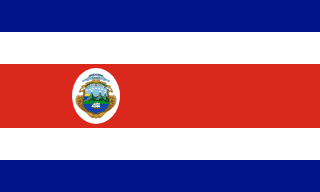
| National Colours | Red, White, Blue |
Cuisine
- Gallo Pinto (rice and beans mixed with coconut milk and spices)
- Casado (a plate featuring rice, beans, plantain, and a choice of protein)
- Tamales (steamed corn dough packets)
Tourism Highlights
- Tortuguero National Park (wildlife viewing)
- Arenal Volcano National Park (hot springs and hiking)
- Monteverde Cloud Forest Reserve (zip-lining and birdwatching)
- Pacific beaches (surfing and relaxation)
Natural Wonders
- Arenal Volcano
- Tortuguero National Park
- Manuel Antonio National Park
Notable People
Rafael Ángel Calderón Guardia, Otto Castas, Adolfo Díaz
Fun Facts
- Costa Rica is one of the few countries in the world that has abolished its army.
- It is a global leader in geothermal energy and renewable energy adoption.
- The national motto, 'Pura Vida,' translates to 'Pure Life' and is used as a general greeting and philosophy.
Military
| Branches | National Force (formerly armed forces) |
|---|---|
| Personnel (Approx.) | 10,000 |
International Relations
| UN Member Since | 1948 |
|---|---|
| Organizations | OAS, UNEP |
| UNESCO Sites | 10 — Tortuguero National Park, Monteverde Cloud Forest Reserve |
Infrastructure & Environment
| Driving Side | Right |
|---|---|
| Electrical | 220V, 60 Hz (Type A, Type B) |
| Internet Users | 87.2% |
| Mobile Subscriptions | 136 per 100 people |
| CO₂ Emissions | 8.4 Mt |
| Renewable Energy | 34.2% |
Environmental Issues
- Sustainable resource management (balancing development with conservation)
- Plastic waste management in coastal areas
Communications
| International Calling Code | +506 |
|---|---|
| Internet TLD | .cr |
| Postal Code Format | #### |
Emergency Services
External Links


 The EARF Engine