





Europe
Denmark
Kingdom of Denmark
"Happiest place on Earth!"
Overview
Denmark, officially the Kingdom of Denmark, is a constitutional unitary monarchy located in the southern part of the Scandinavian Peninsula in Northern Europe. It is a highly developed Nordic country known for its high quality of life, strong social welfare system, and commitment to sustainability. The country is geographically characterized by numerous islands and peninsulas, with Copenhagen serving as its largest metropolitan area and capital. Denmark maintains strong international ties, particularly within the European Union and the Nordic Council, and is recognized for its progressive social policies and design culture.
Travel Advisory
Government & Politics
| Government Type | Constitutional Monarchy |
|---|---|
| System | Unitary State |
| King | King Frederik X |
| Prime Minister | Mette Frederiksen |
| Legislature (Unicameral) | Folketing |
| Independence | 1849-05-29 from Danish Monarchy (from absolute rule) |
| Constitution | 1849 |
Denmark is a stable, highly prosperous, and democratic nation. Its political system is characterized by consensus-building and a strong social safety net. The government operates under a parliamentary system, where the Prime Minister leads the cabinet and is accountable to the Folketing. The country's political landscape is diverse, balancing traditional conservative interests with progressive environmental and social reforms.
Denmark maintains deep economic and political ties with its Nordic neighbors, particularly through the Nordic Council. It is a committed member of the European Union and NATO, while also maintaining strong bilateral relationships with the United Kingdom and the United States. Its foreign policy often emphasizes multilateralism, climate action, and human rights advocacy.
People, Language & Religion
| Official Languages | Danish |
|---|---|
| Regional Languages | Faroese, Greenlandic |
| Native Name DAN | Danmark |
| Demonym (Male) | Danish |
| Ethnic — Danish | Over 90% |
| Religion — Christianity | Majority (Lutheranism) |
Economy
| GDP (Nominal) | $462.5B USD |
|---|---|
| GDP (PPP) | $500.1B USD |
| GDP per Capita | $76,970 USD |
| GDP per Capita (PPP) | $83,218 USD |
| GDP Growth Rate | 0.6% |
| Gini Coefficient | 0.299 |
| Human Development Index 0.96 · Very High | |
| Unemployment Rate | 5.5% |
| Inflation Rate | 1.9% |
| Public Debt (% GDP) | 75.3% |
| Main Industries | Pharmaceuticals, Maritime technology, Food processing, Renewable energy |
| Main Exports | Pharmaceutical products, Machinery, Foodstuffs, Wind turbines |
| Main Imports | Oil and gas, Raw materials, Electronics, Chemicals |
| Export Partners | Germany, Sweden, United Kingdom |
| Import Partners | Germany, Netherlands, United Kingdom |
| Currency | Danish krone (kr) [DKK] |
Demographics
| Population | 6,009,169 |
|---|---|
| Urban Population | 88.8% |
| Median Age | 39 years |
| Life Expectancy | 82.3 years |
| Fertility Rate | 1.47 |
| Infant Mortality | 3.5 per 1,000 births |
| Literacy Rate | 99% |
Geography & Climate
The country is an archipelago comprising over 400 islands, the largest being Zealand (Sjælland). Its geography is dominated by low-lying plains, coastal areas, and numerous inlets, making it highly maritime. The mainland is connected to Germany via the Little Belt Bridge, while the Danish islands are separated by complex straits. The terrain is generally flat, though some areas feature rolling hills and coastal cliffs.
| Terrain | Low-lying plains, islands, and coastal areas |
|---|---|
| Total Area | 43,094 km² |
| Coastline | 450 km |
| Exclusive Economic Zone | 1,200,000 km² |
| Landlocked | No |
| Highest Point | Møllehøj (108 m) |
| Lowest Point | North Sea (0 m) |
| Major Rivers | Isefjord, Lillebælt |
| Major Lakes | Lake Roskilde |
| Major Cities | Copenhagen, Aarhus, Odense |
| Natural Resources | Agricultural land, Wind energy potential, Fisheries |
| Climate | Temperate Oceanic |
Denmark experiences a temperate oceanic climate (Cfb), characterized by mild winters and cool summers. Rainfall is relatively consistent throughout the year, with seasonal variations. The climate is moderated by the surrounding North Sea and the Baltic Sea, preventing extreme temperature fluctuations.
History
Ancient & Early History
While not a major center of ancient civilization, the region was inhabited by various cultures, notably the Germanic tribes and the Norse people. Archaeological evidence points to early settlements dating back to the Neolithic period, which later developed into sophisticated Bronze Age and Iron Age societies.
Colonial Period
The Danish crown established a powerful maritime empire, controlling territories in the Baltic Sea and the Caribbean. Key colonial holdings included the Danish West Indies (now US Virgin Islands) and various trading posts in the Near East, which were crucial for trade and geopolitical influence until the 19th century.
Independence
Denmark transitioned from an absolute monarchy to a constitutional monarchy following the defeat in the Napoleonic Wars and the establishment of the Danish Constitution in 1849, marking a significant shift toward democratic governance.
Modern Era
The 20th century saw Denmark navigate complex geopolitical waters, maintaining its sovereignty while integrating into international structures. It played a key role in the development of the welfare state model, which emphasizes universal healthcare, education, and social security.
Recent History
In recent decades, Denmark has become a global leader in sustainable energy and green technology, particularly wind power. It has also maintained a strong commitment to human rights and gender equality, solidifying its reputation as a progressive European nation.
Culture & National Symbols
Danish culture is renowned for its design excellence, exemplified by iconic furniture and household goods. The country has a rich literary tradition, and its cuisine, particularly the open-faced sandwich (Smørrebrød), is a cultural staple. Copenhagen, in particular, is celebrated for its blend of historical architecture and modern, creative urban life.
| National Anthem | Der Nyhavn — "Der Nyhavn, der ligger endeligt" |
|---|---|
| National Animal | Danish Hare |
| National Bird | Dodo (Extinct) |
| National Flower | Bluebell |
| National Tree | Oak |
| National Sport | Football (Soccer) |
| National Dish | Smørrebrød |
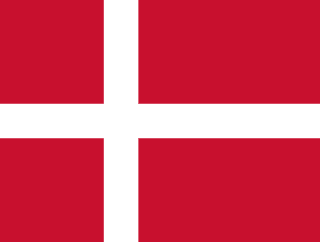
| National Colours | Red, White |
Cuisine
- Smørrebrød (Open-faced sandwiches)
- Wienerbrød (Danish pastry)
- Frikadeller (Meatballs)
Tourism Highlights
- Copenhagen's Little Mermaid statue
- Ferry trips to the islands
- The Tivoli Gardens amusement park
- The Beltring
Natural Wonders
- The Little Belt (Lillebælt) strait
- The Danish archipelago
Notable People
Munch (Hans Christian), Christiansen (Karen), Nielsen (Niels Bohr)
Fun Facts
- Denmark was the first country to implement a comprehensive national welfare state model.
- The country is a global leader in wind energy technology and implementation.
Military
| Branches | Army, Navy, Air Force |
|---|---|
| Personnel (Approx.) | 15,000 |
International Relations
| UN Member Since | 1945 |
|---|---|
| Organizations | European Union, Nordic Council |
| UNESCO Sites | 1 — The Viking Ship Museum (Copenhagen) |
Infrastructure & Environment
| Driving Side | Right |
|---|---|
| Electrical | 230V, 50 Hz (Type C, Type F) |
| Internet Users | 99.8% |
| Mobile Subscriptions | 126.7 per 100 people |
| CO₂ Emissions | 25.6 Mt |
| Renewable Energy | 39.5% |
Environmental Issues
- Coastal erosion
- Sustainable fishing practices
- Managing agricultural runoff
Communications
| International Calling Code | +45 |
|---|---|
| Internet TLD | .dk |
| Postal Code Format | #### |
Emergency Services
External Links




 The EARF Engine