




Europe
Estonia
Republic of Estonia
"Epic Estonia"
Overview
Estonia, officially the Republic of Estonia, is a small, highly developed nation situated in Northern Europe, bordering the Baltic Sea. It is geographically positioned between the Baltic states, bordered by Latvia to the south and Russia to the east, while its northern and western coasts face the Gulf of Finland and the Baltic Sea, respectively. The country's economy is heavily oriented towards technology and services, and it is known for its advanced digital infrastructure and commitment to e-governance. With a population of approximately 1.33 million people, Estonia maintains a high standard of living and a strong integration into European Union structures.
Travel Advisory
Government & Politics
| Government Type | Republic |
|---|---|
| System | Parliamentary Republic |
| President | Alar Karis |
| Prime Minister | Kristen Michal |
| Legislature (Unicameral) | Riigikogu |
| Independence | 1991-08-20 from Soviet Union |
| Constitution | 1992 |
Estonia is a parliamentary republic with a decentralized system, granting significant autonomy to local municipalities. Its political landscape is characterized by a strong emphasis on democratic institutions and rule of law. The government operates through a coalition of parties, with the Prime Minister leading the executive branch and the Riigikogu serving as the primary legislative body.
Estonia maintains robust and strategic partnerships with its EU and NATO allies, particularly Germany and the Nordic countries. Its foreign policy emphasizes digital security, adherence to international law, and promoting Baltic cooperation. Relations with Russia are complex and strained due to geopolitical tensions.
People, Language & Religion
| Official Languages | Estonian |
|---|---|
| Regional Languages | Russian |
| Native Name EST | Eesti |
| Demonym (Male) | Estonian |
| Ethnic — Other | Remaining% |
| Ethnic — Russian | Approx. 10% |
| Ethnic — Estonian | Approx. 85% |
| Religion — Christianity | Majority |
| Religion — Atheism/Non-religious | Significant minority |
Economy
| GDP (Nominal) | $47B USD |
|---|---|
| GDP (PPP) | $71.2B USD |
| GDP per Capita | $34,418 USD |
| GDP per Capita (PPP) | $52,106 USD |
| GDP Growth Rate | -2.7% |
| Gini Coefficient | 0.307 |
| Human Development Index 0.93 · Very High | |
| Unemployment Rate | 8.3% |
| Inflation Rate | 4.8% |
| Public Debt (% GDP) | 35% |
| Main Industries | Information Technology, Services, Trade, Forestry |
| Main Exports | IT services, Machinery, Wood products, Chemicals |
| Main Imports | Energy, Consumer goods, Machinery components |
| Export Partners | Germany, Sweden, Russia |
| Import Partners | Russia, Germany, China |
| Currency | Euro (€) [EUR] |
Demographics
| Population | 1,366,475 |
|---|---|
| Urban Population | 70.7% |
| Median Age | 38 years |
| Life Expectancy | 79.3 years |
| Fertility Rate | 1.18 |
| Infant Mortality | 1.5 per 1,000 births |
| Literacy Rate | 99% |
Geography & Climate
Located in Northern Europe, Estonia is a small country with a diverse geography, encompassing mainland areas, and numerous large and small islands. Its coastline is extensive, facing the Baltic Sea and the Gulf of Finland. The terrain is generally low-lying and flat, characterized by marshlands, forests, and coastal plains, making it highly susceptible to sea-level changes.
| Terrain | Low-lying coastal plains, marshlands, and forests |
|---|---|
| Total Area | 45,227 km² |
| Coastline | 370 km |
| Exclusive Economic Zone | 120,000 km² |
| Landlocked | No |
| Highest Point | Käsmu Tõnni (100 m) |
| Lowest Point | Baltic Sea (0 m) |
| Major Rivers | Emajõgi, Gamla jõgi |
| Major Lakes | Peipus Lake (shared with Russia) |
| Major Cities | Tallinn, Tartu, Narva |
| Natural Resources | Forestry products, Coastal minerals, Renewable energy sources |
| Climate | Temperate Oceanic (Cfb) |
Estonia experiences a temperate oceanic climate, characterized by moderate rainfall and distinct seasonal variations. Winters are cold and snowy, while summers are mild and relatively short. The climate is heavily influenced by the Baltic Sea, which moderates temperature extremes compared to continental locations.
History
Ancient & Early History
Historical records of the region date back to the pre-Christian Baltic tribes, who were influenced by trade routes connecting Scandinavia and the Russian Empire. The area was later incorporated into the Livonian Order and subsequently under various German and Swedish feudal controls.
Colonial Period
The region was subjected to successive foreign powers, including the Teutonic Knights, the Swedish Empire, and the Russian Empire. This period saw the gradual development of urban centers and the establishment of administrative structures that defined the modern Baltic identity.
Independence
Estonia declared its restoration of independence on August 20, 1918, following the collapse of the Russian Empire. It was subsequently occupied by the Soviet Union in 1940 and remained under Soviet control until 1991.
Modern Era
After regaining independence in 1991, Estonia underwent a rapid transition to a market economy and a democratic state. It has since become a global leader in e-governance, implementing advanced digital services and maintaining strong ties with Western European economies.
Recent History
The country has successfully navigated geopolitical tensions, solidifying its commitment to NATO and the EU. Its modern focus remains on technological innovation, green energy transition, and maintaining its unique Baltic identity amidst shifting regional power dynamics.
Culture & National Symbols
Estonian culture is a blend of Baltic traditions and modern European influences, deeply rooted in its maritime history. The country has a strong emphasis on preserving its unique language and cultural identity. Tallinn's Old Town, a UNESCO World Heritage site, showcases medieval architecture and a vibrant cultural scene.
| National Anthem | Mu isamaa maiden laul — "My motherland's fields' song" |
|---|---|
| National Animal | Estonian Hare |
| National Bird | Common Tern |
| National Flower | Estonian Poppy |
| National Tree | Oak |
| National Sport | Ice Hockey |
| National Dish | Röösti (Fried bread) |
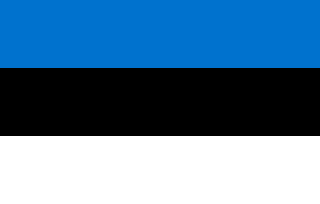
| National Colours | Blue, Black, White |
Cuisine
- Röösti (Fried potato bread)
- Mustard bread
- Seared herring
Tourism Highlights
- Tallinn Old Town
- Saaremaa Island
- Coastal hiking trails
- Peipus Lake
Natural Wonders
- Saaremaa Island
- Gulf of Finland coastline
Notable People
Arvo Pärt, Kaarel Regn
Fun Facts
- Estonia was one of the first countries globally to implement a fully digital government system.
- The country has a high percentage of its population that speaks Estonian as a first language.
Military
| Branches | Estonian Defence Forces, Coast Guard |
|---|---|
| Personnel (Approx.) | 7,000 |
International Relations
| UN Member Since | 1992 |
|---|---|
| Organizations | European Union, NATO |
| UNESCO Sites | 0 |
Infrastructure & Environment
| Driving Side | Right |
|---|---|
| Electrical | 230V, 50 Hz (Type F, Type C) |
| Internet Users | 92.2% |
| Mobile Subscriptions | 151.1 per 100 people |
| CO₂ Emissions | 10.6 Mt |
| Renewable Energy | 38% |
Environmental Issues
- Coastal erosion
- Sustainable forestry management
- Balancing development with biodiversity
Communications
| International Calling Code | +372 |
|---|---|
| Internet TLD | .ee |
| Postal Code Format | ##### |
Emergency Services
External Links


 The EARF Engine