





Europe
France
French Republic
"Liberty, equality, fraternity"
Overview
France, officially the French Republic, is a major country located in Western Europe, renowned for its rich cultural heritage, diverse geography, and significant global influence. Its metropolitan territory is bordered by Belgium, Luxembourg, Germany, Switzerland, Italy, Monaco, Spain, and Andorra, while its overseas departments and territories grant it a vast, discontiguous exclusive economic zone. The country's population is estimated at approximately 67.4 million people, and its mainland area covers 551,695 km². The capital and largest city is Paris, which serves as the nation's primary cultural, commercial, and political hub. The French Republic operates as a semi-presidential republic, embodying the national motto 'Liberté, égalité, fraternité' (Liberty, equality, fraternity).
Travel Advisory
Government & Politics
| Government Type | Semi-presidential Republic |
|---|---|
| System | Republic |
| President | Emmanuel Macron |
| Prime Minister | Sébastien Lecornu |
| Legislature (Bicameral) | Parliament (bicameral) |
| Constitution | 1958 |
France is governed by a semi-presidential republic, a system that balances the power between an elected President (Head of State) and a Prime Minister (Head of Government). The President, elected by direct universal suffrage, sets the broad policy direction, while the Prime Minister manages the day-to-day administration. The government is accountable to the Parliament, which is bicameral, consisting of the National Assembly and the Senate. The political landscape is characterized by a mix of centrist, left-wing, and right-wing parties, often leading to complex coalition governments.
France maintains robust and strategic relationships with its European neighbors, particularly within the framework of the European Union. It is a key global player in international security, often advocating for multilateralism and humanitarian intervention. Bilaterally, it maintains strong ties with the United States, China, and various nations in the Middle East and Africa, leveraging its global network of overseas territories.
People, Language & Religion
| Official Languages | French |
|---|---|
| Regional Languages | Breton, Corsican, Occitan, Catalan |
| Native Name FRA | France |
| Demonym (Male) | French |
| Ethnic — French | Majority |
| Ethnic — European | Significant minority |
| Ethnic — Maghrebi | Significant minority |
| Religion — Islam | Growing minority |
| Religion — Judaism | Established community |
| Religion — Christianity | Largest group (predominantly Catholic) |
Economy
| GDP (Nominal) | $3366.3B USD |
|---|---|
| GDP (PPP) | $4396.4B USD |
| GDP per Capita | $48,986 USD |
| GDP per Capita (PPP) | $63,975 USD |
| GDP Growth Rate | 1.4% |
| Gini Coefficient | 0.318 |
| Human Development Index 0.995 · Very High | |
| Unemployment Rate | 7.5% |
| Inflation Rate | 0.9% |
| Public Debt (% GDP) | 110% |
| Main Industries | Aerospace and Defense, Luxury Goods Manufacturing, Automotive, Agriculture (wine, grains) |
| Main Exports | Aircraft and Engines, Luxury Goods, Chemicals, Agricultural Products |
| Main Imports | Energy (Oil, Gas), Raw Materials, Machinery, Foodstuffs |
| Export Partners | Germany, China, United States |
| Import Partners | Germany, Netherlands, Spain |
| Currency | Euro (€) [EUR] |
Demographics
| Population | 68,720,337 |
|---|---|
| Urban Population | 78.8% |
| Median Age | 42 years |
| Life Expectancy | 83 years |
| Fertility Rate | 1.61 |
| Infant Mortality | 3.4 per 1,000 births |
| Literacy Rate | 99.5% |
Geography & Climate
France occupies a central position in Western Europe, featuring a highly varied geography that includes Alpine mountain ranges in the southeast, extensive plains in the north, and rugged coastal areas. Major river systems, such as the Seine, Loire, and Rhône, traverse the country, supporting historical settlement and agriculture. The country's coastline is extensive, facing the Atlantic Ocean, the English Channel, and the Mediterranean Sea, contributing to diverse maritime economies and natural habitats.
| Terrain | Mixed: Plains, Mountains (Alps, Pyrenees), Coastal Lowlands |
|---|---|
| Total Area | 551,695 km² |
| Coastline | 2,700 km |
| Exclusive Economic Zone | 2,500,000 km² |
| Landlocked | No |
| Highest Point | Mont Blanc (4,809 m) |
| Lowest Point | English Channel (10 m) |
| Major Rivers | Seine, Loire, Rhône, Garonne |
| Major Lakes | Lac Léman (Lake Geneva) |
| Major Cities | Paris, Marseille, Lyon, Toulouse |
| Natural Resources | Oil and Gas (historical), Coal (historical), Water (major source), Forestry products |
| Climate | Temperate Oceanic (Cfb) |
France exhibits a diverse range of climates, generally falling under the temperate oceanic classification. The Atlantic coast and western regions experience mild, wet winters and warm summers. Continental influences are visible in the east, leading to more pronounced seasonal temperature variations, while the Mediterranean coast enjoys hot, dry summers and mild, wet winters.
History
Ancient & Early History
The region has been inhabited since the Paleolithic era, with evidence of early human settlements. It was a key crossroads for Mediterranean trade, notably during the time of the Phoenicians, who established influential city-states like Carthage. Later, it was a major center of Roman civilization, forming part of the Roman Empire and developing sophisticated infrastructure and governance.
Colonial Period
France established a vast colonial empire, controlling territories across North Africa (Algeria, Tunisia), Southeast Asia (Indochina), and the Pacific. This empire was crucial to its global power status until the 20th century, leading to complex decolonization movements and the establishment of modern overseas departments.
Independence
While the metropolitan area was part of the French Kingdom for centuries, the modern concept of the French Republic was established following the French Revolution in 1789, which overthrew the monarchy and ushered in a period of radical political transformation.
Modern Era
The 19th and 20th centuries saw France through periods of instability, including the Second Empire and the Third Republic. France played a pivotal role in both World Wars, suffering significant damage but emerging as a leading European power. The establishment of the Fifth Republic in 1958 provided the stable semi-presidential system that exists today.
Recent History
Since the late 20th century, France has been a core member of the European Union, playing a leading role in European integration and defense policy. Economically, it remains a major global player, focusing on technological innovation, renewable energy, and maintaining its cultural and diplomatic influence on the world stage.
Culture & National Symbols
French culture is globally recognized for its sophisticated arts, literature, and gastronomy. Paris, in particular, is celebrated for its architectural masterpieces, such as the Eiffel Tower and Louvre Museum. The country's commitment to high culture is evident in its film industry, fashion houses, and literary traditions, making it a global center for creative expression.
| National Anthem | La Marseillaise — "Allons, enfants de la Patrie" |
|---|---|
| National Animal | Rooster |
| National Bird | Coq Gaulois |
| National Flower | Fleur de Lys |
| National Tree | Oak |
| National Sport | Football (Soccer) |
| National Dish | Baguette/Croissant |
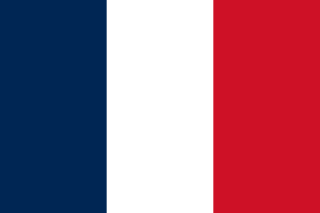
| National Colours | Blue, White, Red |
Cuisine
- Baguette and Croissant
- Coq au Vin
- Ratatouille
- French Onion Soup
Tourism Highlights
- The Louvre Museum (Paris)
- The Palace of Versailles
- The Côte d'Azur (French Riviera)
- The French Alps
Natural Wonders
- The Loire Valley (Châteaux)
- The Normandy Coast
- The French Riviera Beaches
Notable People
Napoléon Bonaparte, Victor Hugo, Albert Camus, Simone de Beauvoir
Fun Facts
- France is the birthplace of the concept of the modern republic.
- The French language is one of the world's most widely spoken and influential languages.
- The country's motto, 'Liberté, égalité, fraternité,' is inscribed on the Arc de Triomphe.
Military
| Branches | Army, Navy, Air Force, Gendarmerie |
|---|---|
| Personnel (Approx.) | 304,000 |
International Relations
| UN Member Since | 1945 |
|---|---|
| Organizations | European Union (EU), NATO |
| UNESCO Sites | 50 — Palace of Versailles, Mont Saint-Michel, Roman Pont du Gard |
Infrastructure & Environment
| Driving Side | Right |
|---|---|
| Electrical | 230V, 50 Hz (Type E, Type F) |
| Internet Users | 88.7% |
| Mobile Subscriptions | 116.7 per 100 people |
| CO₂ Emissions | 274.5 Mt |
| Renewable Energy | 16.2% |
Environmental Issues
- Water pollution in major rivers
- Coastal erosion due to sea-level rise
- Managing agricultural runoff
Communications
| International Calling Code | +33 |
|---|---|
| Internet TLD | .fr |
| Postal Code Format | ##### |
Emergency Services
External Links




 The EARF Engine