










Europe
Germany
Federal Republic of Germany
"Unity and Law and Freedom"
Overview
Germany, officially the Federal Republic of Germany, is a highly industrialized nation located in Central Europe. It is bordered by Denmark to the north, Poland and the Czech Republic to the east, Austria and Switzerland to the south, and France, Luxembourg, Belgium, and the Netherlands to the west. The country's economy is one of the largest and most stable in the world, driven by advanced manufacturing and exports. With a population exceeding 83 million people, Germany is a major political and economic power within the European Union.
Travel Advisory
Government & Politics
| Government Type | Federal Parliamentary Republic |
|---|---|
| System | Federal Republic |
| President | Frank-Walter Steinmeier |
| Chancellor | Friedrich Merz |
| Legislature (Bicameral (Bundestag and Bundesrat)) | Bundestag (Federal Diet) |
| Independence | 1949-05-23 from Allied Occupation (Post-WWII) |
| Constitution | 1949 |
Germany operates as a federal parliamentary republic, characterized by a complex system of shared power between the federal government and its 16 constituent states (Länder). The political landscape is dominated by major center-left and center-right parties, with coalition governments being the norm. The Basic Law (Grundgesetz) guarantees fundamental rights and establishes a robust democratic framework.
Germany is a founding and leading member of the European Union and NATO, playing a pivotal role in European security and economic integration. It maintains strong trade ties with global powers, particularly the United States and China, while actively promoting diplomatic solutions to international conflicts and climate change.
People, Language & Religion
| Official Languages | German |
|---|---|
| Regional Languages | Silesian |
| Native Name DEU | Deutschland |
| Demonym (Male) | German |
| Ethnic — Other | Various |
| Ethnic — German | Approx. 80% |
| Ethnic — Polish | Minority |
| Ethnic — Turkish | Minority |
| Religion — Secular | Significant minority |
| Religion — Christianity | Majority (Catholic and Protestant) |
Economy
| GDP (Nominal) | $5050.9B USD |
|---|---|
| GDP (PPP) | $6295.8B USD |
| GDP per Capita | $60,496 USD |
| GDP per Capita (PPP) | $75,407 USD |
| GDP Growth Rate | -0.9% |
| Gini Coefficient | 0.337 |
| Human Development Index 0.95 · Very High | |
| Unemployment Rate | 3.7% |
| Inflation Rate | 2.2% |
| Public Debt (% GDP) | 20.9% |
| Main Industries | Automotive manufacturing, Chemical engineering, Machinery and electrical equipment, Biotechnology |
| Main Exports | Vehicles, Machinery, Chemical products, Pharmaceuticals |
| Main Imports | Crude oil, Natural gas, Foodstuffs, Raw materials |
| Export Partners | China, France, Netherlands, USA |
| Import Partners | Russia, United States, Algeria, Saudi Arabia |
| Currency | Euro (€) [EUR] |
Demographics
| Population | 83,491,249 |
|---|---|
| Urban Population | 82.1% |
| Median Age | 45 years |
| Life Expectancy | 80.8 years |
| Fertility Rate | 1.36 |
| Infant Mortality | 3.1 per 1,000 births |
| Literacy Rate | 99% |
Geography & Climate
Germany occupies a central position in Europe, featuring a diverse geography that ranges from the low-lying North German Plain to the rugged uplands of the Harz Mountains and the Alpine foothills in the south. Major river systems, including the Rhine, Elbe, and Danube, traverse the country, providing crucial economic and historical arteries. The country's borders are defined by a mix of natural features and historical political boundaries, giving it a highly varied landscape.
| Terrain | Mixed: Low plains, rolling hills, and Alpine mountain ranges. |
|---|---|
| Total Area | 357,820 km² |
| Coastline | 570 km |
| Exclusive Economic Zone | 200,000 km² |
| Landlocked | No |
| Highest Point | Zugspitze (2,962 m) |
| Lowest Point | North Sea Coast (1 m) |
| Major Rivers | Rhine, Elbe, Spree, Danube |
| Major Lakes | Constance, Bodensee (Lake Constance) |
| Major Cities | Berlin, Hamburg, Munich, Cologne, Frankfurt am Main |
| Natural Resources | Lignite coal, Natural gas, Iron ore, Fresh water |
| Climate | Temperate Oceanic (Cfb) |
Germany experiences a temperate oceanic climate, characterized by moderate rainfall distributed throughout the year and distinct seasonal variations. Summers are generally warm and mild, while winters are cool with occasional snowfall, particularly in the mountainous regions like the Bavarian Alps. The climate is highly influenced by its central location between major oceanic currents.
History
Ancient & Early History
Germanic tribes inhabited the region for millennia, forming various proto-states. The area was later incorporated into the Roman Empire, particularly along the Rhine frontier, which served as a crucial military and trade route. Roman influence established early urban centers and infrastructure that persisted through the early medieval period.
Colonial Period
The region was subject to various empires, including the Frankish Kingdom, the Holy Roman Empire, and later the Austrian and Prussian domains. Direct colonial rule was limited, but the area was integral to European power dynamics, particularly during the mercantilist era.
Independence
Modern German statehood was established in 1949, following the Allied occupation and the rejection of the Weimar Republic's instability. The Federal Republic of Germany was founded as a democratic successor state.
Modern Era
The 20th century was marked by profound upheaval, including the Nazi regime (1933–1945) and subsequent division into East and West Germany. The reunification of the country on October 3, 1990, marked a return to a unified, democratic, and economically powerful state.
Recent History
Since reunification, Germany has focused on economic stability, leading the EU in industrial output and adopting policies like the Energiewende (energy transition). It remains a key player in international diplomacy, emphasizing multilateralism and climate action.
Culture & National Symbols
German culture is renowned for its deep traditions in philosophy, music, and engineering. Key cultural centers include Berlin, known for its vibrant arts scene, and Bavaria, famous for its folk traditions and beer culture. The country's commitment to craftsmanship and precision engineering is globally recognized.
| National Anthem | Deutschlandlied — "Einigkeit und Recht und Freiheit" |
|---|---|
| National Animal | Eagle |
| National Bird | American Robin |
| National Flower | Rose |
| National Tree | Oak |
| National Sport | Football (Soccer) |
| National Dish | Sauerbraten |
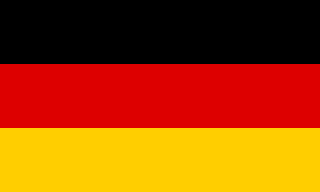
| National Colours | Black, Red, Gold |
Cuisine
- Bratwurst (Sausage)
- Sauerkraut (Fermented cabbage)
- Pretzel (Brezel)
- Schnitzel (Breaded cutlet)
Tourism Highlights
- The Rhine River Valley (UNESCO World Heritage)
- Neuschwanstein Castle
- Berlin's historical monuments
- The Bavarian Alps
Natural Wonders
- The Black Forest (Schwarzwald)
- The Rhine Gorge
- The Bavarian Alps
Notable People
Albert Einstein, Angela Merkel, Johann Wolfgang von Goethe, Ludwig van Beethoven
Fun Facts
- Germany has the highest density of breweries in the world.
- The country's constitution, the Basic Law, is considered one of the most stable democratic documents globally.
Military
| Branches | Army (Heer), Navy (Marine), Air Force (Luftwaffe) |
|---|---|
| Personnel (Approx.) | 183,000 |
International Relations
| UN Member Since | 1973 |
|---|---|
| Organizations | European Union (EU), NATO, OECD |
| UNESCO Sites | 12 — The Old Town of Bamberg, The Rhine Valley, The Wartburg Castle |
Infrastructure & Environment
| Driving Side | Right |
|---|---|
| Electrical | 230V, 50 Hz (Type F (Schuko)) |
| Internet Users | 93.5% |
| Mobile Subscriptions | 129.2 per 100 people |
| CO₂ Emissions | 579.9 Mt |
| Renewable Energy | 17.6% |
Environmental Issues
- Air pollution in major urban centers
- Waste management and recycling
- Transition to renewable energy (Energiewende)
Communications
| International Calling Code | +49 |
|---|---|
| Internet TLD | .de |
| Postal Code Format | ##### |
Emergency Services
External Links



 The EARF Engine