





Europe
Greece
Hellenic Republic
"Freedom or Death"
Overview
Greece, officially the Hellenic Republic, is a country located in the southeastern corner of the Balkan Peninsula in Europe. It is characterized by its complex geography, which includes a mainland connected by peninsulas and thousands of islands scattered across the Aegean and Ionian Seas. The nation's history is foundational to Western civilization, tracing roots from the ancient Minoan and Mycenaean civilizations through the Golden Age of Athens and the Roman Empire. Today, it is a modern republic with a strong cultural identity, and its capital, Athens, serves as a major cultural and political hub.
Travel Advisory
Government & Politics
| Government Type | Unitary Parliamentary Republic |
|---|---|
| System | Republic |
| President | Konstantinos Tasoulas |
| Prime Minister | Kyriakos Mitsotakis |
| Legislature (Bicameral (though often functions as a single body)) | Hellenic Parliament |
| Independence | 1830-01-21 from Ottoman Empire |
| Constitution | 1975 |
Greece is a unitary parliamentary republic with a decentralized administrative structure. Its political system is characterized by a multi-party democracy, though it has historically seen periods of instability and military intervention. The constitution guarantees fundamental rights and establishes a balance between the executive, legislative, and judicial branches.
Greece maintains strong historical and economic ties with the European Union, particularly through the Eurozone. It is a key member of NATO and plays a vital role in the Mediterranean geopolitical landscape. Its relationships with neighboring countries, such as Turkey and Albania, are often complex and subject to regional tensions.
People, Language & Religion
| Official Languages | Greek |
|---|---|
| Native Name ELL | Ελλάδα |
| Demonym (Male) | Greek |
| Ethnic — Greek | 99% |
| Religion — Greek Orthodox | 95% |
Economy
| GDP (Nominal) | $280.6B USD |
|---|---|
| GDP (PPP) | $471.4B USD |
| GDP per Capita | $26,948 USD |
| GDP per Capita (PPP) | $45,264 USD |
| GDP Growth Rate | 2.1% |
| Gini Coefficient | 0.334 |
| Human Development Index 0.925 · Very High | |
| Unemployment Rate | 8.5% |
| Inflation Rate | 2.5% |
| Public Debt (% GDP) | 160% |
| Main Industries | Tourism, Shipping, Agriculture (olives, grapes), Maritime services |
| Main Exports | Mineral fuels, Chemical products, Agricultural products, Services (tourism) |
| Main Imports | Petroleum products, Machinery, Consumer goods, Foodstuffs |
| Export Partners | Germany, United States, France |
| Import Partners | Germany, Italy, Turkey |
| Currency | Euro (€) [EUR] |
Demographics
| Population | 10,413,962 |
|---|---|
| Urban Population | 79.2% |
| Median Age | 40 years |
| Life Expectancy | 81.8 years |
| Fertility Rate | 1.24 |
| Infant Mortality | 3.2 per 1,000 births |
| Literacy Rate | 99% |
Geography & Climate
Geographically, Greece is defined by its fragmented nature, consisting of a mainland and over 2,000 islands. The mainland is dominated by rugged mountain ranges, such as Pindus and Taygetus, which create a highly dissected landscape. The country's extensive coastline, particularly along the Aegean Sea, is crucial to its identity and economy, making it a major maritime power.
| Terrain | Mountainous and island archipelago |
|---|---|
| Total Area | 131,990 km² |
| Coastline | 13,360 km |
| Exclusive Economic Zone | 1,319,900 km² |
| Landlocked | No |
| Highest Point | Mount Olympus (2,919 m) |
| Lowest Point | Sea level (0 m) |
| Major Rivers | Aliakmonas, Acheloos |
| Major Lakes | Lake Volos |
| Major Cities | Athens, Thessaloniki, Patras |
| Natural Resources | Oil and natural gas, Copper, Gold, Tourism potential |
| Climate | Mediterranean |
Greece experiences a classic Mediterranean climate, characterized by hot, dry summers and mild, wet winters. The climate varies significantly between the mainland and the islands, with mountainous regions exhibiting more continental influences. The Aegean islands, in particular, are known for their intense solar radiation and maritime influence.
History
Ancient & Early History
Greece is the birthplace of Western civilization, home to the Minoan civilization on Crete (c. 2700–1450 BCE) and the Mycenaean civilization (c. 1600–1100 BCE). The classical period saw the rise of the city-states (poleis), most famously Athens, which fostered democracy and philosophy, giving rise to figures like Socrates and Plato.
Colonial Period
Following the decline of the Roman Empire, the region was subjected to various powers, including the Byzantine Empire and later the Ottoman Empire. The Ottoman period lasted for nearly four centuries, profoundly influencing Greek culture, architecture, and social structures.
Independence
The Greek War of Independence (1821–1829) was a protracted struggle against the Ottoman Empire. Following international support, Greece achieved full independence in 1830, establishing the modern Greek state.
Modern Era
The 20th century saw Greece navigate periods of civil strife, military coups, and geopolitical tension, particularly during the Cold War. The country transitioned to a modern democracy, joining the European Economic Community (EEC) in 1981 and subsequently adopting the Euro currency.
Recent History
In the 21st century, Greece has faced significant economic challenges, including a severe debt crisis that required international bailouts from the European Union and the IMF. Despite these hurdles, the country has focused on tourism, renewable energy, and maintaining its cultural heritage.
Culture & National Symbols
Greek culture is renowned for its deep connection to classical antiquity, which forms the bedrock of Western philosophy, art, and democracy. The culture is highly visible in its cuisine, music, and the preservation of ancient sites, making it a major draw for global tourism.
| National Anthem | Hymn to Liberty — "Eleftheria i Thanatos" |
|---|---|
| National Animal | Stag |
| National Bird | Eagle |
| National Flower | Cyclamen |
| National Tree | Olive Tree |
| National Sport | Basketball |
| National Dish | Moussaka |
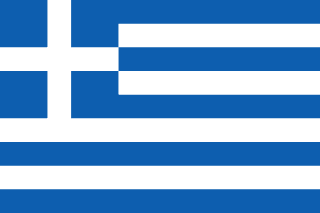
| National Colours | Blue, White |
Cuisine
- Moussaka
- Tzatziki
- Souvlaki
- Greek Salad
Tourism Highlights
- The Acropolis of Athens
- Santorini's caldera views
- Mykonos's beaches
- Crete's historical sites
Natural Wonders
- Mount Olympus
- Meteora Monasteries
- Sarkinian Islands
Notable People
Socrates, Plato, Aristotle, Mikhail Psarrakakis, Yiannis Komnenos
Fun Facts
- Greece is the birthplace of democracy.
- It possesses the longest coastline in the Mediterranean Basin.
- The Greek alphabet is one of the oldest surviving alphabets.
Military
| Branches | Army, Navy, Air Force |
|---|---|
| Personnel (Approx.) | 147,000 |
International Relations
| UN Member Since | 1945 |
|---|---|
| Organizations | Eurozone, NATO |
| UNESCO Sites | 16 — Acropolis of Athens, Ancient Agora of Athens, Delphi Archaeological Site, Meteora Monasteries |
Infrastructure & Environment
| Driving Side | Right |
|---|---|
| Electrical | 230V, 50 Hz (Type C, Type H) |
| Internet Users | 86.3% |
| Mobile Subscriptions | 113.6 per 100 people |
| CO₂ Emissions | 52.5 Mt |
| Renewable Energy | 21.5% |
Environmental Issues
- Coastal pollution
- Water scarcity in summer
- Waste management
Communications
| International Calling Code | +30 |
|---|---|
| Internet TLD | .gr |
| Postal Code Format | ### ## |
Emergency Services
External Links


 The EARF Engine