










Europe
Iceland
"Inspired by Iceland"
Overview
Iceland, officially the Republic of Iceland, is a sovereign island nation situated in the North Atlantic Ocean, positioned astride the Mid-Atlantic Ridge between the North American and Eurasian tectonic plates. It is a sparsely populated Nordic country, culturally and politically integrated with Europe, and is renowned for its dramatic geothermal and volcanic activity. The capital and largest urban area is Reykjavík, which serves as the primary hub for the nation's population of approximately 366,000 people. The country's unique geology, characterized by glaciers, lava fields, and powerful geothermal energy, defines its landscape and economy.
Travel Advisory
Government & Politics
| Government Type | Unitary Parliamentary Republic |
|---|---|
| System | Republic |
| President | Halla Tómasdóttir |
| Prime Minister | Kristrún Frostadóttir |
| Legislature (Unicameral) | Alþingi (Althing) |
| Independence | 1944-06-17 from British Occupation (de facto) |
| Constitution | 1944 |
Iceland operates as a unitary parliamentary republic with a strong emphasis on democratic institutions and social equality. The political landscape is generally characterized by multi-party cooperation, though coalition governments are common. The country maintains a high degree of political stability and is known for its commitment to human rights and environmental protection.
Iceland maintains close economic and cultural ties with the Nordic countries, particularly Denmark and Norway, and is a key member of the European Economic Area (EEA). Geopolitically, its location in the North Atlantic makes it a strategic partner for NATO and other international maritime security initiatives, while its commitment to environmentalism guides its foreign policy.
People, Language & Religion
| Official Languages | Icelandic |
|---|---|
| Native Name ISL | Ísland |
| Demonym (Male) | Icelander |
| Ethnic — Icelandic | 98% |
| Ethnic — Foreign/Other | 2% |
| Religion — Other | 10% |
| Religion — Atheist/Non-religious | 15% |
| Religion — Christianity (Lutheranism) | 75% |
Economy
| GDP (Nominal) | $38.6B USD |
|---|---|
| GDP (PPP) | $32.7B USD |
| GDP per Capita | $98,323 USD |
| GDP per Capita (PPP) | $83,431 USD |
| GDP Growth Rate | 3.5% |
| Gini Coefficient | 0.268 |
| Human Development Index 0.995 · Very High | |
| Unemployment Rate | 3.6% |
| Inflation Rate | 4.1% |
| Public Debt (% GDP) | 80.1% |
| Main Industries | Tourism, Fishing, Aluminum smelting, Renewable energy production |
| Main Exports | Fish products, Aluminum, Energy, Tourism services |
| Main Imports | Petroleum products, Manufactured goods, Foodstuffs |
| Export Partners | United Kingdom, Denmark, Netherlands |
| Import Partners | United Kingdom, Denmark, Germany |
| Currency | Icelandic króna (kr) [ISK] |
Demographics
| Population | 392,404 |
|---|---|
| Urban Population | 94.2% |
| Median Age | 37 years |
| Life Expectancy | 82.8 years |
| Fertility Rate | 1.56 |
| Infant Mortality | 2.1 per 1,000 births |
| Literacy Rate | 99% |
Geography & Climate
Located on the Mid-Atlantic Ridge, Iceland is a geologically active island characterized by a dramatic contrast between its volcanic highlands and low-lying coastal plains. The island is crisscrossed by massive glaciers, vast lava fields, and geothermal vents, making it one of the most geologically dynamic regions in the world. Major river systems, such as the Hvítá, flow through the lowlands, while the island's total coastline is extensive, bordering the North Atlantic and Arctic Oceans.
| Terrain | Volcanic plateau, glacial ice caps, lava fields, and geothermal hot spots. |
|---|---|
| Total Area | 103,000 km² |
| Coastline | 270 km |
| Exclusive Economic Zone | 2,000,000 km² |
| Landlocked | No |
| Highest Point | Hekla (1,262 m) |
| Lowest Point | Sea Level (0 m) |
| Major Rivers | Hvítá, Seyðarfjörður River |
| Major Lakes | Mývatn, Laugardalslaug |
| Major Cities | Reykjavík, Akureyri, Keflavík |
| Natural Resources | Geothermal energy, Hydroelectric power, Salmon, Aluminum ore |
| Climate | Subarctic/Temperate Oceanic |
Iceland experiences a subarctic climate heavily moderated by the warm North Atlantic Current (an extension of the Gulf Stream). This marine influence keeps the climate milder than its latitude suggests, resulting in cool summers and cool winters. Precipitation is generally high, and the weather is highly variable, characterized by frequent wind and rapid changes.
History
Ancient & Early History
Archaeological evidence suggests human settlement in Iceland dates back to the late 9th century, with the Norse settlers arriving around the late 9th or early 10th century. The island was initially settled by Viking explorers, who established a culture deeply rooted in Norse traditions and sagas.
Colonial Period
Iceland was not subject to a major continental empire. It was periodically influenced by Scandinavian powers, notably Norway, until it achieved greater autonomy. Its history is characterized by self-governance and resistance to foreign political control.
Independence
Iceland achieved de facto independence from Danish rule in the 19th century, and its modern political independence was solidified following the end of the British military occupation in 1944.
Modern Era
The 20th century saw Iceland develop a robust democratic system and a strong commitment to social welfare. Its unique geography and abundant geothermal resources allowed it to develop an early and comprehensive reliance on renewable energy, setting it as a global leader in sustainable power.
Recent History
In recent decades, Iceland has leveraged its natural resources and pristine environment to become a global hub for sustainable tourism and renewable energy technology. The country has also become a significant center for international finance and data processing, capitalizing on its stable political environment and skilled workforce.
Culture & National Symbols
Icelandic culture is deeply intertwined with its dramatic natural environment, fostering a unique blend of Norse mythology and modern progressive values. The country is famous for its literary tradition, its vibrant music scene, and its commitment to preserving the Icelandic language and sagas.
| National Anthem | Heimskringla — "Heimskringla" |
|---|---|
| National Animal | Arctic Fox |
| National Bird | Puffin |
| National Flower | Bluebell |
| National Tree | Birch |
| National Sport | Volleyball |
| National Dish | Plokkfiskur (Fish stew) |
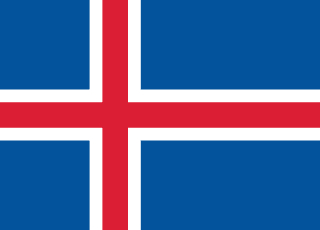
| National Colours | Blue, Red, White |
Cuisine
- Plokkfiskur (Fish stew)
- Skyr (Cultured dairy product)
- Lamb Soup (Kjötsúpa)
Tourism Highlights
- The Golden Circle route (Þingvellir, Geysir, Gullfoss)
- Northern Lights (Aurora Borealis)
- Black Sand Beaches (Reynisfjara)
- Glacier hiking
Natural Wonders
- Blue Lagoon
- Geysir Geothermal Area
- Jökull Glacier
Notable People
Jón Sigurðson, Bjarni Benediktsson, Hallgrímur Pétursson
Fun Facts
- Iceland has one of the highest rates of renewable energy utilization globally.
- The country is situated on the rift valley between the North American and Eurasian plates, making it one of the most seismically active places on Earth.
Military
| Branches | Icelandic Armed Forces (Army, Navy, Air Force) |
|---|
International Relations
| UN Member Since | 1946 |
|---|---|
| Organizations | Nordic Council, Schengen Area |
| UNESCO Sites | 1 — Whalebay Lagoon |
Infrastructure & Environment
| Driving Side | Left |
|---|---|
| Electrical | 230V, 50 Hz (Type C, Type F) |
| Internet Users | 98.2% |
| Mobile Subscriptions | 120.9 per 100 people |
| CO₂ Emissions | 3.3 Mt |
| Renewable Energy | 82.4% |
Environmental Issues
- Managing geothermal and volcanic risks
- Sustainable fishing quotas
- Climate change impact on glaciers
Communications
| International Calling Code | +354 |
|---|---|
| Internet TLD | .is |
| Postal Code Format | ### |
Emergency Services
External Links


 The EARF Engine