










Asia
India
Republic of India
"Truth alone triumphs"
Overview
India, officially the Republic of India, is a vast and diverse country located in the Indian subcontinent, forming the core of South Asia. It is recognized as the world's most populous nation and the seventh-largest by area. Geographically, it is bordered by Pakistan in the west, China, Nepal, and Bhutan in the north, and Bangladesh and Myanmar in the east, while its southern coast faces the Indian Ocean. The country's immense size and varied geography—ranging from the Himalayan peaks to tropical coastlines—have fostered a rich tapestry of cultures, languages, and economies. The capital region, centered around New Delhi, serves as the political and administrative hub for this rapidly developing global power.
Travel Advisory
Government & Politics
| Government Type | Federal Parliamentary Democratic Republic |
|---|---|
| System | Federal Republic |
| President | Droupadi Murmu |
| Prime Minister | Narendra Modi |
| Legislature (Bicameral) | Parliament of India |
| Independence | 1947-08-15 from United Kingdom (British Raj) |
| Constitution | 1950 |
India operates as a federal parliamentary democracy, where power is constitutionally divided between the central government and the state governments. The Prime Minister, who is the leader of the majority party in the Lok Sabha (the lower house of Parliament), serves as the head of government. The system is characterized by a multi-party electoral structure and a commitment to constitutional rights, though regional political dynamics remain complex.
India maintains complex and strategic relationships with global powers, balancing its ties between Western democracies (like the US and EU) and major economies (like Russia and the UAE). It is a founding member of the Non-Aligned Movement and plays a crucial role in regional forums like SAARC and the Quad, emphasizing its role as a stable democratic power in Asia.
People, Language & Religion
| Official Languages | Hindi, English |
|---|---|
| Regional Languages | Bengali, Tamil, Telugu, Marathi, Gujarati |
| Native Name ENG | India |
| Native Name HIN | भारत |
| Native Name TAM | இந்தியா |
| Demonym (Male) | Indian |
| Ethnic — Dravidian | Approx. 15% |
| Ethnic — Indo-Aryan | Approx. 75% |
| Ethnic — Scheduled Tribes | Approx. 10% |
| Religion — Islam | Approx. 14% |
| Religion — Jainism | Approx. 0.2% |
| Religion — Sikhism | Approx. 1% |
| Religion — Buddhism | Approx. 0.2% |
| Religion — Hinduism | Approx. 80% |
| Religion — Christianity | Approx. 2% |
Economy
| GDP (Nominal) | $3956.1B USD |
|---|---|
| GDP (PPP) | $17197.4B USD |
| GDP per Capita | $2,702 USD |
| GDP per Capita (PPP) | $11,748 USD |
| GDP Growth Rate | 6.5% |
| Gini Coefficient | 0.255 |
| Human Development Index 0.63 · Medium | |
| Unemployment Rate | 4.2% |
| Inflation Rate | 2.4% |
| Public Debt (% GDP) | 46.5% |
| Main Industries | Information Technology (IT), Agriculture, Textiles, Automobile Manufacturing |
| Main Exports | Refined Petroleum Products, Gems and Jewellery, Machinery, Pharmaceuticals |
| Main Imports | Crude Petroleum, Electronics Components, Fertilizers, Machinery |
| Export Partners | United States, United Arab Emirates, Germany |
| Import Partners | Saudi Arabia, China, Russia |
| Currency | Indian rupee (₹) [INR] |
Demographics
| Population | 1,463,865,525 |
|---|---|
| Urban Population | 35.7% |
| Median Age | 28.5 years |
| Life Expectancy | 72.2 years |
| Fertility Rate | 1.96 |
| Infant Mortality | 23.3 per 1,000 births |
| Literacy Rate | 78.2% |
Geography & Climate
The geography of India is incredibly varied, encompassing the massive Himalayan mountain range in the north, which is the source of major rivers like the Ganges and Indus. South of the Himalayas lie the Indo-Gangetic Plain, one of the world's most fertile agricultural regions. The peninsula itself features the Deccan Plateau, flanked by the Western and Eastern Ghats, culminating in the tropical coastlines and the Andaman and Nicobar Islands in the Bay of Bengal.
| Terrain | Mountainous, Plateau, and Coastal Plains |
|---|---|
| Total Area | 3,287,590 km² |
| Coastline | 7,516 km |
| Landlocked | No |
| Highest Point | Kanchenjunga (8,586 m) |
| Lowest Point | Gulf of Khambhat (10 m) |
| Major Rivers | Ganges (Ganga), Yamuna, Godavari, Krishna, Narmada, Indus |
| Major Lakes | Wular Lake, Chilika Lake, Pulicat Lake |
| Major Cities | Mumbai, Delhi, Bangalore, Kolkata |
| Natural Resources | Coal, Petroleum, Natural Gas, Iron Ore, Bauxite |
| Climate | Tropical Monsoon/Subtropical |
India exhibits a highly diverse climate, ranging from the arid and semi-arid conditions of the Thar Desert in the west to the tropical monsoon climate of the coastal regions. The Himalayan foothills experience temperate to alpine climates, while the southern peninsular regions are characterized by tropical wet and dry seasons, heavily influenced by the monsoon winds.
History
Ancient & Early History
The Indian subcontinent was home to some of the world's earliest civilizations, notably the Indus Valley Civilization (c. 3300–1300 BCE), which featured advanced urban planning and sophisticated drainage systems. Following this, the Vedic period saw the development of Hinduism and the establishment of early kingdoms, leading to the Mauryan Empire under Ashoka the Great (322–232 BCE), which spread Buddhism across Asia.
Colonial Period
The region was subjected to various foreign influences, including Greek, Roman, and later, the powerful empires of Persia and the Mughals. The British East India Company established significant control, culminating in the direct rule of the British Raj. This period of colonial rule profoundly shaped India's legal, administrative, and economic structures, leading to a long struggle for self-determination.
Independence
The Indian independence movement gained massive momentum through non-violent resistance, spearheaded by Mahatma Gandhi and the Indian National Congress. The culmination of this struggle led to the transfer of power from Britain, resulting in the formation of the Republic of India on August 15, 1947.
Modern Era
The early decades of the republic were marked by the drafting of a comprehensive constitution, establishing India as a sovereign, socialist, secular, and democratic republic. The country has since undergone rapid economic liberalization, transitioning from a largely agrarian economy to a global IT and services powerhouse, while simultaneously managing immense internal diversity and developmental challenges.
Recent History
In recent decades, India has solidified its role as a major global economic player, attracting significant foreign direct investment. The government has focused on infrastructure development, digital connectivity, and social welfare programs, positioning the nation as a key player in the geopolitical landscape of the 21st century.
Culture & National Symbols
Indian culture is one of the world's oldest and most complex, characterized by a syncretic blend of traditions. It is renowned for its classical arts, including Bharatanatyam and Kathak dance forms, and its rich literary heritage, which spans Sanskrit literature to modern regional languages. The festival circuit, including Diwali and Holi, showcases vibrant religious and social traditions.
| National Anthem | Jana Gana Mana — "Jana Gana Mana Adhinayaka Jaya" |
|---|---|
| National Animal | Bengal Tiger |
| National Bird | Indian Peafowl |
| National Flower | Lotus |
| National Tree | Banyan Tree |
| National Sport | Hockey |
| National Dish | Biryani |
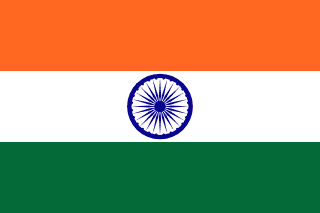
| National Colours | Saffron, White, Green |
Cuisine
- Curry (regional variations)
- Biryani
- Dosa
- Naan
- Samosa
Tourism Highlights
- Taj Mahal (Agra)
- Kerala Backwaters
- Varanasi Ghats
- Jaipur Forts
Natural Wonders
- Himalayan Mountains
- Western Ghats
- Sundarbans Mangrove Forest
Notable People
Mahatma Gandhi, Jawaharlal Nehru, Satyajit Ray, A.P.J. Abdul Kalam
Fun Facts
- India has more languages spoken than any other country.
- The Indian Constitution is the longest written constitution in the world.
- The Ganges River is considered sacred by Hindus.
Military
| Branches | Indian Army, Indian Navy, Indian Air Force, Indian Coast Guard |
|---|---|
| Personnel (Approx.) | 3,068,000 |
International Relations
| UN Member Since | 1947 |
|---|---|
| Organizations | G20, BRICS, SAARC |
| UNESCO Sites | 33 — Taj Mahal, Ajanta Caves, Ellora Caves, Hampi |
Infrastructure & Environment
| Driving Side | Left |
|---|---|
| Electrical | 230V, 50 Hz (Type D, Type C) |
| Internet Users | 70% |
| Mobile Subscriptions | 79.4 per 100 people |
| CO₂ Emissions | 3153.8 Mt |
| Renewable Energy | 34.9% |
Environmental Issues
- Air Pollution (especially in major cities)
- Water Scarcity
- Deforestation (in certain regions)
- Industrial Waste Management
Communications
| International Calling Code | +91 |
|---|---|
| Internet TLD | .in |
| Postal Code Format | ###### |
Emergency Services
External Links


 The EARF Engine