










Asia
Indonesia
Republic of Indonesia
"Unity in Diversity"
Overview
The Republic of Indonesia is a vast archipelagic state located in Southeast Asia and Oceania, situated between the Indian and Pacific Oceans. Comprising over 17,000 islands, including major landmasses like Sumatra, Java, Sulawesi, and parts of Borneo, it is the world's largest archipelagic nation. With a population exceeding 273 million people, Indonesia is the world's fourth most populous country and the most populous Muslim-majority nation. Its diverse geography, spanning tropical rainforests and volcanic peaks, has fostered a rich tapestry of cultures and languages.
Travel Advisory
Government & Politics
| Government Type | Federal Presidential Republic |
|---|---|
| System | Federal Republic |
| President | Prabowo Subianto |
| President | Prabowo Subianto |
| Legislature (Bicameral) | People's Consultative Assembly (MPR) and House of Representatives (DPR) |
| Independence | 1945-08-17 from Netherlands (Dutch East Indies) |
| Constitution | 1945 |
Indonesia is a highly decentralized federal republic composed of thousands of islands, giving it immense cultural and linguistic diversity. Its political system balances central government authority with significant regional autonomy. The political landscape is dynamic, marked by democratic elections and the ongoing negotiation of power between regional interests and national policy.
As a major ASEAN member and G20 participant, Indonesia maintains a policy of non-alignment and active diplomacy. It plays a crucial role in promoting maritime security and regional stability in the Indo-Pacific, balancing relationships between major global powers like the US, China, and Australia.
People, Language & Religion
| Official Languages | Indonesian |
|---|---|
| Regional Languages | Javanese, Sundanese, Batak, Minangkabau |
| Native Name IND | Indonesia |
| Demonym (Male) | Indonesian |
| Ethnic — Batak | Significant group in Sumatra |
| Ethnic — Javanese | Largest group, concentrated on Java |
| Ethnic — Sundanese | Major group, concentrated on West Java |
| Ethnic — Minangkabau | Major group in West Sumatra |
| Religion — Islam | Majority religion (over 87%) |
| Religion — Buddhism | Minority presence |
| Religion — Hinduism | Historical presence, particularly in Bali |
| Religion — Christianity | Significant minority |
Economy
| GDP (Nominal) | $1445.6B USD |
|---|---|
| GDP (PPP) | $5045.8B USD |
| GDP per Capita | $5,060 USD |
| GDP per Capita (PPP) | $17,660 USD |
| GDP Growth Rate | 5.1% |
| Gini Coefficient | 0.344 |
| Human Development Index 0.707 · High | |
| Unemployment Rate | 3.2% |
| Inflation Rate | 1.9% |
| Public Debt (% GDP) | 30% |
| Main Industries | Agriculture (Palm Oil, Rubber), Mining (Nickel, Coal), Manufacturing (Textiles, Electronics), Fisheries |
| Main Exports | Palm Oil, Coal, Nickel Ore, Rubber, Electronics |
| Main Imports | Machinery and Equipment, Petroleum Products, Chemicals, Iron Ore, Foodstuffs |
| Export Partners | China, Japan, United States, European Union |
| Import Partners | China, Japan, South Korea, Australia |
| Currency | Indonesian rupiah (Rp) [IDR] |
Demographics
| Population | 285,721,236 |
|---|---|
| Urban Population | 59.4% |
| Median Age | 30 years |
| Life Expectancy | 71.3 years |
| Fertility Rate | 2.12 |
| Infant Mortality | 15.2 per 1,000 births |
| Literacy Rate | 96% |
Geography & Climate
The Indonesian archipelago is a massive collection of islands situated at the convergence of the Indian and Pacific tectonic plates. Its geography is characterized by extreme biodiversity, numerous active volcanoes, and complex maritime boundaries. Major islands include Sumatra, Java, Borneo (Kalimantan), Sulawesi, and Papua (New Guinea). The country's location makes it a critical global maritime crossroads.
| Terrain | Volcanic, mountainous, and heavily archipelagic |
|---|---|
| Total Area | 1,904,569 km² |
| Coastline | 9,900 km |
| Exclusive Economic Zone | 5,200,000 km² |
| Landlocked | No |
| Highest Point | Mount William (3,284 m) |
| Lowest Point | Sea level (0 m) |
| Major Rivers | Kapuas River, Musi River, Mahakam River |
| Major Lakes | Lake Toba |
| Major Cities | Jakarta, Surabaya, Bandung, Medan |
| Natural Resources | Palm oil, Nickel, Copper, Coal, Timber, Natural Gas |
| Climate | Tropical Rainforest/Monsoonal |
Indonesia experiences a tropical monsoon climate, characterized by high temperatures and high humidity year-round. The climate is heavily influenced by the seasonal monsoons, resulting in distinct wet and dry seasons. Volcanic activity contributes to fertile soil and unique biodiversity across the archipelago.
History
Ancient & Early History
The region was home to various sophisticated cultures, including the powerful Srivijaya Empire (7th–13th centuries) and the Majapahit Empire (13th–15th centuries). These ancient kingdoms established extensive maritime trade networks, making the islands crucial hubs along the Spice Routes.
Colonial Period
Indonesia was subjected to centuries of European colonial rule, most notably by the Dutch (Dutch East India Company, VOC). The Dutch presence was characterized by forced labor, resource extraction, and attempts to control the lucrative spice trade, leading to significant resistance movements.
Independence
The struggle for independence culminated in 1945, when Sukarno and Mohammad Hatta proclaimed the Republic of Indonesia. The ensuing revolution involved armed conflict against the returning Dutch forces, culminating in international recognition.
Modern Era
Following the initial struggles, Indonesia transitioned through periods of authoritarian rule (e.g., the New Order under Suharto) before democratizing in the late 1990s. The country has since undergone significant political and economic reforms, establishing itself as a major regional power.
Recent History
In recent decades, Indonesia has focused on economic diversification, infrastructure development, and maintaining regional stability. It has become a key player in global supply chains, particularly in the mining and energy sectors, while navigating complex internal political dynamics.
Culture & National Symbols
Indonesian culture is a vibrant synthesis of indigenous traditions, Islamic influences, and colonial history. The arts are renowned for their intricate batik textiles, traditional dance forms (like the Balinese Legong), and gamelan music, which are deeply intertwined with local spiritual beliefs.
| National Anthem | Indonesia Raya — "Indonesia tanah airku" |
|---|---|
| National Animal | Komodo Dragon |
| National Bird | Cendrawasih (Bird-of-Paradise) |
| National Flower | Rafflesia |
| National Tree | Meranti |
| National Sport | Badminton |
| National Dish | Nasi Goreng |
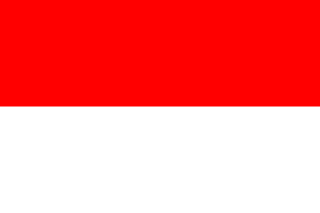
| National Colours | Red, White |
Cuisine
- Nasi Goreng (Fried Rice)
- Rendang (Spiced Beef)
- Satay (Skewered Meat)
- Gado-Gado (Vegetable Salad)
Tourism Highlights
- Bali (Culture and Beaches)
- Komodo National Park (Reptiles and Marine Life)
- Borobudur Temple (Buddhist Architecture)
- Raja Ampat (Underwater Biodiversity)
Natural Wonders
- Komodo National Park
- Mount Bromo
- Raja Ampat Marine Park
Notable People
Sukarno, Mohammad Hatta, Joko Widodo
Fun Facts
- Indonesia is the world's largest archipelagic state.
- The country is home to the Komodo dragon, the world's largest lizard.
- The motto 'Bhinneka Tunggal Ika' translates to 'Unity in Diversity'.
Military
| Branches | TNI Army, TNI Navy, TNI Air Force |
|---|---|
| Personnel (Approx.) | 676,000 |
International Relations
| UN Member Since | 1950 |
|---|---|
| Organizations | ASEAN, G20 |
| UNESCO Sites | 10 — Borobudur Temple, Prambanan Temple, Komodo National Park |
Infrastructure & Environment
| Driving Side | Right |
|---|---|
| Electrical | 220V, 50 Hz (Type C, Type F) |
| Internet Users | 72.8% |
| Mobile Subscriptions | 122.5 per 100 people |
| CO₂ Emissions | 812.2 Mt |
| Renewable Energy | 20.2% |
Environmental Issues
- Deforestation (especially in Borneo and Sumatra)
- Marine Plastic Pollution
- Coastal Erosion
- Volcanic Activity Management
Communications
| International Calling Code | +62 |
|---|---|
| Internet TLD | .id |
| Postal Code Format | ##### |
Emergency Services
External Links


 The EARF Engine