





Middle East
Iraq
Republic of Iraq
"Tourism not terrorism"
Overview
Iraq, officially the Republic of Iraq, is a country located in the heart of Western Asia, forming a critical geopolitical crossroads in the Middle East. It is bordered by Turkey to the north, Syria to the west, Jordan to the southwest, Kuwait and the Persian Gulf to the southeast, Saudi Arabia to the south, and Iran to the east. The country's history is profoundly intertwined with major civilizations, serving as the cradle of Mesopotamian culture, home to the ancient Sumerians, Akkadians, Babylonians, and Assyrians. The capital and largest city is Baghdad, which has historically been a center of learning and power. The population is highly diverse, comprising Arabs, Kurds, Turkmen, and various religious minorities, all contributing to a complex cultural tapestry.
Travel Advisory
Government & Politics
| Government Type | Federal Presidential Republic |
|---|---|
| System | Federal Republic |
| President | Nizar Amidi |
| Prime Minister | Ali al-Zaidi |
| Legislature (Unicameral) | Council of Representatives |
| Independence | 1932-03-28 from British Mandate |
| Constitution | 2005 |
Iraq is constitutionally a federal republic, designed to accommodate its diverse ethnic and sectarian makeup. The political system is characterized by a complex power-sharing arrangement among major groups. The government structure involves a President (Head of State) and a Prime Minister (Head of Government), with the Council of Representatives serving as the legislature. Political stability remains a primary challenge, requiring continuous negotiation between federal and regional authorities.
Iraq maintains complex and often strained relationships with its neighbors, including Iran, Turkey, and Saudi Arabia, due to historical rivalries and sectarian differences. Economically, it relies heavily on trade with regional powers and international investment, particularly in the energy sector. Its foreign policy aims to balance regional influences while asserting its sovereignty and promoting stability in the Gulf region.
People, Language & Religion
| Official Languages | Arabic |
|---|---|
| Regional Languages | Kurdish, Assyrian, Turkmen |
| Native Name ARA | العراق |
| Native Name ARC | ܩܘܼܛܢܵܐ |
| Native Name CKB | کۆماری |
| Demonym (Male) | Iraqi |
| Ethnic — Arabs | Majority group, forming the core of the population. |
| Ethnic — Kurds | Large ethnic group, primarily residing in the Kurdistan Region. |
| Ethnic — Yazidis | Religious minority, historically concentrated in Sinjar. |
| Ethnic — Persians | Minority group, particularly in the south. |
| Ethnic — Turkmens | Significant minority group, particularly in northern areas. |
| Ethnic — Armenians | Minority group with historical presence. |
| Ethnic — Assyrians | Christian minority with ancient roots. |
| Ethnic — Mandaeans | Religious minority with ancient roots. |
| Religion — Islam | Dominant religion, encompassing Sunni and Shia branches. |
| Religion — Judaism | Historical and contemporary minority presence. |
| Religion — Yazidism | Recognized minority religion. |
| Religion — Christianity | Significant minority, including various denominations. |
Economy
| GDP (Nominal) | $254.4B USD |
|---|---|
| GDP (PPP) | $670.8B USD |
| GDP per Capita | $5,410 USD |
| GDP per Capita (PPP) | $14,267 USD |
| GDP Growth Rate | 4.5% |
| Gini Coefficient | 0.298 |
| Human Development Index 0.68 · Medium | |
| Unemployment Rate | 15.5% |
| Inflation Rate | 0.3% |
| Public Debt (% GDP) | 27.4% |
| Main Industries | Oil and Gas Extraction, Construction, Agriculture, Trade and Services |
| Main Exports | Crude Oil, Natural Gas, Petrochemical Products |
| Main Imports | Foodstuffs, Machinery and Equipment, Fuel Oil, Pharmaceuticals |
| Export Partners | China, India, Saudi Arabia, Turkey |
| Import Partners | Iran, Turkey, Saudi Arabia |
| Currency | Iraqi dinar (ع.د) [IQD] |
Demographics
| Population | 47,020,774 |
|---|---|
| Urban Population | 69.9% |
| Median Age | 23 years |
| Life Expectancy | 72.4 years |
| Fertility Rate | 3.22 |
| Infant Mortality | 20.1 per 1,000 births |
| Literacy Rate | 80% |
Geography & Climate
The country's geography is dominated by the Mesopotamian plain, a vast alluvial basin formed by the Tigris and Euphrates rivers. This fertile plain, which covers much of the central region, is historically crucial for agriculture and civilization. The northern border, however, is marked by the Zagros Mountains, a rugged and geologically significant range. The southern regions transition into coastal plains near the Persian Gulf, while the eastern border is defined by the Iranian plateau.
| Terrain | Alluvial plain (Mesopotamia) with mountainous northern borders (Zagros) |
|---|---|
| Total Area | 438,317 km² |
| Coastline | 110 km |
| Exclusive Economic Zone | 438,317 km² |
| Landlocked | No |
| Highest Point | Mount Sinjar (1,412 m) |
| Lowest Point | Persian Gulf (0 m) |
| Major Rivers | Tigris River, Euphrates River |
| Major Lakes | Lake Mesopotamian |
| Major Cities | Baghdad, Erbil, Basra, Kirkuk |
| Natural Resources | Oil and Natural Gas, Potash, Minerals (Gypsum, Limestone), Fertile Agricultural Land |
| Climate | Arid/Semi-arid |
Iraq experiences a predominantly arid to semi-arid climate, characterized by extreme temperature variations between seasons. Summers are intensely hot, while winters can be cool, especially in the northern mountainous regions. Rainfall is generally low and unpredictable, making water management and agriculture challenging outside of major river systems.
History
Ancient & Early History
Mesopotamia, the land between the rivers Tigris and Euphrates, was one of the earliest centers of human civilization. It was home to the Sumerians, who developed the first writing system (cuneiform) and advanced urban planning. Later, it was ruled by the Akkadian Empire, the Babylonian Empire (including Hammurabi's code), and the Assyrian Empire, establishing it as a pivotal hub of ancient global power.
Colonial Period
Iraq's modern history was shaped by its status as a British Mandate following the collapse of the Ottoman Empire after World War I. The British administration sought to stabilize the region and manage the oil resources, leading to complex political arrangements and internal tensions among the diverse ethnic and sectarian groups.
Independence
Iraq declared its independence in 1932, though its political stability and borders have been subject to numerous revisions and conflicts since then.
Modern Era
The country experienced significant political upheaval throughout the latter half of the 20th century, marked by internal conflicts, civil wars, and the rise of various militant groups. The 2003 US-led invasion led to the dismantling of the existing state structure, followed by a prolonged period of reconstruction and sectarian violence.
Recent History
In the 21st century, Iraq has focused on rebuilding its infrastructure and economy while navigating complex geopolitical pressures from regional powers. The government has worked to establish a federal system that grants greater autonomy to the Kurdistan Region, aiming for long-term stability and economic diversification away from oil.
Culture & National Symbols
Iraqi culture is a rich synthesis of Mesopotamian traditions, Islamic scholarship, and diverse regional influences. Baghdad, in particular, was historically a global intellectual center, famous for the House of Wisdom. The cuisine and arts reflect the confluence of Arab, Persian, and Mesopotamian heritage, making it a deeply layered cultural experience.
| National Anthem | Mawtini — "My Homeland" |
|---|---|
| National Animal | Gazelle |
| National Bird | Iraqi Falcon |
| National Flower | Iris |
| National Tree | Date Palm |
| National Sport | Football (Soccer) |
| National Dish | Maqluba |
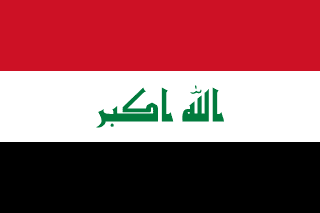
| National Colours | Red, White, Black |
Cuisine
- Maqluba (a layered rice and meat dish)
- Dolma (stuffed vegetables)
- Kabsa (spiced rice dish)
Tourism Highlights
- Ancient ruins of Babylon and Ur
- Historical sites in the Kurdistan Region (e.g., Erbil Citadel)
- The Tigris and Euphrates river landscapes
Natural Wonders
- The Mesopotamian Marshes
- The Tigris and Euphrates River Valley
Notable People
Saddam Hussein, Mustafa Kamal, Nuri al-Maliki
Fun Facts
- Iraq is often referred to as the 'Cradle of Civilization' due to its role in early human development.
- The Tigris and Euphrates rivers are crucial to the country's agricultural and historical life.
Military
| Branches | Army, Air Force, Navy |
|---|---|
| Personnel (Approx.) | 459,000 |
International Relations
| UN Member Since | 1961 |
|---|---|
| Organizations | Arab League, Gulf Cooperation Council (GCC) |
| UNESCO Sites | 1 — Ancient City of Babylon |
Infrastructure & Environment
| Driving Side | Right |
|---|---|
| Electrical | 220V, 50 Hz (Type C, Type D) |
| Internet Users | 81.5% |
| Mobile Subscriptions | 100.1 per 100 people |
| CO₂ Emissions | 238.7 Mt |
| Renewable Energy | 1.1% |
Environmental Issues
- Water scarcity and pollution
- Desertification
- Oil spill contamination
Communications
| International Calling Code | +964 |
|---|---|
| Internet TLD | .iq |
| Postal Code Format | ##### |
Emergency Services
External Links


 The EARF Engine