










Europe
Ireland
United Kingdom of Great Britain and Northern Ireland
"Ireland the Island"
Overview
Ireland is an island nation located in the North Atlantic Ocean, situated off the east coast of Great Britain. Geographically, it is the second-largest island of the British Isles and the third-largest in Europe. The island is politically divided between the sovereign Republic of Ireland and Northern Ireland, which remains part of the United Kingdom. The island's landscape is characterized by rolling green hills, dramatic coastlines, and a rich blend of historical and cultural sites. Historically, it has been a focal point for various empires, from the ancient Celts to the British Crown, shaping its unique identity.
Travel Advisory
Government & Politics
| Government Type | Republic / De Facto Parliamentary Democracy |
|---|---|
| System | Parliamentary Republic |
| President | Catherine Connolly (acting) |
| Taoiseach (Prime Minister) | Micheál Martin |
| Legislature (Bicameral (Dáil Éireann and Seanad Éireann)) | Oireachtas (Parliament) |
| Independence | 1922-12-11 from United Kingdom |
| Constitution | 1937 |
The Republic of Ireland is a unitary, parliamentary democracy. Its political system is characterized by a strong emphasis on consensus and civil rights. The government operates through a cabinet led by the Taoiseach, who is drawn from the Dáil Éireann (the lower house of the Oireachtas). The political landscape is dominated by parties advocating for EU membership and economic stability.
Ireland maintains close economic and political ties with the European Union and the United Kingdom. Its foreign policy emphasizes multilateralism, human rights, and international development. Relations with the United States are particularly strong, forming a key pillar of its economic and cultural partnerships.
People, Language & Religion
| Official Languages | Irish (Gaeilge) |
|---|---|
| National Languages | English, Irish |
| Regional Languages | English |
| Native Name ENG | United Kingdom |
| Demonym (Male) | British |
| Ethnic — Irish | Majority |
| Ethnic — British | Minority |
| Religion — Islam | Small Minority |
| Religion — Catholicism | Majority |
| Religion — Protestantism | Significant Minority |
Economy
| GDP (Nominal) | $721.7B USD |
|---|---|
| GDP (PPP) | $850.6B USD |
| GDP per Capita | $131,592 USD |
| GDP per Capita (PPP) | $155,089 USD |
| GDP Growth Rate | 3.5% |
| Gini Coefficient | 0.29 |
| Human Development Index 0.91 · Very High | |
| Unemployment Rate | 4.6% |
| Inflation Rate | 2.2% |
| Public Debt (% GDP) | 60% |
| Main Industries | Pharmaceuticals, Technology, Financial Services, Agriculture |
| Main Exports | Pharmaceutical products, Machinery, Foodstuffs, Electronics |
| Main Imports | Oil and gas, Machinery, Chemicals, Consumer goods |
| Export Partners | United States, United Kingdom, Germany |
| Import Partners | United Kingdom, United States, Germany |
| Currency | British pound (£) [GBP] |
Demographics
| Population | 5,484,367 |
|---|---|
| Urban Population | 64.6% |
| Median Age | 34 years |
| Life Expectancy | 83 years |
| Fertility Rate | 1.47 |
| Infant Mortality | 3.4 per 1,000 births |
| Literacy Rate | 99.5% |
Geography & Climate
Located in the North Atlantic, Ireland is an island with a diverse topography, featuring rolling green pastures, rugged mountain ranges like the Wicklow Mountains, and extensive coastal areas. The geography is defined by its proximity to Great Britain and the rich maritime history of the region. The island's relatively low elevation contributes to its fertile agricultural land and picturesque scenery.
| Terrain | Rolling hills, coastal plains, and mountainous regions |
|---|---|
| Total Area | 111,000 km² |
| Coastline | 500 km |
| Exclusive Economic Zone | 100,000 km² |
| Landlocked | No |
| Highest Point | Carrauntoohil (1,038 m) |
| Lowest Point | Coastal areas (0 m) |
| Major Rivers | River Shannon, River Liffey |
| Major Lakes | Lough Neagh, Lough Derg |
| Major Cities | Dublin, Cork, Galway, Limerick |
| Natural Resources | Agricultural land, Peat, Mineral deposits (e.g., copper, zinc) |
| Climate | Temperate Oceanic (Cfb) |
Ireland experiences a temperate oceanic climate, characterized by mild winters and cool summers. Rainfall is distributed relatively evenly throughout the year, making it one of the wettest countries in Europe. The climate is moderated by the surrounding Atlantic Ocean, preventing extreme temperature variations.
History
Ancient & Early History
The island was inhabited by various groups, most notably the Celts, who established sophisticated tribal societies. Archaeological evidence points to continuous habitation dating back to the Neolithic period, with advanced megalithic structures like passage tombs found across the landscape.
Colonial Period
Ireland was subjected to various foreign powers, including the Romans, the Anglo-Saxons, and later the English Crown. The period of English rule, particularly following the Tudor conquest, led to significant cultural and political upheaval, culminating in the Plantations and the subsequent struggle for self-determination.
Independence
The struggle for independence intensified in the late 18th and 19th centuries. The Anglo-Irish War and the subsequent Irish War of Independence led to the Anglo-Irish Treaty of 1921, resulting in the establishment of the Irish Free State, which eventually became the Republic of Ireland.
Modern Era
The Republic of Ireland achieved full sovereignty and recognition in the 1930s. Since then, the country has undergone significant economic transformation, moving from an agrarian economy to a global hub for technology and pharmaceuticals, attracting substantial foreign direct investment.
Recent History
In recent decades, Ireland has solidified its position within the European Union and the global economy. It has maintained a strong commitment to international law and trade, while navigating complex political relationships with the United Kingdom regarding the island's border and constitutional status.
Culture & National Symbols
Irish culture is globally renowned for its vibrant music, storytelling, and literary tradition. Key cultural expressions include the pub scene, traditional music sessions (seisiúns), and the celebration of Gaelic heritage. The country's deep connection to its Celtic roots remains a defining feature of its national identity.
| National Anthem | Amhrán na bhFiann (The Soldier's Song) — "Amhrán na bhFiann, amhrán na bhFiann" |
|---|---|
| National Animal | Irish Elk (Mythological) |
| National Bird | Peregrine Falcon |
| National Flower | Shamrock |
| National Tree | Oak |
| National Sport | Gaelic Football |
| National Dish | Irish Stew |
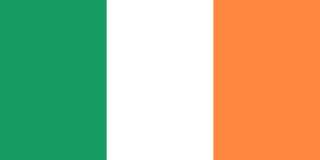
| National Colours | Green, White, Orange |
Cuisine
- Irish Stew (lamb or mutton with potatoes and carrots)
- Soda Bread
- Colcannon (mashed potatoes with cabbage or kale)
Tourism Highlights
- The Cliffs of Moher (County Clare)
- The Ring of Kerry (County Kerry)
- Dublin's Temple Bar district
- The Giant's Causeway (Northern Ireland)
Natural Wonders
- The Cliffs of Moher
- Skellig Michael
- Lough Neagh
Notable People
Seánรัฐ (Saint Patrick), W.B. Yeats, Oscar Wilde, Paul Yeats
Fun Facts
- Ireland is the only country in the world whose name is derived from the Latin word for 'island' (Hibernia).
- The Irish language (Gaeilge) is one of the few Celtic languages still spoken today.
Military
| Branches | Army, Navy, Air Corps |
|---|---|
| Personnel (Approx.) | 9,000 |
International Relations
| UN Member Since | 1966 |
|---|---|
| Organizations | European Union (EU) |
| UNESCO Sites | 1 — Skellig Michael |
Infrastructure & Environment
| Driving Side | Left |
|---|---|
| Electrical | 230V, 50 Hz (Type G) |
| Internet Users | 97.2% |
| Mobile Subscriptions | 112.6 per 100 people |
| CO₂ Emissions | 32.6 Mt |
| Renewable Energy | 12.7% |
Environmental Issues
- Coastal erosion
- Agricultural runoff and water quality
- Sustainable management of peatlands
Communications
| International Calling Code | +44 |
|---|---|
| Internet TLD | .uk |
| Postal Code Format | @# #@@|@## #@@|@@# #@@|@@## #@@|@#@ #@@|@@#@ #@@|GIR0AA |
Emergency Services
External Links

 The EARF Engine