





Europe
Italy
Italian Republic
"Made in Italy"
Overview
Italy, officially the Italian Republic, is a nation located in Southern and Western Europe. It is characterized by a large peninsula that extends into the Mediterranean Sea, bordered by the Alps to the north and sharing land borders with France, Switzerland, Austria, Slovenia, and the enclaves of Vatican City and San Marino. The country is renowned for its diverse geography, which includes mountainous regions, fertile plains, and nearly 800 islands, most notably Sicily and Sardinia. With a population of approximately 59.5 million people, Italy's cultural and historical significance is immense, making it a cradle of Western civilization and a major economic power in the European Union.
Travel Advisory
Government & Politics
| Government Type | Unitary Parliamentary Republic |
|---|---|
| System | Republic |
| President | Sergio Mattarella |
| President of the Council of Ministers | Giorgia Meloni |
| Legislature (Bicameral) | Parliament of Italy |
| Independence | null from null |
| Constitution | 1948 |
Italy is a parliamentary republic with a complex, multi-party political system. The government is formed by a coalition of parties, led by the Prime Minister, who must maintain the confidence of the Parliament. The political landscape is often characterized by shifting alliances and regionalist movements, balancing national interests with the autonomy of its constituent regions.
Italy is a founding and key member of the European Union and NATO, maintaining strong diplomatic and economic ties with its neighbors, particularly France and Germany. It plays an active role in Mediterranean security and international cooperation, balancing its historical ties with the Middle East and North Africa with its commitment to Western alliances.
People, Language & Religion
| Official Languages | Italian |
|---|---|
| Regional Languages | Sardinian, Corsican |
| Native Name ITA | Italia |
| Demonym (Male) | Italian |
| Ethnic — Italian | Majority |
| Ethnic — Corsican | Minority |
| Ethnic — Sardinian | Minority |
| Religion — Islam | Minority |
| Religion — Judaism | Minority |
| Religion — Catholicism | Majority |
Economy
| GDP (Nominal) | $2551.6B USD |
|---|---|
| GDP (PPP) | $3700.1B USD |
| GDP per Capita | $43,309 USD |
| GDP per Capita (PPP) | $62,803 USD |
| GDP Growth Rate | 0.8% |
| Gini Coefficient | 0.343 |
| Human Development Index 0.92 · Very High | |
| Unemployment Rate | 6.4% |
| Inflation Rate | 1.5% |
| Public Debt (% GDP) | 77.3% |
| Main Industries | Fashion and Textiles, Automotive Manufacturing, Tourism, Food Processing, Machinery |
| Main Exports | Machinery, Vehicles, Pharmaceuticals, Food Products, Chemicals |
| Main Imports | Energy Products, Raw Materials, Machinery Components, Petroleum Products |
| Export Partners | Germany, France, United States, China |
| Import Partners | Germany, France, United States |
| Currency | Euro (€) [EUR] |
Demographics
| Population | 58,915,656 |
|---|---|
| Urban Population | 69.7% |
| Median Age | 43 years |
| Life Expectancy | 84 years |
| Fertility Rate | 1.18 |
| Infant Mortality | 2.3 per 1,000 births |
| Literacy Rate | 99% |
Geography & Climate
The Italian peninsula is a prominent feature of Southern Europe, extending into the Mediterranean Sea. Its geography is highly varied, encompassing the rugged Apennine mountain range running down its spine, the fertile Po Valley in the north, and numerous islands such as Sicily and Sardinia. The country's position has historically made it a crossroads of major civilizations, influencing its diverse culture and economy.
| Terrain | Mountainous, featuring the Apennines, Po Valley, and numerous islands. |
|---|---|
| Total Area | 301,336 km² |
| Coastline | 1 km |
| Exclusive Economic Zone | 1,000,000 km² |
| Landlocked | No |
| Highest Point | Corno Grande (2,912 m) |
| Lowest Point | Adriatic Sea (0 m) |
| Major Rivers | Po River, Arno River, Tiber River |
| Major Lakes | Lake Garda, Lake Como, Lake Maggiore |
| Major Cities | Rome, Milan, Naples, Turin, Palermo |
| Natural Resources | Natural Gas, Oil, Agricultural Land, Mineral Deposits |
| Climate | Mediterranean |
Italy primarily experiences a Mediterranean climate, characterized by hot, dry summers and mild, wet winters. Alpine regions in the north feature a distinct alpine climate with heavy snowfall and cold temperatures. The northern Po Valley has a more temperate continental influence, while the islands exhibit tropical influences in some areas.
History
Ancient & Early History
Ancient Italy was the heartland of the Roman Republic and Empire, which dominated the Mediterranean basin for centuries. Major centers of civilization included the Greek colonies and the Etruscan kingdoms. The Roman influence profoundly shaped Western law, language, and governance, leaving an indelible mark on the continent.
Colonial Period
Italy was involved in various colonial ventures, notably in Eritrea, Somalia, and Libya, during the late 19th and early 20th centuries. These periods of imperial ambition contributed to the rise of Fascism and the subsequent World War II involvement.
Independence
Italy achieved a degree of unification through the efforts of various political figures, culminating in the establishment of the Kingdom of Italy in 1861. The modern Italian Republic was formally established in 1946, following the collapse of the monarchy and the Allied occupation.
Modern Era
The 20th century saw Italy navigate periods of intense political turmoil, including the rise of Benito Mussolini's Fascist regime. After the devastation of World War II, the country underwent a period of rapid economic reconstruction and growth, becoming a key member of the European Economic Community.
Recent History
In recent decades, Italy has maintained its status as a major Mediterranean economy, focusing on high-value manufacturing, luxury goods, and tourism. However, it has faced challenges related to high public debt, demographic decline, and regional economic disparities, leading to ongoing structural reforms.
Culture & National Symbols
Italian culture is globally recognized for its profound contributions to the arts, architecture, and cuisine. From the Renaissance masterpieces of Florence to the Roman ruins, the country offers an unparalleled immersion into Western artistic history. Fashion, opera, and gastronomy are cornerstones of its cultural identity.
| National Anthem | Il Canto degli Italiani — "Viva l'Italia, viva il popolo" |
|---|---|
| National Animal | Italian Wolf |
| National Bird | White Stork |
| National Flower | Lily |
| National Tree | Olive Tree |
| National Sport | Football (Calcio) |
| National Dish | Pizza |
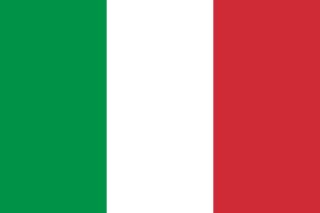
| National Colours | Green, White, Red |
Cuisine
- Pizza
- Pasta
- Risotto
- Tiramisu
- Gelato
Tourism Highlights
- Colosseum and Roman Forum
- Venice canals
- Amalfi Coast
- Tuscan countryside
- Cinque Terre
Natural Wonders
- Dolomites
- Amalfi Coast
- Po Valley Wetlands
Notable People
Leonardo da Vinci, Michelangelo, Raphael, Dante Alighieri, Galileo Galilei
Fun Facts
- Italy is the birthplace of the Euro currency.
- The country's historical influence shaped the development of modern European law and governance.
- The Italian language is a Romance language, descended from Vulgar Latin.
Military
| Branches | Army, Navy, Air Force |
|---|---|
| Personnel (Approx.) | 338,000 |
International Relations
| UN Member Since | 1955 |
|---|---|
| Organizations | European Union (EU), NATO |
| UNESCO Sites | 50 — Colosseum, Pompeii, Venice, Piazza del Campo |
Infrastructure & Environment
| Driving Side | Right |
|---|---|
| Electrical | 230V, 50 Hz (Type L) |
| Internet Users | 89.2% |
| Mobile Subscriptions | 132.6 per 100 people |
| CO₂ Emissions | 299.2 Mt |
| Renewable Energy | 17.5% |
Environmental Issues
- Coastal erosion
- Water management in the Po Valley
- Waste management and pollution
Communications
| International Calling Code | +39 |
|---|---|
| Internet TLD | .it |
| Postal Code Format | ##### |
Emergency Services
External Links


 The EARF Engine