






Asia
Kazakhstan
Republic of Kazakhstan
"The land of wonders"
Overview
Kazakhstan, officially the Republic of Kazakhstan, is a vast, landlocked country situated in Central Asia, with a small extension into Eastern Europe. It is the world's ninth-largest country by area, boasting a diverse geography that ranges from arid steppes and deserts to fertile agricultural lands and the massive Caspian Sea coast. Bordered by Russia, China, Kyrgyzstan, Uzbekistan, and Turkmenistan, its history is marked by nomadic traditions, imperial influence, and a modern push for economic diversification. The population, estimated at around 18.7 million, is ethnically diverse, with Kazakhs forming the majority and Russians constituting a significant minority. The country's economy is heavily reliant on natural resources, particularly oil and gas.
Travel Advisory
Government & Politics
| Government Type | Federal Presidential Republic |
|---|---|
| System | Federation |
| President | Kassym-Jomart Tokayev |
| Prime Minister | Oljas Bektenov |
| Legislature (Bicameral) | Parliament of the Republic of Kazakhstan |
| Independence | 1991-12-16 from Soviet Union (USSR) |
| Constitution | 1995 |
Kazakhstan operates as a federal presidential republic with a highly centralized political structure. The President holds significant executive power, while the Parliament (Majilis and Senate) provides legislative oversight. The political landscape is characterized by a balance between maintaining national sovereignty and integrating into regional economic blocs, such as the EAEU. The government emphasizes stability and resource management as core pillars of its national policy.
Kazakhstan maintains complex and crucial relationships with its immediate neighbors, particularly Russia and China, which are vital for trade and security. It is also actively engaged with Western powers and international financial institutions to attract foreign direct investment and diversify its geopolitical partnerships, positioning itself as a neutral hub in Central Asia.
People, Language & Religion
| Official Languages | Kazakh |
|---|---|
| Regional Languages | Russian |
| Native Name KAZ | Қазақстан |
| Native Name RUS | Казахстан |
| Demonym (Male) | Kazakhstani |
| Ethnic — Other | Various |
| Ethnic — Kazakh | Majority |
| Ethnic — Uyghur | Minority |
| Ethnic — Russian | Significant Minority |
| Religion — Other | Minority |
| Religion — Sunni Islam | Majority |
| Religion — Christianity | Significant Presence |
Economy
| GDP (Nominal) | $306.2B USD |
|---|---|
| GDP (PPP) | $923.2B USD |
| GDP per Capita | $14,692 USD |
| GDP per Capita (PPP) | $44,293 USD |
| GDP Growth Rate | 5.5% |
| Gini Coefficient | 0.292 |
| Human Development Index 0.805 · High | |
| Unemployment Rate | 4.8% |
| Inflation Rate | 11.4% |
| Public Debt (% GDP) | 20.9% |
| Main Industries | Oil and Gas Extraction, Mining, Agriculture, Manufacturing |
| Main Exports | Crude Oil, Natural Gas, Metals (Copper, Gold), Fertilizers |
| Main Imports | Machinery and Equipment, Consumer Goods, Fuel Oil, Grain |
| Export Partners | China, Russia, Germany |
| Import Partners | China, Russia |
| Currency | Kazakhstani tenge (₸) [KZT] |
Demographics
| Population | 20,843,754 |
|---|---|
| Urban Population | 62.4% |
| Median Age | 30.5 years |
| Life Expectancy | 74.5 years |
| Fertility Rate | 2.98 |
| Infant Mortality | 7.4 per 1,000 births |
| Literacy Rate | 98.5% |
Geography & Climate
Kazakhstan occupies a massive expanse of Central Asia, featuring a highly varied topography. The landscape includes vast, semi-arid steppes, extensive deserts like the Kyzylkum, and fertile river valleys. The country's western border is defined by the Caspian Sea, providing a significant, though not fully coastal, geographical feature. The terrain is generally flat to rolling, punctuated by mountain ranges in the south and east.
| Terrain | Steppe, Desert, Mountainous |
|---|---|
| Total Area | 2,724,900 km² |
| Coastline | 1,040 km |
| Exclusive Economic Zone | 1,000,000 km² |
| Landlocked | Yes |
| Highest Point | Peak of Yomdysh (3,300 m) |
| Lowest Point | Caspian Sea (0 m) |
| Major Rivers | Ili River, Syr Darya River |
| Major Lakes | Caspian Sea |
| Major Cities | Almaty, Astana (Nur-Sultan), Shymkent |
| Natural Resources | Petroleum, Natural Gas, Uranium, Copper, Gold, Coal |
| Climate | Steppe/Continental |
The climate is predominantly continental, characterized by extreme seasonal temperature variations. Summers are hot and dry, while winters are severely cold, with deep frost and snow cover. Precipitation is generally low, leading to semi-arid conditions across much of the territory.
History
Ancient & Early History
The region was historically traversed by major trade routes, most notably the Silk Road, connecting East and West. Ancient nomadic groups, including the Saka and Scythians, established powerful empires and cultural centers across the steppes, leaving archaeological evidence of advanced metallurgy and trade.
Colonial Period
During the 18th and 19th centuries, the area was gradually incorporated into the Russian Empire. The region was subjected to various administrative changes and military campaigns, leading to significant demographic shifts and the establishment of Russian cultural and political dominance.
Independence
The Kazakh Soviet Socialist Republic declared its sovereignty in 1920. Following the collapse of the Soviet Union, Kazakhstan declared full independence on December 16, 1991, marking the end of nearly two centuries of imperial rule.
Modern Era
The early post-Soviet period saw economic instability and political restructuring. The country underwent significant reforms, particularly in the energy sector, and focused on developing its infrastructure and diversifying its economy away from Soviet-era industrial models.
Recent History
In recent decades, Kazakhstan has positioned itself as a major global energy player and a key geopolitical bridge between East and West. It has actively pursued foreign investment and modernized its governance structures while managing the complex relationship with its powerful neighbors, particularly Russia and China.
Culture & National Symbols
Kazakh culture is deeply rooted in nomadic traditions, which are reflected in its vibrant arts, music, and hospitality. The traditional horse culture, including the sport of equestrianism, is a defining feature. The country also boasts historical sites related to the Silk Road, showcasing centuries of cultural exchange between civilizations.
| National Anthem | Kazakhstan Anthem — "Kazakhstan, the land of the free..." |
|---|---|
| National Animal | Snow Leopard |
| National Bird | Saker Falcon |
| National Flower | Saffron Crocus |
| National Tree | Poplar |
| National Sport | Equestrian Sports |
| National Dish | Beshbarmak |
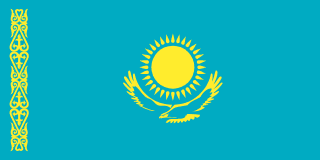
| National Colours | Blue, Gold, Orange |
Cuisine
- Beshbarmak (a noodle soup)
- Kumys (fermented mare's milk)
- Baursak (fried dough bread)
Tourism Highlights
- The Caspian Sea coast and its resorts
- The historical Silk Road routes
- The vast steppes and natural reserves
Natural Wonders
- The Kyzylkum Desert
- The Caspian Sea
- The Ili River Delta
Notable People
Nursultan Nazarbayev, Kassym-Jomart Tokayev
Fun Facts
- Kazakhstan is the world's largest landlocked country.
- It possesses significant reserves of oil, natural gas, and rare earth minerals.
Military
| Branches | Ground Forces, Air Force, Navy (Caspian Sea), Border Guards |
|---|---|
| Personnel (Approx.) | 71,000 |
International Relations
| UN Member Since | 1992 |
|---|---|
| Organizations | Eurasian Economic Union (EAEU) |
| UNESCO Sites | 1 — Silk Road sites (various) |
Infrastructure & Environment
| Driving Side | Right |
|---|---|
| Electrical | 220V, 50 Hz (Type C, Type A) |
| Internet Users | 93.4% |
| Mobile Subscriptions | 127.1 per 100 people |
| CO₂ Emissions | 258.8 Mt |
| Renewable Energy | 2% |
Environmental Issues
- Desertification and land degradation
- Water scarcity in arid regions
- Impact of oil extraction on ecosystems
Communications
| International Calling Code | +76, 7 |
|---|---|
| Internet TLD | .kz, .қаз |
| Postal Code Format | ###### |
Emergency Services
External Links


 The EARF Engine