










Africa
Kenya
Republic of Kenya
"Harambee (Pulling together)"
Overview
Kenya, officially the Republic of Kenya, is a sovereign nation located in East Africa, bordering Ethiopia, Somalia, South Sudan, Uganda, and Tanzania, and possessing a coastline on the Indian Ocean. The country is characterized by immense geographical diversity, ranging from the arid northern rangelands to the lush equatorial forests and the dramatic coastal regions. Its capital and largest urban center is Nairobi, while the historic port city of Mombasa serves as a major gateway to the Indian Ocean. Kenya has historically been a crucial crossroads of trade and civilization, attracting diverse populations and cultures.
Travel Advisory
Government & Politics
| Government Type | Republic |
|---|---|
| System | Unitary Presidential Republic |
| President | William Ruto |
| President | William Ruto |
| Legislature (Bicameral (though often functions as a single legislative body)) | National Assembly |
| Independence | 1963-12-12 from United Kingdom (British Colony) |
| Constitution | 2010 |
Kenya operates as a presidential republic with a semi-decentralized system. The government is structured around the executive (President), the legislature (National Assembly), and the judiciary. Political life is characterized by a mix of ethnic and regional loyalties, making coalition building and constitutional adherence critical for stability.
Kenya maintains strong economic and diplomatic ties with Western powers, particularly the UK and US, while also deepening strategic partnerships with China and the Gulf Cooperation Council (GCC) states. Its role in East Africa makes it a key player in regional security and trade initiatives.
People, Language & Religion
| Official Languages | Swahili |
|---|---|
| National Languages | Swahili, English |
| Regional Languages | English |
| Native Name ENG | Kenya |
| Native Name SWA | Kenya |
| Demonym (Male) | Kenyan |
| Ethnic — Luo | 10% |
| Ethnic — Meru | 7% |
| Ethnic — Other | 60% |
| Ethnic — Kikuyu | 15% |
| Ethnic — Kalenjin | 8% |
| Religion — Islam | 25% |
| Religion — Christianity | 60% |
| Religion — Traditional/Other | 15% |
Economy
| GDP (Nominal) | $135.9B USD |
|---|---|
| GDP (PPP) | $403.6B USD |
| GDP per Capita | $2,363 USD |
| GDP per Capita (PPP) | $7,016 USD |
| GDP Growth Rate | 5.5% |
| Gini Coefficient | 0.385 |
| Human Development Index 0.642 · High | |
| Unemployment Rate | 5.4% |
| Inflation Rate | 4.1% |
| Public Debt (% GDP) | 50% |
| Main Industries | Tourism, Agriculture (Horticulture, Tea, Coffee), Financial Services, Telecommunications |
| Main Exports | Tea, Coffee, Horticultural Products, Remittances |
| Main Imports | Machinery and Equipment, Petroleum Products, Vehicles, Consumer Goods |
| Export Partners | United Kingdom, China, United States, European Union |
| Import Partners | China, United Arab Emirates, India, United States |
| Currency | Kenyan shilling (Sh) [KES] |
Demographics
| Population | 57,532,493 |
|---|---|
| Urban Population | 32.2% |
| Median Age | 19 years |
| Life Expectancy | 63.8 years |
| Fertility Rate | 3.17 |
| Infant Mortality | 34.2 per 1,000 births |
| Literacy Rate | 75% |
Geography & Climate
The country's geography is highly varied, encompassing the Great Rift Valley, which runs through the central region, creating dramatic geological features. Major biomes include the vast savanna grasslands, which support large wildlife populations, and the fertile agricultural lands near the coast. The country's coastline on the Indian Ocean is famous for its coral reefs and beaches.
| Terrain | Vast savanna, Great Rift Valley, coastal plains, and highland plateaus. |
|---|---|
| Total Area | 580,367 km² |
| Coastline | 1 km |
| Exclusive Economic Zone | 500,000 km² |
| Landlocked | No |
| Highest Point | Mount Kenya (5,199 m) |
| Lowest Point | Indian Ocean (0 m) |
| Major Rivers | Tana River, Ewaso Ng'iro River |
| Major Lakes | Lake Victoria, Lake Naivasha, Lake Nakuru |
| Major Cities | Nairobi, Mombasa, Kisumu, Nakuru |
| Natural Resources | Wildlife (tourism), Coffee, Tea, Minerals (Soda Ash, Fluorspar), Water |
| Climate | Tropical Savanna/Coastal |
Kenya exhibits diverse climates, ranging from the arid and semi-arid conditions of the northern rangelands to the tropical rainforests of the coast and the temperate highlands of the central region. The equatorial zone experiences distinct wet and dry seasons, while the coastal areas are influenced by the Indian Ocean monsoon patterns.
History
Ancient & Early History
The region has been inhabited by various groups for millennia, with evidence of early human evolution in sites like Olduvai Gorge. Ancient trade routes connected the interior with the Indian Ocean, facilitating the movement of goods and cultures from Arabia and the Mediterranean.
Colonial Period
Kenya was a key part of the British East Africa Protectorate, which was administered by the British Empire. The colonial period saw the establishment of settler economies, particularly in agriculture, and the development of infrastructure like railways to facilitate resource extraction and trade.
Independence
The struggle for independence gained momentum in the mid-20th century, culminating in the Mau Mau uprising and subsequent negotiations. Kenya achieved full independence from the United Kingdom on December 12, 1963.
Modern Era
Following independence, Kenya established itself as a regional economic hub and a major tourist destination. The country has undergone periods of political instability and constitutional review, culminating in the 2010 Constitution, which aimed to decentralize power and improve governance.
Recent History
In recent years, Kenya has focused on infrastructure development, particularly through large-scale projects like the Standard Gauge Railway. The economy has been marked by fluctuating commodity prices and efforts to diversify beyond traditional agriculture and tourism.
Culture & National Symbols
Kenyan culture is a vibrant mosaic, heavily influenced by its diverse ethnic groups and its history as a trade crossroads. Traditional ceremonies, vibrant markets, and the preservation of local arts and crafts are central to the cultural identity. The country is also renowned for its participation in global sporting events.
| National Anthem | Ee Mungu Nguvu Yetu — "Oh God, You are our strength" |
|---|---|
| National Animal | Lion |
| National Bird | Secretary Bird |
| National Flower | Blue Butterfly |
| National Tree | Acacia |
| National Sport | Athletics |
| National Dish | Nyama Choma (Grilled Meat) |
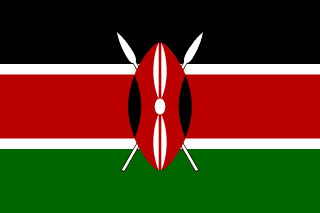
| National Colours | Black, Red, Green |
Cuisine
- Ugali (Maize porridge)
- Sukuma Wiki (Collard greens)
- Nyama Choma (Grilled meat)
- Pilau (Spiced rice)
Tourism Highlights
- Maasai Mara National Reserve (Wildlife safaris)
- Diani Beach (Coastal relaxation)
- Amboseli National Park (Elephant viewing)
- Lamu Old Town (Historical architecture)
Natural Wonders
- Great Rift Valley
- Mount Kenya
- Maasai Mara Ecosystem
Notable People
Jomo Kenyatta, William Ruto, Paul Muite wa Gichuru
Fun Facts
- Kenya is home to some of the world's most famous wildlife safaris.
- The country's national motto, Harambee, translates to 'pulling together' in Swahili.
Military
| Branches | Kenya Army, Kenya Navy, Kenya Air Force |
|---|---|
| Personnel (Approx.) | 24,000 |
International Relations
| UN Member Since | 1963 |
|---|---|
| Organizations | African Union (AU), United Nations (UN) |
| UNESCO Sites | 1 — Lamu Old Town |
Infrastructure & Environment
| Driving Side | Left |
|---|---|
| Electrical | 230V, 50 Hz (Type G) |
| Internet Users | 35% |
| Mobile Subscriptions | 126.5 per 100 people |
| CO₂ Emissions | 21.6 Mt |
| Renewable Energy | 67.7% |
Environmental Issues
- Deforestation and habitat loss
- Water scarcity and drought
- Waste management in urban centers
Communications
| International Calling Code | +254 |
|---|---|
| Internet TLD | .ke |
| Postal Code Format | ##### |
Emergency Services
External Links


 The EARF Engine