










Middle East
Lebanon
Lebanese Republic
"Lebanon Passion for Living"
Overview
Lebanon, officially the Lebanese Republic, is a small, highly mountainous country situated in the Levant region of Western Asia. It is geographically positioned at the crossroads of the Mediterranean Basin and the Arabian Peninsula, bordered by Syria to the north and east, Israel to the south, and the Mediterranean Sea to the west. With an area of 10,452 km², the nation is characterized by a complex blend of historical influences, diverse ethnic groups, and a vibrant, though often politically volatile, culture. Beirut serves as the capital and the country's largest urban center, making it a major hub for trade and culture in the Eastern Mediterranean.
Travel Advisory
Government & Politics
| Government Type | Republic |
|---|---|
| System | Semi-presidential Republic |
| President | Joseph Aoun |
| Prime Minister | Nawaf Salam |
| Legislature (Unicameral) | Council of Representatives |
| Independence | 1943-11-22 from French Mandate |
| Constitution | 1926 |
Lebanon operates under a complex sectarian power-sharing system, where political power is distributed among the major religious communities (Maronites, Sunnis, Shiites). The political structure is highly decentralized and often leads to gridlock. The country's governance is frequently challenged by internal rivalries and external geopolitical pressures from neighboring states.
Lebanon maintains complex and often strained relationships with its neighbors, including Syria, Israel, and Jordan. Its foreign policy is heavily influenced by regional power dynamics, making it a key point of intersection for international interests, humanitarian aid, and geopolitical competition in the Eastern Mediterranean.
People, Language & Religion
| Official Languages | Arabic |
|---|---|
| Regional Languages | French, Maronite Arabic Dialect |
| Native Name ARA | لبنان |
| Native Name FRA | Liban |
| Demonym (Male) | Lebanese |
| Ethnic — Arabs | Majority |
| Ethnic — Druze | Significant minority |
| Ethnic — Greek | Minority |
| Ethnic — Maronites | Significant minority |
| Religion — Druze | Significant |
| Religion — Shia Islam | Minority |
| Religion — Sunni Islam | Major |
| Religion — Christianity | Significant (Maronite, Greek Orthodox) |
Economy
| GDP (Nominal) | $26B USD |
|---|---|
| GDP (PPP) | $69.2B USD |
| GDP per Capita | $4,473 USD |
| GDP per Capita (PPP) | $11,917 USD |
| GDP Growth Rate | 0% |
| Gini Coefficient | 0.355 |
| Human Development Index 0.8 · High | |
| Unemployment Rate | 11% |
| Inflation Rate | 14.6% |
| Public Debt (% GDP) | 128.6% |
| Main Industries | Tourism, Construction, Services, Agriculture (citrus, olives) |
| Main Exports | Agricultural products, Processed goods, Services (tourism), Petroleum products (historical) |
| Main Imports | Fuel, Foodstuffs, Machinery, Consumer goods |
| Export Partners | United Arab Emirates, Jordan, Israel |
| Import Partners | Saudi Arabia, Turkey, Qatar |
| Currency | Lebanese pound (ل.ل) [LBP] |
Demographics
| Population | 5,849,421 |
|---|---|
| Urban Population | 91% |
| Median Age | 28 years |
| Life Expectancy | 77.9 years |
| Fertility Rate | 2.23 |
| Infant Mortality | 15.3 per 1,000 births |
| Literacy Rate | 95% |
Geography & Climate
The country's geography is dominated by the Anti-Lebanon and Lebanon mountain ranges, which run parallel to the Mediterranean coast. These rugged mountains create a highly fragmented landscape, with fertile coastal plains and deep river valleys providing the primary habitable areas. The Lebanese coastline is relatively short but highly strategic, connecting the Levant to the wider Mediterranean trade routes.
| Terrain | Mountainous, with fertile coastal plains and deep river valleys. |
|---|---|
| Total Area | 10,452 km² |
| Coastline | 55 km |
| Exclusive Economic Zone | 10,000 km² |
| Landlocked | No |
| Highest Point | Mount Lebanon (3,000 m) |
| Lowest Point | Mediterranean Sea (0 m) |
| Major Rivers | Litani River, Hasbani River |
| Major Cities | Beirut, Sidon, Tripoli |
| Natural Resources | Limestone, Marble, Oil and Gas (historical/potential), Agricultural land |
| Climate | Mediterranean |
Lebanon experiences a classic Mediterranean climate, characterized by hot, dry summers and mild, wet winters. The coastal plains benefit from maritime influence, while the mountainous interior receives significant rainfall, particularly from the Mediterranean cyclones, making the climate highly varied by altitude.
History
Ancient & Early History
The region has been a cradle of civilization, home to the ancient Phoenicians, who established maritime trade networks across the Mediterranean. Later, it was influenced by Greek colonization, the Seleucid Empire, and the Roman Empire, which built significant infrastructure and cities like Baalbek. The area was also a key center for early Christianity.
Colonial Period
Following the decline of the Roman Empire, the region passed through various Byzantine and Islamic caliphates. In the 19th and early 20th centuries, it was subjected to French influence and eventually became part of the French Mandate, which governed the territory until the mid-20th century.
Independence
Lebanon achieved a degree of independence in 1943, though its borders and political stability have been subject to continuous regional conflicts and internal power struggles since then.
Modern Era
The modern history of Lebanon is marked by a complex sectarian power-sharing system and repeated periods of civil conflict. The country has struggled with economic crises, political fragmentation, and the impact of regional proxy wars, leading to periods of severe instability and humanitarian concern.
Recent History
The recent decades have seen Lebanon grappling with severe economic collapse, hyperinflation, and a major banking crisis. The country has faced significant political turmoil, leading to widespread protests and a humanitarian emergency that has severely impacted its population and infrastructure.
Culture & National Symbols
Lebanese culture is renowned for its vibrant blend of Mediterranean, Arab, and European influences. It is celebrated for its hospitality, its rich artistic traditions, and its status as a major cultural crossroads. The cuisine, music, and fashion reflect this unique confluence of civilizations.
| National Anthem | Kawkab el-Shams (Star of the Sun) — "Kawkab el-Shams, kawkab el-shams" |
|---|---|
| National Animal | Cedar (Cedar of Lebanon) |
| National Bird | Mediterranean Gull |
| National Flower | Cedar |
| National Tree | Cedar |
| National Sport | Football (Soccer) |
| National Dish | Kibbeh |
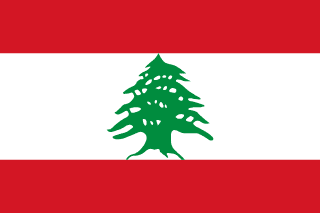
| National Colours | Red, White, Green |
Cuisine
- Kibbeh (meat and bulgur shell)
- Tabbouleh (parsley, bulgur, tomato salad)
- Manakish (flatbread with toppings)
Tourism Highlights
- Beirut's historic downtown and modern architecture
- The ancient ruins of Baalbek
- The Mediterranean beaches and coastal resorts
Natural Wonders
- The Cedar of Lebanon forests
- The Mediterranean coastline
Notable People
Georges Mar Tanzi, Michel Aoun
Fun Facts
- The Cedar of Lebanon is the national symbol and a species endemic to the region.
- The country's geography is highly mountainous, limiting large-scale infrastructure development.
Military
| Branches | Army, Navy, Air Force |
|---|---|
| Personnel (Approx.) | 80,000 |
International Relations
| UN Member Since | 1945 |
|---|---|
| Organizations | League of Arab States |
| UNESCO Sites | 1 — Roman Amphitheatre of Baalbek |
Infrastructure & Environment
| Driving Side | Right |
|---|---|
| Electrical | 220V, 50 Hz (Type C, Type F) |
| Internet Users | 80.6% |
| Mobile Subscriptions | 74 per 100 people |
| CO₂ Emissions | 11 Mt |
| Renewable Energy | 6.8% |
Environmental Issues
- Waste management and pollution in Beirut
- Water scarcity and mismanagement
- Coastal erosion
Communications
| International Calling Code | +961 |
|---|---|
| Internet TLD | .lb |
| Postal Code Format | #### ####|#### |
Emergency Services
External Links


 The EARF Engine