










North America
Mexico
United Mexican States
"The neighbor's right is peace"
Overview
Mexico, officially the United Mexican States, is a large country located in North America, forming a crucial cultural and economic bridge between the United States and Central America. It is bordered by the United States to the north and by Guatemala and Belize to the southeast, with extensive coastlines along the Pacific Ocean, the Caribbean Sea, and the Gulf of Mexico. With a population exceeding 128 million people, Mexico is the largest Spanish-speaking nation by population and possesses a rich, complex history spanning pre-Columbian civilizations, Spanish colonial rule, and modern republican development.
Travel Advisory
Government & Politics
| Government Type | Federal Presidential Republic |
|---|---|
| System | Federal Republic |
| President | Claudia Sheinbaum |
| President | Claudia Sheinbaum |
| Legislature (Bicameral) | Congress of the Union |
| Independence | 1921-02-28 from Spain (Formal independence from Spain was achieved in 1821) |
| Constitution | 1917 |
Mexico operates as a federal presidential republic with a decentralized system of power. The political landscape is dominated by a mix of established parties and regional movements. The government structure includes a powerful executive branch, a bicameral legislature, and a judiciary system, all operating under the framework of the 1917 Constitution.
Mexico maintains extremely close and vital economic ties with the United States, forming the backbone of North American trade. It also maintains strong diplomatic and cultural relationships with Latin American nations and has deepened its engagement with Asian economies through trade agreements.
People, Language & Religion
| Official Languages | Spanish |
|---|---|
| Regional Languages | Maya, Nahuatl, Zapotec |
| Native Name SPA | México |
| Demonym (Male) | Mexican |
| Ethnic — Mestizo | Majority |
| Ethnic — Indigenous | Significant minority (e.g., Maya, Nahua) |
| Ethnic — European Descent | Significant minority |
| Religion — Christianity | Predominant (Catholicism) |
| Religion — Indigenous Beliefs | Significant presence |
Economy
| GDP (Nominal) | $1832.6B USD |
|---|---|
| GDP (PPP) | $3413.3B USD |
| GDP per Capita | $13,889 USD |
| GDP per Capita (PPP) | $25,868 USD |
| GDP Growth Rate | 2.5% |
| Gini Coefficient | 0.426 |
| Human Development Index 0.769 · High | |
| Unemployment Rate | 2.7% |
| Inflation Rate | 3.8% |
| Public Debt (% GDP) | 50.3% |
| Main Industries | Automotive Manufacturing, Tourism, Agriculture (Maize, Beans, Citrus), Technology and Services |
| Main Exports | Motor Vehicles, Electronic Components, Oil, Agricultural Products, Machinery |
| Main Imports | Petroleum Products, Machinery and Equipment, Chemicals, Consumer Goods, Raw Materials |
| Export Partners | United States, Canada, China |
| Import Partners | United States, China, Canada |
| Currency | Mexican peso ($) [MXN] |
Demographics
| Population | 131,946,900 |
|---|---|
| Urban Population | 80% |
| Median Age | 27.5 years |
| Life Expectancy | 75.3 years |
| Fertility Rate | 1.89 |
| Infant Mortality | 12.1 per 1,000 births |
| Literacy Rate | 95.6% |
Geography & Climate
The country's geography is characterized by three major physiographic regions: the Sierra Madre mountain range system, which runs through the west and south; the central plateau, which contains the major population centers; and the extensive coastal plains bordering the Pacific, Gulf of Mexico, and Caribbean Sea. This varied topography supports diverse ecosystems, from coral reefs to high-altitude grasslands.
| Terrain | Mountainous, plateau, and coastal plains |
|---|---|
| Total Area | 1,964,375 km² |
| Coastline | 11,000 km |
| Exclusive Economic Zone | 2,000,000 km² |
| Landlocked | No |
| Highest Point | Pico de Orizaba (5,636 m) |
| Lowest Point | Sea Level (various points) (0 m) |
| Major Rivers | Río Bravo (Rio Grande), Usumacinta River, Pánuco River |
| Major Lakes | Lake Chapala, Lake Pico de Lagos |
| Major Cities | Mexico City, Guadalajara, Monterrey, Puebla |
| Natural Resources | Oil and Natural Gas, Copper, Silver, Gold, Iron Ore, Water (significant reserves) |
| Climate | Tropical/Subtropical |
Mexico exhibits a highly diverse climate profile, ranging from tropical rainforests in the southern regions (like Chiapas) to arid desert climates in the north (like Chihuahua). The central highlands often feature temperate climates, while the Pacific coast experiences tropical wet and dry seasons.
History
Ancient & Early History
The region was home to sophisticated pre-Columbian civilizations, including the Olmec, Maya, and Aztec empires. The Maya civilization, centered in the Yucatán Peninsula, developed complex astronomical and mathematical knowledge, while the Aztec capital of Tenochtitlan flourished on Lake Texcoco, becoming a major Mesoamerican power.
Colonial Period
Following the Spanish conquest in the early 16th century, the area became the core of the Viceroyalty of New Spain. Spanish rule lasted for over three centuries, profoundly influencing the culture, religion, and political structure, leading to the establishment of a rigid social hierarchy.
Independence
The movement for independence gained momentum in the early 19th century, culminating in the declaration of independence from Spain in 1821. The subsequent decades were marked by internal conflicts and struggles to define a stable national identity.
Modern Era
The 20th century saw Mexico through periods of revolution, most notably the Mexican Revolution (1910–1920), which fundamentally restructured the country's political and land ownership systems. The subsequent decades focused on industrialization, economic integration with the United States, and maintaining democratic stability.
Recent History
In recent years, Mexico has focused on economic diversification and infrastructure development, while simultaneously grappling with issues of organized crime and migration. The country remains a critical player in North American trade and geopolitics.
Culture & National Symbols
Mexican culture is renowned globally for its vibrant artistic traditions, including muralism (exemplified by Rivera and Orozco), its rich folk art, and its deep connection to indigenous heritage. The celebration of Día de Muertos (Day of the Dead) is a globally recognized cultural phenomenon, blending pre-Hispanic rituals with Catholic traditions.
| National Anthem | Himno Nacional Mexicano — "Mexicanos, al grito de Independencia..." |
|---|---|
| National Animal | Golden Eagle |
| National Bird | Mexican Eagle |
| National Flower | Cempasúchil (Marigold) |
| National Tree | Agave |
| National Sport | Football (Soccer) |
| National Dish | Tacos al Pastor |
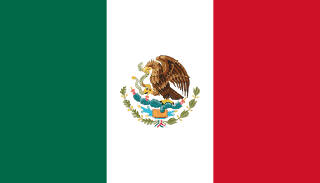
| National Colours | Green, White, Red |
Cuisine
- Tacos (various types)
- Mole Poblano
- Enchiladas
- Tamales
Tourism Highlights
- Cancún and Riviera Maya (Caribbean beaches)
- Puerto Vallarta (Pacific beaches)
- Chichen Itza (Mayan ruins)
- Mexico City (Cultural sites)
Natural Wonders
- Sian Ka'an Biosphere Reserve
- Copper Canyon
- Los Cabos Archipelago
Notable People
Frida Kahlo, Diego Rivera, Octavio Paz, Salvador Dalí (influence)
Fun Facts
- Mexico is the largest country in Latin America by area.
- The Mexican peso (MXN) is the official currency.
- The country is a major global producer of copper and oil.
Military
| Branches | Army, Navy, Air Force |
|---|---|
| Personnel (Approx.) | 341,000 |
International Relations
| UN Member Since | 1946 |
|---|---|
| Organizations | OAS, NAFTA/USMCA |
| UNESCO Sites | 14 — Chichen Itza, Teotihuacan, Historic Centre of Mexico City, Palenque Archeological Site |
Infrastructure & Environment
| Driving Side | Right |
|---|---|
| Electrical | 127V, 60 Hz (Type A, Type B) |
| Internet Users | 83.1% |
| Mobile Subscriptions | 116.5 per 100 people |
| CO₂ Emissions | 476 Mt |
| Renewable Energy | 13% |
Environmental Issues
- Water scarcity and pollution
- Deforestation in tropical regions
- Impact of industrial pollution on coastal zones
Communications
| International Calling Code | +52 |
|---|---|
| Internet TLD | .mx |
| Postal Code Format | ##### |
Emergency Services
External Links




 The EARF Engine