










Oceania
New Zealand
"100% Pure"
Overview
New Zealand is an island country located in the southwestern Pacific Ocean, forming part of the larger region of Oceania. It is composed of two main landmasses—the North Island and the South Island—along with numerous smaller islands. The country is renowned for its dramatic, varied topography, which includes volcanic plateaus, alpine regions like the Southern Alps, and fertile coastal plains. Its isolation has fostered a unique blend of Māori culture and British colonial heritage. The capital city is Wellington, while the largest urban center is Auckland. The nation is known globally for its natural beauty and commitment to conservation.
Travel Advisory
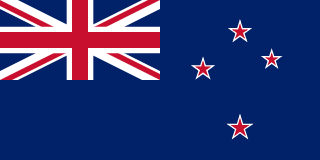
Government & Politics
| Government Type | Parliamentary Constitutional Monarchy |
|---|---|
| System | Constitutional Monarchy |
| King | Dame Cindy Kiro (Governor-General) |
| Prime Minister | Christopher Luxon |
| Legislature (Bicameral) | Parliament of New Zealand |
| Independence | null from null |
| Constitution | 1986 |
New Zealand operates as a parliamentary constitutional monarchy, where the monarch (currently King Charles III) is the head of state, and the Prime Minister is the head of government. The government is formed by the party or coalition that commands the confidence of the House of Representatives. The political landscape is characterized by a multi-party system, with key debates often centering on environmental policy, indigenous rights, and international trade.
New Zealand maintains strong diplomatic and economic ties with Australia, forming a key part of the Pacific region. It is a committed member of the Commonwealth and has active relationships with Asian powers, including China, while also participating in regional security dialogues like the Five Eyes alliance. Its foreign policy emphasizes multilateralism, climate action, and support for Pacific Island nations.
People, Language & Religion
| Official Languages | English |
|---|---|
| Regional Languages | Māori |
| Native Name ENG | New Zealand |
| Native Name MRI | Aotearoa |
| Native Name NZS | New Zealand |
| Demonym (Male) | New Zealander |
| Ethnic — Asian | Small percentage |
| Ethnic — Māori | Approx. 12-15% |
| Ethnic — European | Approx. 75-80% |
| Religion — Buddhism | Minority |
| Religion — Hinduism | Minority |
| Religion — Christianity | Majority |
Economy
| GDP (Nominal) | $264.1B USD |
|---|---|
| GDP (PPP) | $305.4B USD |
| GDP per Capita | $49,591 USD |
| GDP per Capita (PPP) | $57,350 USD |
| GDP Growth Rate | 2.5% |
| Gini Coefficient | 0.33 |
| Human Development Index 0.93 · Very High | |
| Unemployment Rate | 5.1% |
| Inflation Rate | 2.8% |
| Public Debt (% GDP) | 52% |
| Main Industries | Tourism, Agriculture (Dairy), Fishing, Technology |
| Main Exports | Dairy products, Meat, Wood products, Fish |
| Main Imports | Machinery and equipment, Petroleum products, Consumer goods, Vehicles |
| Export Partners | Australia, China, Japan |
| Import Partners | China, Australia, Japan |
| Currency | New Zealand dollar ($) [NZD] |
Demographics
| Population | 5,324,700 |
|---|---|
| Urban Population | 84% |
| Median Age | 35 years |
| Life Expectancy | 82 years |
| Fertility Rate | 1.57 |
| Infant Mortality | 4 per 1,000 births |
| Literacy Rate | 99% |
Geography & Climate
Located in the southwestern Pacific Ocean, New Zealand is an archipelago comprising the North and South Islands. Its geography is defined by intense tectonic activity, resulting in dramatic features such as the Southern Alps, active volcanoes, and deep fjords. The country's varied terrain includes fertile coastal plains, rugged mountain ranges, and extensive geothermal areas, making it a global hotspot for biodiversity.
| Terrain | Volcanic, Alpine, and Coastal |
|---|---|
| Total Area | 270,467 km² |
| Coastline | 1,200 km |
| Landlocked | No |
| Highest Point | Aoraki / Mount Cook (3,724 m) |
| Lowest Point | Sea level (0 m) |
| Major Rivers | Rangitāiki River, Clutha River |
| Major Lakes | Lake Taupō, Lake Wakatipu |
| Major Cities | Auckland, Wellington, Christchurch |
| Natural Resources | Geothermal energy, Dairy farming land, Forestry products, Marine resources |
| Climate | Temperate Oceanic (Cfb) |
New Zealand generally experiences a temperate oceanic climate, characterized by mild winters and warm summers. Rainfall is relatively high and distributed throughout the year, moderated by the surrounding ocean currents. The climate varies significantly between the northern subtropical regions and the cooler, more alpine areas of the South Island.
History
Ancient & Early History
The region was inhabited by Polynesian settlers, who developed the unique culture and language of the Māori people. Archaeological evidence suggests human settlement dates back over 800 years, establishing a sophisticated society before European arrival.
Colonial Period
European contact began in the late 18th century, leading to various claims by Britain and France. The Treaty of Waitangi, signed in 1840, established British sovereignty over the island, though its interpretation remains a source of historical and legal debate regarding Māori rights.
Independence
While the British Crown asserted sovereignty, the country gradually developed self-governance. Full self-determination was achieved through internal political evolution rather than a single declaration of independence.
Modern Era
New Zealand became a self-governing colony within the British Empire. It gained greater autonomy over the 20th century, leading to the establishment of a fully representative parliamentary democracy. The country has maintained strong ties with the Commonwealth while developing a distinct national identity.
Recent History
In recent decades, New Zealand has focused on environmental protection, cultural recognition of Māori heritage, and economic diversification. It has become a global leader in sustainable tourism and agricultural practices, while navigating complex geopolitical relationships in the Pacific region.
Culture & National Symbols
New Zealand's culture is a unique blend of Māori traditions and Western influences. Māori culture is deeply visible through language (Te Reo Māori), art (Tā moko), and performance (Haka). The country celebrates its natural environment, which permeates its arts, literature, and sporting culture.
| National Anthem | God Defend New Zealand — "God defend New Zealand" |
|---|---|
| National Animal | Kiwi |
| National Bird | Kiwi |
| National Flower | Kōwhai |
| National Tree | Kauri |
| National Sport | Rugby Union |
| National Dish | Hāngi |
| National Colours | Black, White, Green |
Cuisine
- Hāngi (earth oven cooking)
- Kaimoana (seafood)
- Lamb and seasonal vegetables
Tourism Highlights
- The Milford Sound (fiord)
- The Southern Alps (hiking)
- Lake Taupō (geothermal activity)
- Auckland Harbour (cityscape)
Natural Wonders
- Fiordland National Park
- Tongariro National Park
- Southern Alps
- Lake Taupō
Notable People
Sir Edmund Hillary, Dame Flora Glover, Sir Michael Cullen
Fun Facts
- New Zealand is the only country in the world to have a national bird (Kiwi) that is also its national animal.
- The country's unique geology has resulted in a high concentration of geothermal activity.
Military
| Branches | New Zealand Defence Force (NZDF), Army, Navy, Air Force |
|---|---|
| Personnel (Approx.) | 10,000 |
International Relations
| UN Member Since | 1960 |
|---|---|
| Organizations | Commonwealth of Nations |
| UNESCO Sites | 1 — Waitangi Treaty Grounds |
Infrastructure & Environment
| Driving Side | Left |
|---|---|
| Electrical | 230V, 50 Hz (Type I) |
| Internet Users | 93.5% |
| Mobile Subscriptions | 130.1 per 100 people |
| CO₂ Emissions | 31.8 Mt |
| Renewable Energy | 28.9% |
Environmental Issues
- Coastal erosion
- Biodiversity loss (due to introduced species)
- Climate change impact on sea levels
Communications
| International Calling Code | +64 |
|---|---|
| Internet TLD | .nz |
| Postal Code Format | #### |
Emergency Services
External Links


 The EARF Engine