










South America
Paraguay
Republic of Paraguay
"Paz y justicia (Peace and Justice)"
Overview
Paraguay, officially the Republic of Paraguay, is a landlocked country situated in the heart of South America. It is bordered by Argentina to the south and southwest, Brazil to the east and northeast, and Bolivia to the northwest. The nation's geography is characterized by a mix of fertile plains, subtropical forests, and the Paraguay River basin, which is crucial for its economy and transport. With a population of approximately 7.2 million people, the country maintains a strong cultural identity, with its capital, Asunción, serving as its primary urban and administrative center.
Travel Advisory
Government & Politics
| Government Type | Federal Presidential Republic |
|---|---|
| System | Republic |
| President | Santiago Peña |
| President | Santiago Peña |
| Legislature (Bicameral) | Congress of the Republic |
| Independence | 1811-05-14 from Spanish Empire |
| Constitution | 1997 |
Paraguay is a federal presidential republic with a history marked by geopolitical vulnerability. Its political system is structured around a bicameral Congress and a powerful executive branch. The country has historically struggled with internal political stability and external economic pressures, though recent decades have seen efforts toward democratic consolidation and regional integration.
Paraguay maintains strong economic and political ties with its immediate neighbors, particularly Brazil and Argentina, due to shared river systems and trade routes. It is a committed member of Mercosur and actively participates in regional diplomatic forums to ensure its economic stability and sovereignty.
People, Language & Religion
| Official Languages | Spanish |
|---|---|
| National Languages | Spanish, Guaraní |
| Regional Languages | Guaraní |
| Native Name GRN | Paraguái |
| Native Name SPA | Paraguay |
| Demonym (Male) | Paraguayan |
| Ethnic — Teopío | Indigenous group |
| Ethnic — Mbyá Guaraní | Significant indigenous population |
| Ethnic — Mixed Ancestry | Common due to historical mixing |
| Ethnic — European Descent | Large segment of the population |
| Religion — Protestantism | Minority presence |
| Religion — Roman Catholicism | Predominant religion |
| Religion — Indigenous Beliefs | Practiced by some communities |
Economy
| GDP (Nominal) | $49.3B USD |
|---|---|
| GDP (PPP) | $141.5B USD |
| GDP per Capita | $7,027 USD |
| GDP per Capita (PPP) | $20,181 USD |
| GDP Growth Rate | 4.5% |
| Gini Coefficient | 0.442 |
| Human Development Index 0.68 · Medium | |
| Unemployment Rate | 4.8% |
| Inflation Rate | 4% |
| Public Debt (% GDP) | 35% |
| Main Industries | Agriculture (Soybean, Corn), Livestock Farming, Textiles, Mining |
| Main Exports | Soybean Meal, Corn, Beef, Leather, Potassium Sulfate |
| Main Imports | Machinery and Equipment, Petroleum Products, Chemicals, Vehicles, Fertilizers |
| Export Partners | Brazil, Argentina, China |
| Import Partners | Brazil, Argentina |
| Currency | Paraguayan guaraní (₲) [PYG] |
Demographics
| Population | 7,013,078 |
|---|---|
| Urban Population | 70.4% |
| Median Age | 28 years |
| Life Expectancy | 74 years |
| Fertility Rate | 2.42 |
| Infant Mortality | 14.5 per 1,000 births |
| Literacy Rate | 94.9% |
Geography & Climate
The country's geography is dominated by three main regions: the fertile Oriental region (or Paraguay River basin), the vast and semi-arid Chaco Plain in the west, and the Paraná River basin in the east. The Paraguay River is a major geographical feature, acting as a natural corridor and historical trade route connecting the Atlantic basin to the Amazon basin.
| Terrain | Mixed: Fertile plains, subtropical forests, and semi-arid Chaco plateau |
|---|---|
| Total Area | 406,752 km² |
| Coastline | 0 km |
| Exclusive Economic Zone | 0 km² |
| Landlocked | Yes |
| Highest Point | Cerro Colorado (150 m) |
| Lowest Point | Paraguay River (10 m) |
| Major Rivers | Paraguay River, Paraná River, Pilcomayo River |
| Major Lakes | Ypacaraí Lake |
| Major Cities | Asunción, Ciudad del Este, Encarnación |
| Natural Resources | Soybeans, Beef, Timber, Potassium, Natural Gas |
| Climate | Tropical Savanna (Aw) |
Paraguay experiences a tropical climate, characterized by distinct wet and dry seasons. The eastern regions, particularly near Brazil, exhibit a more humid subtropical influence, while the Chaco region in the west is semi-arid, leading to significant climatic variation across the country.
History
Ancient & Early History
Historical records of pre-Columbian Paraguay are sparse, but the region was inhabited by various indigenous groups, including the Guaraní people, who developed sophisticated agricultural and social structures along the Paraná and Paraguay rivers.
Colonial Period
The area was claimed by the Spanish Empire, forming part of the Viceroyalty of Rio de la Plata. The region was strategically important due to its river access, leading to periods of conflict and control by various European powers, including the Portuguese.
Independence
Paraguay declared its independence from Spain on May 14, 1811. The subsequent years were marked by internal conflicts and struggles for regional autonomy against powerful neighbors like Brazil and Argentina.
Modern Era
The 19th and early 20th centuries saw Paraguay become a major regional power, culminating in the devastating Paraguayan War (War of the Triple Alliance, 1864–1870). The country suffered immense demographic and economic losses, leading to a period of instability and foreign intervention.
Recent History
Since the late 20th century, Paraguay has focused on economic diversification, particularly in agriculture and trade, and has sought to stabilize its political system. It has become a key member of Mercosur, integrating into regional trade blocs.
Culture & National Symbols
Paraguayan culture is a unique blend of indigenous Guaraní traditions and Spanish colonial influences. The country is renowned for its vibrant music, particularly the 'polca paraguaya', and its strong emphasis on family and community ties. The cuisine often reflects this blend, utilizing local ingredients in traditional preparations.
| National Anthem | Himno Nacional Paraguayo — "¡Gloria al Paraguay!" |
|---|---|
| National Animal | Jaguar |
| National Bird | Tucan |
| National Flower | Ipê |
| National Tree | Quebracho |
| National Sport | Football (Soccer) |
| National Dish | Sopa Paraguaya |
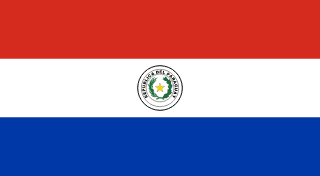
| National Colours | Red, White, Blue |
Cuisine
- Sopa Paraguaya (a cornmeal and cheese savory cake)
- Chipá (a type of bread)
- Mandioca (cassava-based dishes)
Tourism Highlights
- The Paraguay River basin and its wildlife
- The historic city of Asunción
- The Jesuit Missions in the Argentine border region (nearby)
Natural Wonders
- The Paraguay River Delta
- The Chaco Wetlands
Notable People
José Gaspar Rodríguez de Francia, Alfredo Stroessner
Fun Facts
- Paraguay is one of the few countries in South America that is entirely landlocked.
- The Guaraní language remains a living, spoken language alongside Spanish.
Military
| Branches | Army, Navy, Air Force |
|---|---|
| Personnel (Approx.) | 29,000 |
International Relations
| UN Member Since | 1945 |
|---|---|
| Organizations | Mercosur |
| UNESCO Sites | 0 |
Infrastructure & Environment
| Driving Side | Right |
|---|---|
| Electrical | 220V, 60 Hz (Type L) |
| Internet Users | 81.6% |
| Mobile Subscriptions | 126.6 per 100 people |
| CO₂ Emissions | 8 Mt |
| Renewable Energy | 58.8% |
Environmental Issues
- Deforestation in the Chaco region
- Water pollution in major river systems
- Unsustainable agricultural practices
Communications
| International Calling Code | +595 |
|---|---|
| Internet TLD | .py |
| Postal Code Format | #### |
Emergency Services
External Links


 The EARF Engine