










Asia
Philippines
Republic of the Philippines
"It's more fun in the Philippines"
Overview
The Republic of the Philippines is an archipelagic nation located in Southeast Asia, situated in the western Pacific Ocean. Comprising over 7,600 islands, the country is geographically divided into three main regions: Luzon, Visayas, and Mindanao. It is bordered by the South China Sea to the west, the Philippine Sea to the east, and the Celebes Sea to the south. The nation is known for its rich cultural diversity, tropical climate, and significant historical role as a crossroads of global trade and colonial influence. Manila serves as the capital, and the country maintains a vibrant blend of indigenous traditions and modern global influences.
Travel Advisory
Government & Politics
| Government Type | Unitary Presidential Constitutional Republic |
|---|---|
| System | Republic |
| President | Ferdinand Marcos Jr. |
| President | Ferdinand Marcos Jr. |
| Legislature (Bicameral) | Congress of the Philippines |
| Independence | 1946-07-4 from United States |
| Constitution | 1973 |
The Philippines is a unitary republic with a presidential system, meaning the President serves as both the head of state and the head of government. The government structure includes a bicameral Congress (Senate and House of Representatives) and a Supreme Court. Political life is characterized by a mix of democratic institutions and powerful political dynasties.
The Philippines maintains strong economic and security ties with the United States, stemming from historical alliances. It is also a key member of ASEAN and has growing trade relationships with China, Japan, and Australia, making it a vital player in the Indo-Pacific region.
People, Language & Religion
| Official Languages | Filipino |
|---|---|
| Regional Languages | English |
| Native Name ENG | Philippines |
| Native Name FIL | Pilipinas |
| Demonym (Male) | Filipino |
| Ethnic — Other | Numerous indigenous groups across the archipelago. |
| Ethnic — Ilocano | Significant group in Northern Luzon. |
| Ethnic — Tagalog | Majority group, primarily in Luzon. |
| Ethnic — Visayan | Major group in the Visayas region. |
| Religion — Islam | Significant minority, particularly in Mindanao. |
| Religion — Buddhism | Minority presence. |
| Religion — Christianity | Predominant religion, primarily Roman Catholicism. |
Economy
| GDP (Nominal) | $487.1B USD |
|---|---|
| GDP (PPP) | $1468.8B USD |
| GDP per Capita | $4,171 USD |
| GDP per Capita (PPP) | $12,577 USD |
| GDP Growth Rate | 5.5% |
| Gini Coefficient | 0.393 |
| Human Development Index 0.72 · High | |
| Unemployment Rate | 2.2% |
| Inflation Rate | 1.7% |
| Public Debt (% GDP) | 43.4% |
| Main Industries | BPO (Business Process Outsourcing), Tourism, Agriculture (Rice, Coconut), Manufacturing |
| Main Exports | Electronics, Semiconductors, Skilled labor services, Coconut products |
| Main Imports | Petroleum products, Machinery and equipment, Consumer goods, Foodstuffs |
| Export Partners | United States, China, Japan, Saudi Arabia |
| Import Partners | China, Japan, Saudi Arabia, Singapore |
| Currency | Philippine peso (₱) [PHP] |
Demographics
| Population | 116,786,962 |
|---|---|
| Urban Population | 55.8% |
| Median Age | 26 years |
| Life Expectancy | 69.9 years |
| Fertility Rate | 1.89 |
| Infant Mortality | 21.7 per 1,000 births |
| Literacy Rate | 95% |
Geography & Climate
The archipelago is composed of over 7,600 islands, forming a complex chain in the western Pacific. The geography is highly varied, featuring volcanic mountains, extensive coral reefs, and deep trenches. The three main island groups—Luzon, Visayas, and Mindanao—each possess unique geological features and ecological zones. The country's location makes it a major maritime crossroads, contributing to its rich biodiversity.
| Terrain | Volcanic, mountainous, and archipelagic with extensive coastal plains. |
|---|---|
| Total Area | 342,353 km² |
| Coastline | 3,500 km |
| Exclusive Economic Zone | 3,100,000 km² |
| Landlocked | No |
| Highest Point | Mount Apo (2,995 m) |
| Lowest Point | Philippine Trench (3000 m) |
| Major Rivers | Agno River, Pamagin River |
| Major Lakes | Taal Lake |
| Major Cities | Metro Manila, Cebu City, Davao City |
| Natural Resources | Nickel, Copper, Gold, Petroleum, Marine resources |
| Climate | Tropical Rainforest/Tropical Monsoon |
The Philippines experiences a tropical maritime climate, characterized by high temperatures and high humidity year-round. It is subject to seasonal monsoons, resulting in distinct wet and dry seasons. The country is highly prone to tropical cyclones (typhoons), particularly during the wet season (June to November).
History
Ancient & Early History
The islands were inhabited by various indigenous groups for millennia, who developed sophisticated maritime cultures and trade networks. Archaeological evidence points to early settlements dating back thousands of years, with early trade links established with China and India.
Colonial Period
The Philippines was first encountered by Ferdinand Magellan in 1521, leading to Spanish colonization which lasted for over 300 years. Following the Spanish period, the country was subjected to American rule from 1898 until the Commonwealth period, which profoundly shaped its political and social structures.
Independence
The Philippines declared its independence from the United States on July 4, 1946, marking the end of its colonial status and the beginning of its modern republic.
Modern Era
The country has experienced periods of political instability, including martial law under Ferdinand Marcos Sr. The democratic institutions have faced challenges, leading to periods of political turmoil and constitutional amendments.
Recent History
In recent decades, the Philippines has focused on economic growth through services and remittances. It continues to navigate geopolitical tensions in the South China Sea while promoting its role in regional stability and international trade.
Culture & National Symbols
The culture is a unique blend of indigenous Filipino traditions, Spanish colonial influences (evident in religion and architecture), and American modernity. Filipino culture is renowned for its hospitality, vibrant festivals (fiestas), and deep family ties.
| National Anthem | Lupang Hinirang — "Bayang magiliw, 'king, mahal kita" |
|---|---|
| National Animal | Philippine Eagle |
| National Bird | Philippine Eagle |
| National Flower | Sampaguita |
| National Tree | Narra |
| National Sport | Arnis (Filipino Martial Arts) |
| National Dish | Adobo |
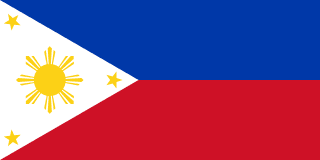
| National Colours | Blue, Red, White |
Cuisine
- Adobo (meat stewed in vinegar, soy sauce, and garlic)
- Sinigang (sour soup, often with tamarind)
- Lechon (whole roasted pig)
Tourism Highlights
- White-sand beaches (e.g., Boracay)
- Diving and snorkeling in coral reefs
- Historical sites (e.g., Vigan, Intramuros)
Natural Wonders
- Taal Volcano and Lake
- Chocolate Hills (Bohol)
- Puerto Princesa Subterranean River National Park
Notable People
Manuel Quezon, Jose Rizal, Corazon Aquino
Fun Facts
- The Philippines is an archipelago of over 7,600 islands.
- The national motto, 'It's more fun in the Philippines,' is a popular tourism slogan.
- The country's primary source of foreign exchange is remittances from Overseas Filipino Workers (OFWs).
Military
| Branches | Armed Forces of the Philippines (AFP), Philippine Navy, Philippine Air Force |
|---|---|
| Personnel (Approx.) | 157,000 |
International Relations
| UN Member Since | 1975 |
|---|---|
| Organizations | ASEAN |
| UNESCO Sites | 11 — Rice Terraces of the Philippine Cordilleras, Vigan City |
Infrastructure & Environment
| Driving Side | Right |
|---|---|
| Electrical | 220V, 60 Hz (Type A, Type B) |
| Internet Users | 67.3% |
| Mobile Subscriptions | 115.3 per 100 people |
| CO₂ Emissions | 174.1 Mt |
| Renewable Energy | 28% |
Environmental Issues
- Marine pollution and coral reef degradation
- Deforestation in upland areas
- Vulnerability to climate change and typhoons
Communications
| International Calling Code | +63 |
|---|---|
| Internet TLD | .ph |
| Postal Code Format | #### |
Emergency Services
External Links


 The EARF Engine