










Europe
Poland
Republic of Poland
"Move your imagination"
Overview
Poland, officially the Republic of Poland, is a country located in Central Europe, forming a crucial crossroads between Western and Eastern Europe. Its geography is defined by a varied landscape, extending from the Baltic Sea in the north to the Carpathian and Sudetes mountain ranges in the south. The nation's history is marked by periods of great power and decline, from the Polish-Lithuanian Commonwealth to its modern status as a key member of the European Union. The population, estimated at over 37.9 million people, resides in a country with an area of 312,679 km². The capital and largest city is Warsaw, which serves as the primary economic and cultural hub.
Travel Advisory
Government & Politics
| Government Type | Unitary Semi-Presidential Republic |
|---|---|
| System | Republic |
| President | Karol Nawrocki |
| Prime Minister | Donald Tusk |
| Legislature (Bicameral) | Sejm and Senat (Parliament) |
| Independence | 1918-11-11 from German Empire/Russian Empire (Re-establishment) |
| Constitution | 1997 |
Poland operates as a unitary semi-presidential republic, featuring a separation of powers among the executive, legislative, and judicial branches. The President serves as the head of state, while the Prime Minister leads the government. The political landscape is characterized by a multi-party system, with historical tensions between conservative, liberal, and socialist political movements.
Poland maintains strong, strategic partnerships with its EU and NATO allies, particularly Germany and France. Historically, its foreign policy has been defined by balancing relations between powerful neighbors (Russia, Germany) while advocating for national sovereignty and adherence to Western democratic norms.
People, Language & Religion
| Official Languages | Polish |
|---|---|
| Regional Languages | Silesian, Kashubian |
| Native Name POL | Polska |
| Demonym (Male) | Polish |
| Ethnic — German | Minority |
| Ethnic — Polish | Majority |
| Ethnic — Ukrainian | Minority |
| Religion — Jewish | Minority |
| Religion — Greek Orthodox | Minority |
| Religion — Roman Catholicism | Majority |
Economy
| GDP (Nominal) | $1035.5B USD |
|---|---|
| GDP (PPP) | $1977.1B USD |
| GDP per Capita | $28,420 USD |
| GDP per Capita (PPP) | $54,262 USD |
| GDP Growth Rate | 3.5% |
| Gini Coefficient | 0.285 |
| Human Development Index 0.925 · Very High | |
| Unemployment Rate | 3% |
| Inflation Rate | 3.8% |
| Public Debt (% GDP) | 60.5% |
| Main Industries | Manufacturing, Agriculture, Services, Technology |
| Main Exports | Machinery, Chemicals, Automobiles, Food Products |
| Main Imports | Energy, Raw Materials, Electronics, Machinery |
| Export Partners | Germany, UK, France |
| Import Partners | Russia, Germany, China |
| Currency | Polish złoty (zł) [PLN] |
Demographics
| Population | 36,435,861 |
|---|---|
| Urban Population | 60.1% |
| Median Age | 39 years |
| Life Expectancy | 78.4 years |
| Fertility Rate | 1.14 |
| Infant Mortality | 3.6 per 1,000 births |
| Literacy Rate | 99.5% |
Geography & Climate
The country's geography is highly varied, featuring fertile lowlands in the north and central regions, which are ideal for agriculture. To the south, the terrain rises into the Carpathian and Sudetes mountain ranges, providing diverse ecosystems and natural reserves. Major river systems, such as the Vistula and Oder, flow through the central plains, connecting the Baltic Sea to the interior. The Baltic Sea coastline is a significant geographical feature.
| Terrain | Mixed: Lowland plains, rolling hills, and mountain ranges (Sudetes, Carpathians) |
|---|---|
| Total Area | 312,679 km² |
| Coastline | 570 km |
| Exclusive Economic Zone | 120,000 km² |
| Landlocked | No |
| Highest Point | Giewont (1,896 m) |
| Lowest Point | Baltic Sea (0 m) |
| Major Rivers | Vistula, Oder, Bug |
| Major Lakes | Masurian Lake District |
| Major Cities | Warsaw, Kraków, Wrocław, Łódź, Poznań |
| Natural Resources | Coal, Oil, Natural Gas, Forestry Products |
| Climate | Temperate Continental |
Poland generally experiences a temperate continental climate, characterized by distinct seasonal variations. Winters are cold with significant snowfall, while summers are warm and humid. The climate is influenced by its position on the Baltic Sea, leading to moderate maritime effects in coastal regions.
History
Ancient & Early History
The region was settled by various groups, including the Celts and Germanic tribes, before the arrival of the Roman Empire. Roman influence was significant, particularly in the southern regions, establishing trade routes and administrative centers.
Colonial Period
Poland was a major player in the medieval European political landscape, forming the Polish-Lithuanian Commonwealth (1569–1795). This vast state was a key cultural and political center until it was partitioned by neighboring powers—Russia, Prussia, and Austria—in the late 18th century.
Independence
Following the partitions, Polish identity was maintained through resistance and cultural movements. The Second Polish Republic was re-established in 1918, marking a period of national revival and sovereignty.
Modern Era
The 20th century saw Poland endure immense turmoil, including occupation by Nazi Germany during World War II. After the war, the country was under Soviet influence, leading to the communist era. The transition to democracy and market economy began in the late 1980s, culminating in the modern, sovereign Polish Republic.
Recent History
Since joining the European Union in 2004, Poland has undergone significant economic and political integration with Western Europe. It remains a key member of NATO and the EU, balancing its historical ties with Russia while pursuing deep economic ties with the West.
Culture & National Symbols
Polish culture is renowned for its rich literary tradition, exemplified by figures like Adam Mickiewicz and Czesław Miłosz. The country has deep roots in Catholicism and folk traditions, which are visible in its vibrant festivals and architecture. The cuisine and arts reflect a blend of Slavic and Central European influences.
| National Anthem | Mazurek Dąbrowskiego — "Grażono, ojczyzno, gdzie jesteś?" |
|---|---|
| National Animal | White Eagle |
| National Bird | White Eagle |
| National Flower | Pansy |
| National Sport | Football (Soccer) |
| National Dish | Pierogi |
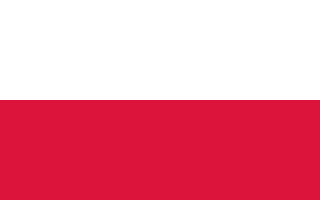
| National Colours | White, Red |
Cuisine
- Pierogi (dumplings)
- Żurek (sour rye soup)
- Bigos (hunter's stew)
Tourism Highlights
- Kraków's Old Town
- Wawel Royal Castle
- Masurian Lake District
- Zakopane (mountain resort)
Natural Wonders
- Białowieża Forest
- Tatra Mountains
Notable People
Maria Skłodowska-Curie, Nicolaus Copernicus, Józef Piłsudski
Fun Facts
- Poland is the only country in the EU that has not been part of the Soviet bloc.
- The Polish language is a West Slavic language, known for its complex consonant clusters.
Military
| Branches | Army, Navy, Air Force |
|---|---|
| Personnel (Approx.) | 189,000 |
International Relations
| UN Member Since | 1991 |
|---|---|
| Organizations | European Union (EU), NATO |
| UNESCO Sites | 15 — Wawel Royal Castle, Kraków Old Town, Malbork Castle |
Infrastructure & Environment
| Driving Side | Right |
|---|---|
| Electrical | 230V, 50 Hz (Type C, Type E) |
| Internet Users | 88.6% |
| Mobile Subscriptions | 138 per 100 people |
| CO₂ Emissions | 276.1 Mt |
| Renewable Energy | 15.2% |
Environmental Issues
- Air pollution (especially in industrial centers)
- Deforestation (historical)
- Agricultural runoff
Communications
| International Calling Code | +48 |
|---|---|
| Internet TLD | .pl |
| Postal Code Format | ##-### |
Emergency Services
External Links


 The EARF Engine