










Europe
Portugal
Portuguese Republic
"Europe's West Coast"
Overview
Portugal, officially the Portuguese Republic, is a sovereign nation located in the Iberian Peninsula in Southwestern Europe. It is geographically defined by the Atlantic Ocean to the west and south, and shares a long border with Spain to the east. The country's territory includes the mainland, as well as the autonomous archipelagos of the Azores and Madeira, which are crucial parts of its national identity. The capital and largest city is Lisbon, a historic metropolis known for its blend of Age of Discoveries grandeur and modern urban life. Portugal has historically played a pivotal role in global exploration and trade, shaping its unique cultural and economic profile.
Travel Advisory
Government & Politics
| Government Type | Unitary Parliamentary Republic |
|---|---|
| System | Republic |
| President | António José Seguro |
| Prime Minister | Luís Montenegro |
| Legislature (Unicameral) | Assembly of the Republic |
| Independence | 1911-11-10 from Kingdom of Portugal (Monarchy) |
| Constitution | 1976 |
Portugal is a stable, democratic, and highly integrated member of the European Union and NATO. Its political system is a parliamentary republic, characterized by a multi-party system and a strong emphasis on social welfare. The country's political discourse often balances its historical ties to the Atlantic with its modern commitment to European integration and sustainable development.
Portugal maintains strong diplomatic and economic ties with its immediate neighbors, Spain and Morocco. Due to its strategic location and historical role, it is deeply integrated into the European Union's political and economic framework. It also maintains significant cultural and trade relationships with Latin America and African nations.
People, Language & Religion
| Official Languages | Portuguese |
|---|---|
| Regional Languages | Azorean Portuguese, Madeiran Portuguese |
| Native Name POR | Portugal |
| Demonym (Male) | Portuguese |
| Ethnic — Portuguese | Over 95% |
| Religion — Christianity | Majority (predominantly Roman Catholicism) |
Economy
| GDP (Nominal) | $346.6B USD |
|---|---|
| GDP (PPP) | $574.2B USD |
| GDP per Capita | $32,082 USD |
| GDP per Capita (PPP) | $53,146 USD |
| GDP Growth Rate | 2.5% |
| Gini Coefficient | 0.339 |
| Human Development Index 0.805 · High | |
| Unemployment Rate | 6.2% |
| Inflation Rate | 2.3% |
| Public Debt (% GDP) | 5.7% |
| Main Industries | Tourism, Automotive manufacturing, Textiles, Renewable energy |
| Main Exports | Vehicles, Refined petroleum products, Machinery, Wine |
| Main Imports | Oil and gas, Machinery parts, Chemicals, Foodstuffs |
| Export Partners | Spain, Germany, France |
| Import Partners | Spain, Germany, France |
| Currency | Euro (€) [EUR] |
Demographics
| Population | 10,804,871 |
|---|---|
| Urban Population | 61.5% |
| Median Age | 43 years |
| Life Expectancy | 82.4 years |
| Fertility Rate | 1.41 |
| Infant Mortality | 2.7 per 1,000 births |
| Literacy Rate | 99% |
Geography & Climate
The country's geography is characterized by a diverse mix of coastal plains, rugged mountainous interior, and volcanic archipelagos. The western coast faces the vast Atlantic Ocean, while the eastern border with Spain is marked by varied terrain, including plateaus and river valleys. The presence of the Azores and Madeira adds significant oceanic and volcanic diversity to the national landscape.
| Terrain | Coastal plains, mountainous interior, and volcanic archipelagos |
|---|---|
| Total Area | 92,212 km² |
| Coastline | 930 km |
| Exclusive Economic Zone | 1,200,000 km² |
| Landlocked | No |
| Highest Point | Pico Ruivo (2,371 m) |
| Lowest Point | Atlantic Ocean (0 m) |
| Major Rivers | Tagus River (Tejo), Douro River |
| Major Lakes | Lagoa de Óbidos |
| Major Cities | Lisbon, Porto, Braga |
| Natural Resources | Natural gas, Petroleum, Hydroelectric potential, Agricultural land |
| Climate | Mediterranean/Oceanic |
Portugal exhibits a transition from Mediterranean climate in the south and west to a more temperate oceanic climate in the north. Rainfall is generally concentrated in the cooler months, while summers are warm and dry, though the Atlantic influence moderates temperature extremes year-round.
History
Ancient & Early History
The region was settled by various peoples, including the Iberian tribes and the Phoenicians, who established early trading posts. Later, it was heavily influenced by the Roman Empire, which established the province of Lusitania, leading to significant Romanization of the culture and infrastructure.
Colonial Period
Portugal was a dominant maritime power during the Age of Discoveries (15th-16th centuries), establishing vast colonial empires across Africa, Asia, and the Americas. This period of global trade and exploration profoundly shaped its national identity and economy, though the empire eventually declined under European pressures.
Independence
The monarchy was overthrown in 1910, leading to the establishment of the First Republic. After periods of instability, the country transitioned to a stable democratic republic, culminating in its full integration into the European community.
Modern Era
The 20th century saw Portugal navigate periods of authoritarian rule (Estado Novo) followed by the Carnation Revolution of 1974. This revolution restored democracy and led to a period of rapid political and economic modernization, culminating in its entry into the European Economic Community.
Recent History
Since joining the European Union, Portugal has focused on economic diversification, particularly in tourism and renewable energy. It has maintained a stable democratic framework while managing demographic challenges, including low birth rates and an aging population.
Culture & National Symbols
Portuguese culture is renowned for its unique blend of maritime history, melancholic Fado music, and vibrant tilework (azulejos). The country's cuisine is heavily influenced by its Atlantic trade routes, featuring fresh seafood and simple, hearty dishes. The culture places a high value on family and community traditions.
| National Anthem | Hino Nacional — "Portugal, terra de amores e de glória" |
|---|---|
| National Animal | Portuguese Eagle |
| National Bird | Doves (Doves) |
| National Flower | Carnation |
| National Tree | Oak |
| National Sport | Football (Soccer) |
| National Dish | Bacalhau à Brás |
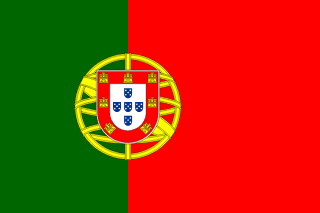
| National Colours | Red, Green |
Cuisine
- Bacalhau (Salted Codfish) dishes
- Pastel de Nata (Custard Tart)
- Vinho Verde (Green Wine)
Tourism Highlights
- The historic center of Lisbon (Baixa)
- The colorful tiles and architecture of Porto
- The natural beauty and volcanic landscapes of the Azores and Madeira
Natural Wonders
- Sintra's Quinta da Regaleira
- The Algarve coastline
- The Azores volcanic islands
Notable People
Vasco da Gama, Luís Vaz de Camões, Fernando Pessoa
Fun Facts
- Portugal is the westernmost point of continental Europe.
- The country shares the longest uninterrupted border in the EU with Spain.
Military
| Branches | Army, Navy, Air Force |
|---|---|
| Personnel (Approx.) | 52,000 |
International Relations
| UN Member Since | 1951 |
|---|---|
| Organizations | NATO, EU |
| UNESCO Sites | 10 — Jerónimos Monastery, Belém Tower, Sintra-Cascais Natural Park |
Infrastructure & Environment
| Driving Side | Right |
|---|---|
| Electrical | 230V, 50 Hz (Type C, Type F) |
| Internet Users | 88.5% |
| Mobile Subscriptions | 124.1 per 100 people |
| CO₂ Emissions | 35.6 Mt |
| Renewable Energy | 32.3% |
Environmental Issues
- Coastal erosion
- Waste management
- Sustainable fishing practices
Communications
| International Calling Code | +351 |
|---|---|
| Internet TLD | .pt |
| Postal Code Format | ####-### |
Emergency Services
External Links


 The EARF Engine