







Europe
Romania
"Discover Wild Romania"
Overview
Romania is a country situated at the crossroads of Central, Eastern, and Southeast Europe, characterized by its diverse geography and rich history. It shares borders with Ukraine, Moldova, Bulgaria, Serbia, and Hungary, and has a significant coastline along the Black Sea. The country's territory is dominated by the Carpathian Mountains, a major range that runs from north to southwest, and is traversed by the Danube River, Europe's second-longest. Bucharest serves as the capital and largest urban center, while other major cities include Cluj-Napoca and Timișoara. Romania has historically been a crossroads of civilizations, influencing its culture, economy, and political development.
Travel Advisory
Government & Politics
| Government Type | Unitary Semi-Presidential Republic |
|---|---|
| System | Republic |
| President | Nicușor Dan |
| Prime Minister | Ilie Bolojan |
| Legislature (Bicameral) | Parliament |
| Independence | 1989-09-16 from Romania was part of the Austro-Hungarian Empire and later the Kingdom of Romania. |
| Constitution | 1991 |
Romania is a unitary state with a semi-presidential system, meaning executive power is shared between a directly elected President and a Prime Minister who leads the cabinet. The political landscape is characterized by multi-party competition, with major parties often forming coalition governments. The country's political stability is closely tied to its successful integration into Western institutions like the EU and NATO.
Romania maintains strong strategic partnerships with Western European nations, particularly Germany and France, due to its membership in the EU and NATO. It also maintains complex and historically significant relationships with its immediate neighbors, including Ukraine and Moldova, which are key geopolitical partners in the Black Sea region.
People, Language & Religion
| Official Languages | Romanian |
|---|---|
| Regional Languages | Ukrainian, German, Italian |
| Native Name RON | România |
| Demonym (Male) | Romanian |
| Ethnic — Roma | Significant minority |
| Ethnic — German | Significant minority |
| Ethnic — Romanian | Majority |
| Ethnic — Ukrainian | Significant minority |
| Religion — Islam | Minority |
| Religion — Catholicism | Minority |
| Religion — Orthodox Christianity | Majority |
Economy
| GDP (Nominal) | $428.7B USD |
|---|---|
| GDP (PPP) | $968B USD |
| GDP per Capita | $22,538 USD |
| GDP per Capita (PPP) | $50,895 USD |
| GDP Growth Rate | 2.5% |
| Gini Coefficient | 0.298 |
| Human Development Index 0.81 · High | |
| Unemployment Rate | 6% |
| Inflation Rate | 7.2% |
| Public Debt (% GDP) | 45% |
| Main Industries | Automotive manufacturing, Chemicals, Energy production, Agriculture |
| Main Exports | Machinery and equipment, Petroleum products, Automotive parts, Agricultural products |
| Main Imports | Energy sources, Raw materials, Consumer goods, Machinery components |
| Export Partners | Germany, China, United States, Italy |
| Import Partners | Germany, China, Russia, Turkey |
| Currency | Romanian leu (lei) [RON] |
Demographics
| Population | 19,020,271 |
|---|---|
| Urban Population | 52.2% |
| Median Age | 36 years |
| Life Expectancy | 76.5 years |
| Fertility Rate | 1.39 |
| Infant Mortality | 6 per 1,000 births |
| Literacy Rate | 99% |
Geography & Climate
The country's geography is defined by its position in Southeast Europe, featuring a mix of rolling plains, mountainous regions, and a significant coastline. The Carpathian Mountains form a major arc across the country, providing diverse ecosystems and challenging terrain. Major river systems, including the Danube, flow through the country, emptying into the Black Sea and forming the Danube Delta, a globally significant wetland.
| Terrain | Mountainous (Carpathians), Plateau, and River Valley |
|---|---|
| Total Area | 238,391 km² |
| Coastline | 170 km |
| Exclusive Economic Zone | 170,000 km² |
| Landlocked | No |
| Highest Point | Moldoveanu Peak (2,544 m) |
| Lowest Point | Black Sea (0 m) |
| Major Rivers | Danube, Siret, Olt |
| Major Lakes | Lake Cristal, Lake Neajl |
| Major Cities | Bucharest, Cluj-Napoca, Timișoara, Iași, Constanța |
| Natural Resources | Fossil fuels (oil and natural gas), Timber, Minerals (coal, iron ore), Agricultural land |
| Climate | Humid Continental (Dfa/Dfb) |
Romania experiences a predominantly continental climate, characterized by hot summers and cold winters. The climate varies significantly across its diverse geography; the Black Sea coast enjoys a milder, subtropical influence, while the Carpathian interior experiences pronounced seasonal temperature shifts.
History
Ancient & Early History
The region has been inhabited by various groups since prehistory, notably the Dacians, who established a powerful kingdom in the area. Later, the area was heavily influenced by the Roman Empire, which established Roman settlements and infrastructure, integrating the region into the Roman provincial system.
Colonial Period
Following the decline of the Roman Empire, the region was controlled by various powers, including the Byzantine Empire and later the Ottoman Empire. The 18th and 19th centuries saw periods of struggle for autonomy, culminating in the formation of the modern Romanian state through various treaties and national uprisings.
Independence
Romania achieved its modern form of statehood through a complex series of political maneuvers and wars, culminating in the establishment of the Kingdom of Romania in the late 19th century. The communist regime was overthrown in the Revolution of December 1989, restoring democratic governance.
Modern Era
The 20th century saw Romania caught between major geopolitical powers, leading to periods of Soviet influence and subsequent attempts at national reorientation. The country transitioned through communism and eventually adopted a market economy, joining NATO and the European Union in the early 21st century.
Recent History
Since the early 2000s, Romania has focused on integrating into Western European structures, undergoing significant economic reforms and infrastructure development. The country continues to balance its historical ties with Eastern Europe while pursuing deeper integration with the EU and global markets.
Culture & National Symbols
Romanian culture is a rich blend of Slavic, Latin, and Byzantine influences. It is renowned for its vibrant folk traditions, elaborate costumes, and unique musical heritage. The country's folklore, particularly in regions like Transylvania, is deeply intertwined with its history and identity.
| National Anthem | Mândra Roumaniei — "Mândra Roumaniei, stelele-nori, (Pride of Romania, stars-clouds)" |
|---|---|
| National Animal | Brown Bear |
| National Bird | Cormorant |
| National Flower | Cornflower |
| National Tree | Oak |
| National Sport | Football (Soccer) |
| National Dish | Mămăligă cu brânză și carne (Polenta with cheese and meat) |
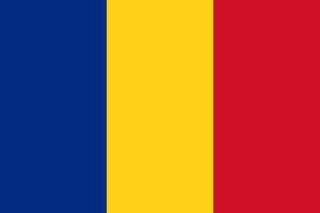
| National Colours | Blue, Yellow, Red |
Cuisine
- Mămăligă (Polenta)
- Sarmale (Stuffed cabbage rolls)
- Mici (Grilled minced meat)
- Plăcintă (Sweet or savory pastry)
Tourism Highlights
- Transylvania's medieval castles and fortified churches
- The Danube Delta's unique wetland ecosystem
- The Black Sea resorts (e.g., Constanța)
- The Carpathian Mountains' hiking trails
Natural Wonders
- The Danube Delta
- The Carpathian Mountains
- Peleș Castle (architectural wonder)
Notable People
Mihai Eminescu, George Enescu, Marius Codreanu
Fun Facts
- Romania is home to one of the largest populations of wild brown bears in Europe.
- The country has a significant concentration of UNESCO World Heritage sites, particularly in its medieval towns and castles.
Military
| Branches | Army, Navy, Air Force |
|---|---|
| Personnel (Approx.) | 128,000 |
International Relations
| UN Member Since | 1999 |
|---|---|
| Organizations | European Union (EU), NATO |
| UNESCO Sites | 12 — Bran Castle, Săcele Citadel, Peleș Castle |
Infrastructure & Environment
| Driving Side | Right |
|---|---|
| Electrical | 230V, 50 Hz (Type F (Schuko), Type C) |
| Internet Users | 91.3% |
| Mobile Subscriptions | 119.8 per 100 people |
| CO₂ Emissions | 70.9 Mt |
| Renewable Energy | 23.6% |
Environmental Issues
- Deforestation in the Carpathian foothills
- Water pollution in major river systems
- Impact of agricultural runoff on wetlands
Communications
| International Calling Code | +40 |
|---|---|
| Internet TLD | .ro |
| Postal Code Format | ###### |
Emergency Services
External Links


 The EARF Engine