










Middle East
Saudi Arabia
Kingdom of Saudi Arabia
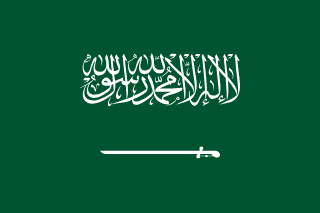
"There is no god but God; Muhammad is the messenger of God"
Overview
Saudi Arabia, officially the Kingdom of Saudi Arabia (KSA), is a large country situated in the heart of the Arabian Peninsula in Western Asia. It is the largest country in the Middle East and the fifth-largest in Asia by area. The nation's geography is dominated by arid desert, steppe, and mountainous regions, with a unique coastline along both the Red Sea and the Persian Gulf. The capital and largest city is Riyadh, while other major population centers include Jeddah and the historically and religiously significant cities of Mecca and Medina. With a population of approximately 34.8 million people, Saudi Arabia is a major global energy producer and a key center for Islamic pilgrimage.
Travel Advisory
Government & Politics
| Government Type | Constitutional Monarchy |
|---|---|
| System | Absolute Monarchy |
| King | King Salman |
| Prime Minister | Crown Prince Mohammed bin Salman |
| Legislature (Advisory (Non-legislative)) | Consultative Council |
| Independence | 1932-03-23 from Various local sheikhdoms (Unification) |
Saudi Arabia is an absolute monarchy ruled by the House of Saud. The King serves as both the head of state and the head of government, wielding ultimate authority. The political structure is highly centralized, with the King's Council and the Consultative Council serving as primary advisory bodies. The country maintains a strong adherence to Wahhabi interpretations of Sunni Islam, which heavily influences its legal and social framework.
Saudi Arabia plays a pivotal role in global energy security and Islamic diplomacy. It maintains complex relationships with regional rivals (such as Iran) and strategic partners (including the US and China). Its foreign policy is heavily influenced by its religious leadership and its economic interests derived from oil exports.
People, Language & Religion
| Official Languages | Arabic |
|---|---|
| Native Name ARA | العربية السعودية |
| Demonym (Male) | Saudi Arabian |
| Ethnic — Arab | Over 90% |
| Ethnic — Non-Arab | Remaining population |
| Religion — Judaism | Small minority |
| Religion — Christianity | Small minority |
| Religion — Islam (Sunni): | Over 90% |
Economy
| GDP (Nominal) | $1276.9B USD |
|---|---|
| GDP (PPP) | $2728B USD |
| GDP per Capita | $34,537 USD |
| GDP per Capita (PPP) | $73,784 USD |
| GDP Growth Rate | 3.5% |
| Gini Coefficient | 0.3 |
| Human Development Index 0.81 · Very High | |
| Unemployment Rate | 3% |
| Inflation Rate | 2.1% |
| Public Debt (% GDP) | 20% |
| Main Industries | Oil and Gas Extraction, Petrochemicals, Construction, Finance |
| Main Exports | Crude Petroleum, Natural Gas, Petrochemical Products, Gold |
| Main Imports | Foodstuffs, Machinery, Water, Pharmaceuticals |
| Export Partners | China, India, Japan, South Korea |
| Import Partners | China, India, Iran, Turkey |
| Currency | Saudi riyal (ر.س) [SAR] |
Demographics
| Population | 36,973,555 |
|---|---|
| Urban Population | 84.6% |
| Median Age | 25 years |
| Life Expectancy | 79 years |
| Fertility Rate | 2.31 |
| Infant Mortality | 4.7 per 1,000 births |
| Literacy Rate | 97.9% |
Geography & Climate
Saudi Arabia occupies a vast expanse of the Arabian Peninsula, bordered by the Red Sea in the west and the Persian Gulf to the east. Its geography is highly varied, encompassing massive desert plateaus, rugged mountain ranges (such as the Sarawat Mountains), and fertile coastal strips. The country's strategic location makes it a crucial global crossroads for trade and energy transport.
| Terrain | Arid desert, steppe, mountain ranges, and coastal plains. |
|---|---|
| Total Area | 2,149,690 km² |
| Coastline | 2 km |
| Landlocked | No |
| Highest Point | Jabal Shawwal (2 m) |
| Lowest Point | Arabian Sea/Red Sea (0 m) |
| Major Rivers | Wadi Al-Hamra (Seasonal) |
| Major Cities | Riyadh, Jeddah, Mecca, Medina |
| Natural Resources | Crude Oil, Natural Gas, Iron Ore, Gypsum, Potash |
| Climate | BWh/BSh (Hot Desert/Steppe) |
The climate is predominantly arid and semi-arid, characterized by extreme temperature fluctuations between hot summers and mild winters. Rainfall is scarce and highly unpredictable, making water management a critical national concern. Coastal areas, particularly along the Red Sea, experience a tropical savanna climate, while the interior is classic desert.
History
Ancient & Early History
The Arabian Peninsula was historically home to various nomadic tribes and small city-states, notably the powerful Sabaean Kingdom in Yemen and the Nabataean Kingdom centered at Petra. These ancient civilizations were crucial trade hubs along the incense and spice routes, predating the rise of major empires in the region.
Colonial Period
The region was historically influenced by various powers, including the Ottoman Empire and the British Empire, which sought to secure oil interests and maintain stability in the Gulf. Direct colonial rule was limited, but foreign influence was significant in the 19th and early 20th centuries.
Independence
The modern state emerged through the unification efforts of Ibn Saud (Abdulaziz bin Abdul Rahman Al Saud) in the 1920s and 1930s, culminating in the declaration of the Kingdom of Saudi Arabia in 1932.
Modern Era
Saudi Arabia rapidly modernized in the late 20th century, driven by oil revenues. The country became a major global player in energy markets and undertook massive infrastructure and urban development projects, particularly in Riyadh and Jeddah.
Recent History
In recent years, the Kingdom has initiated the Vision 2030 program, a sweeping economic and social reform plan aimed at diversifying the economy away from oil dependence, modernizing governance, and enhancing the quality of life for its citizens.
Culture & National Symbols
Saudi culture is deeply intertwined with Islamic tradition and Bedouin heritage. The country is renowned for its elaborate hospitality, traditional poetry, and the preservation of ancient tribal customs. The architecture in historical cities like Jeddah and Al-Ula reflects a blend of Islamic and regional styles.
| National Anthem | Qaṣīdat al-Yamānah — "The poem of Yamamah" |
|---|---|
| National Animal | Arabian Camel |
| National Bird | Arabian Falcon |
| National Flower | Date Palm |
| National Tree | Date Palm |
| National Sport | Camel Racing |
| National Dish | Kabsa |
| National Colours | Green, White |
Cuisine
- Kabsa (Spiced rice dish)
- Jareesh (Wheat porridge)
- Mandi (Slow-cooked meat and rice)
Tourism Highlights
- The Grand Mosque in Mecca and Prophet's Mosque in Medina (Hajj/Umrah)
- Historical sites in Al-Ula (Nabataean ruins)
- Coastal resorts along the Red Sea
Natural Wonders
- The Empty Quarter (Rub' al Khali)
- The Red Sea coral reefs
Notable People
King Salman bin Abdulaziz Al Saud, Sheikh Mohammed bin Salman
Fun Facts
- Saudi Arabia is the largest country in the Middle East.
- It is the only country with a coastline on both the Red Sea and the Persian Gulf.
- The country is the birthplace of Islam.
Military
| Branches | Ground Forces, Air Force, Navy |
|---|---|
| Personnel (Approx.) | 282,000 |
International Relations
| UN Member Since | 1945 |
|---|---|
| Organizations | OIC (Organization of Islamic Cooperation) |
| UNESCO Sites | 1 — Al-Ula Historic Site |
Infrastructure & Environment
| Driving Side | Right |
|---|---|
| Electrical | 220V, 60 Hz (Type G, Type C) |
| Internet Users | 100% |
| Mobile Subscriptions | 159.5 per 100 people |
| CO₂ Emissions | 652.5 Mt |
| Renewable Energy | 0.1% |
Environmental Issues
- Water scarcity and desalination dependency
- Desertification and land degradation
- Managing oil extraction waste
Communications
| International Calling Code | +966 |
|---|---|
| Internet TLD | .sa, .السعودية |
| Postal Code Format | ##### |
Emergency Services
External Links


 The EARF Engine