










Europe
Serbia
Republic of Serbia
"Experience Serbia!"
Overview
The Republic of Serbia is a country located in the Balkans, at the crossroads of Southeast and Central Europe. It is a landlocked nation, bordered by several key states including Hungary, Romania, Bulgaria, North Macedonia, Croatia, Bosnia and Herzegovina, and Montenegro. With a population of approximately 6.9 million people, Serbia's largest city, Belgrade, serves as its capital. The country's rich history has seen it influenced by major empires, including the Byzantine and Ottoman, and it remains a vital cultural and geopolitical crossroads.
Travel Advisory
Government & Politics
| Government Type | Federal Parliamentary Republic |
|---|---|
| System | Republic |
| President | Aleksandar Vučić |
| Prime Minister | Đuro Macut |
| Legislature (Unicameral) | National Assembly of Serbia |
| Independence | 1941-10-10 from Yugoslavia (de facto) |
| Constitution | 2006 |
Serbia is a constitutional republic with a semi-presidential system, though its political landscape is often characterized by strong executive power. The political discourse is heavily influenced by historical narratives, regional rivalries, and the ongoing status of Kosovo. The country's political stability is often tested by internal ethnic tensions and external geopolitical pressures.
Serbia maintains complex and multifaceted foreign relations, balancing its desire for European integration (EU candidate status) with deep historical and cultural ties to Russia and China. It is a member of the Council of Europe and participates in regional cooperation efforts, while its relationship with Kosovo remains a major point of international contention.
People, Language & Religion
| Official Languages | Serbian |
|---|---|
| Regional Languages | Bosnian, Croatian, Albanian |
| Native Name SRP | Србија |
| Demonym (Male) | Serbian |
| Ethnic — Serbs | Majority |
| Ethnic — Bosniaks | Significant minority |
| Ethnic — Albanians | Minority |
| Ethnic — Romanians | Minority |
| Religion — Islam | Significant minority |
| Religion — Catholicism | Minority |
| Religion — Orthodox Christianity | Majority |
Economy
| GDP (Nominal) | $100B USD |
|---|---|
| GDP (PPP) | $222.1B USD |
| GDP per Capita | $15,262 USD |
| GDP per Capita (PPP) | $33,910 USD |
| GDP Growth Rate | 3.5% |
| Gini Coefficient | 0.328 |
| Human Development Index 0.68 · Medium | |
| Unemployment Rate | 7.1% |
| Inflation Rate | 3.9% |
| Public Debt (% GDP) | 75% |
| Main Industries | Manufacturing, Agriculture, Mining, Services |
| Main Exports | Machinery, Chemical products, Fuel, Agricultural goods |
| Main Imports | Petroleum products, Machinery, Raw materials, Foodstuffs |
| Export Partners | Germany, China, Hungary |
| Import Partners | Germany, China, Romania |
| Currency | Serbian dinar (дин.) [RSD] |
Demographics
| Population | 6,549,143 |
|---|---|
| Urban Population | 62.6% |
| Median Age | 35 years |
| Life Expectancy | 76 years |
| Fertility Rate | 1.64 |
| Infant Mortality | 4.6 per 1,000 births |
| Literacy Rate | 99% |
Geography & Climate
Serbia is situated in the Balkan Peninsula, forming a crucial geographical nexus between Central and Southeast Europe. Its terrain is highly varied, encompassing the fertile Pannonian Plain in the north, the rugged mountains of the Šumadija and Morava regions, and the lower hills of the south. Major river systems, such as the Danube and the Sava, flow through the country, facilitating historical trade and settlement.
| Terrain | Mixed: Pannonian Plain, Balkan Mountains, and rolling hills. |
|---|---|
| Total Area | 88,361 km² |
| Coastline | 0 km |
| Exclusive Economic Zone | 0 km² |
| Landlocked | Yes |
| Highest Point | Goraševski vrh (1 m) |
| Lowest Point | Danube River (20 m) |
| Major Rivers | Danube, Sava, Morava |
| Major Lakes | Sremski gradski jazera |
| Major Cities | Belgrade, Novi Sad, Niš |
| Natural Resources | Coal, Oil, Iron ore, Agricultural land |
| Climate | Continental |
Serbia generally experiences a temperate continental climate, characterized by hot summers and cold winters. Precipitation is relatively moderate, often peaking in the spring and early summer months. The climate variability across the country is influenced by its position on the Balkan Peninsula.
History
Ancient & Early History
The region has been inhabited since prehistoric times and was a key part of the Roman Empire, particularly within the province of Pannonia. Later, it became a crucial center for the early Serbian state, which flourished during the Byzantine period, establishing powerful medieval Serbian kingdoms.
Colonial Period
The Serbian lands were subjected to various empires, most notably the Byzantine Empire and later the Ottoman Empire, which controlled the region for several centuries. Resistance movements were constant, leading to periods of semi-autonomy and eventual struggles for national revival.
Independence
Serbia achieved a degree of independence from the Ottoman Empire in the 19th century, participating in the various Balkan Wars. The modern state's borders and identity were significantly shaped by the collapse of the Austro-Hungarian and Ottoman empires.
Modern Era
The 20th century saw Serbia embroiled in the complex geopolitical conflicts of the Yugoslav federation. Following the dissolution of Yugoslavia, Serbia maintained its sovereignty but faced international isolation and conflict, particularly concerning the disputed territory of Kosovo.
Recent History
Since the early 21st century, Serbia has pursued a policy of economic diversification and integration with European structures, while maintaining strong ties with Russia and China. It continues to navigate complex regional disputes and aims to solidify its position as a regional economic hub.
Culture & National Symbols
Serbian culture is deeply rooted in Orthodox Christianity and Slavic traditions. It is renowned for its vibrant folk music, elaborate traditional clothing, and rich oral storytelling. The cuisine, heavily influenced by Balkan and Ottoman culinary traditions, is celebrated for its use of paprika, cheese, and grilled meats.
| National Anthem | March of the Serbian People — "Srbija, zemlja naša, slava ti..." |
|---|---|
| National Animal | Wolf |
| National Bird | Kukavica (Owl) |
| National Flower | Vinca (Periwinkle) |
| National Tree | Oak |
| National Sport | Basketball |
| National Dish | ćevapi |
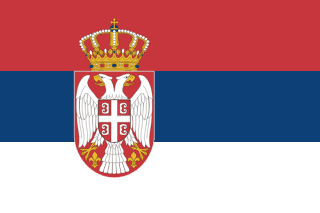
| National Colours | Red, Blue, White |
Cuisine
- ćevapi (grilled minced meat)
- pita (savory baked pastry)
- rakija (fruit brandy)
- ajvar (vegetable relish)
Tourism Highlights
- Belgrade's vibrant nightlife and historical architecture
- Manastir (monasteries) in Serbia and Kosovo
- The natural beauty of the Šumadija and Morava regions
- The cultural significance of Novi Sad and Petrovaradin Fortress
Natural Wonders
- Tara River Canyon
- Šumadija Mountains
- Ovčar-Kablar Gorge
Notable People
Vojović Petrović, Miloš Petrović, Jelena Karleuša
Fun Facts
- Serbia is historically known as the cradle of the Serbian Orthodox Church.
- The city of Belgrade is one of the largest and most historically significant urban centers in the Balkans.
Military
| Branches | Army, Air Force, Police Forces |
|---|---|
| Personnel (Approx.) | 32,000 |
International Relations
| UN Member Since | 1992 |
|---|---|
| Organizations | Council of Europe, Balkan Cooperation |
| UNESCO Sites | 1 — Strahovo Monastery |
Infrastructure & Environment
| Driving Side | Right |
|---|---|
| Electrical | 220V, 50 Hz (Type F (Schuko), Type C) |
| Internet Users | 87.7% |
| Mobile Subscriptions | 123.8 per 100 people |
| CO₂ Emissions | 25 Mt |
| Renewable Energy | 27.2% |
Environmental Issues
- Air pollution in major urban centers
- Water management in the Danube basin
- Deforestation in certain mountainous regions
Communications
| International Calling Code | +381 |
|---|---|
| Internet TLD | .rs, .срб |
| Postal Code Format | ###### |
Emergency Services
External Links


 The EARF Engine