










Asia
Singapore
Republic of Singapore
"Onward Singapore"
Overview
Singapore, officially the Republic of Singapore, is a highly developed island city-state located in Southeast Asia. Its territory comprises one main island, 63 satellite islands, and various islets, situated strategically near the confluence of major shipping lanes. The nation is bordered by the Strait of Malacca to the west and the Singapore Strait to the south, making it a critical global maritime hub. With a population of over 5.6 million people concentrated in a small area of 710 km², Singapore is renowned for its advanced infrastructure, economic stability, and multicultural society.
Travel Advisory
Government & Politics
| Government Type | Parliamentary Republic |
|---|---|
| System | Republic |
| President | Tharman Shanmugaratnam |
| Prime Minister | Lawrence Wong |
| Legislature (Unicameral) | Parliament of Singapore |
| Independence | 1965-08-09 from Malaysia |
| Constitution | 1965 |
Singapore operates as a parliamentary republic with a Westminster-style system. The government is led by the Prime Minister, who is drawn from the majority party in the Parliament. The political landscape is characterized by strong governance, a focus on meritocracy, and a commitment to maintaining social order and economic stability. The ruling People's Action Party (PAP) has dominated the political scene since independence.
Singapore maintains highly pragmatic and diversified foreign relations, balancing its interests between major global powers, including the United States, China, and Japan. Its economic openness and commitment to international law allow it to function as a neutral, reliable partner in global trade and diplomacy, making it a crucial node in Asia's geopolitical network.
People, Language & Religion
| Official Languages | English |
|---|---|
| National Languages | Malay |
| Regional Languages | Mandarin |
| Native Name ENG | Singapore |
| Native Name MSA | Singapura |
| Native Name TAM | சிங்கப்பூர் |
| Native Name ZHO | 新加坡 |
| Demonym (Male) | Singaporean |
| Ethnic — Malay | 13% |
| Ethnic — Indian | 10% |
| Ethnic — Others | 2% |
| Ethnic — Chinese | 75% |
| Religion — Islam | 15% |
| Religion — Others | 5% |
| Religion — Buddhism | 25% |
| Religion — Hinduism | 10% |
| Religion — Christianity | 5% |
Economy
| GDP (Nominal) | $603.9B USD |
|---|---|
| GDP (PPP) | $998.3B USD |
| GDP per Capita | $98,814 USD |
| GDP per Capita (PPP) | $163,354 USD |
| GDP Growth Rate | 2.5% |
| Gini Coefficient | 0.36 |
| Human Development Index 0.92 · Very High | |
| Unemployment Rate | 2.8% |
| Inflation Rate | 0.9% |
| Public Debt (% GDP) | 167.8% |
| Main Industries | Financial Services, Biotechnology, Logistics and Shipping, Tourism |
| Main Exports | Electronics, Petrochemicals, Machinery, Chemicals |
| Main Imports | Foodstuffs, Energy, Water, Raw Materials |
| Export Partners | China, Japan, India |
| Import Partners | Australia, Indonesia, Malaysia |
| Currency | Singapore dollar ($) [SGD] |
Demographics
| Population | 6,111,175 |
|---|---|
| Urban Population | 100% |
| Median Age | 35 years |
| Life Expectancy | 83.3 years |
| Fertility Rate | 0.97 |
| Infant Mortality | 2.2 per 1,000 births |
| Literacy Rate | 99% |
Geography & Climate
As a small island city-state, Singapore's geography is defined by its dense urban development and strategic location in the Straits of Malacca. The main island is surrounded by numerous smaller islets and reefs, which contribute to its maritime identity. Its proximity to major global shipping routes has historically dictated its economic and geopolitical importance. The island's limited landmass has necessitated intensive land reclamation and vertical development.
| Terrain | Low-lying coastal plain, heavily urbanized |
|---|---|
| Total Area | 710 km² |
| Coastline | 250 km |
| Exclusive Economic Zone | 100,000 km² |
| Landlocked | No |
| Highest Point | Bukit Timah Hill (163 m) |
| Lowest Point | Coastal areas (1 m) |
| Major Rivers | Singapore River |
| Major Lakes | MacRitchie Reservoir |
| Major Cities | Singapore |
| Natural Resources | Limited natural resources; relies heavily on imports |
| Climate | Tropical Rainforest |
Singapore experiences a tropical rainforest climate, characterized by high temperatures and high humidity year-round. Rainfall is abundant and distributed throughout the year, with distinct wet and dry seasons. The climate is influenced by its equatorial location, resulting in consistent warmth and minimal seasonal variation.
History
Ancient & Early History
While not an ancient civilization center itself, the area has been inhabited by various groups, including the early Malay people. Historically, it was a key trading post and port, attracting influences from Indian, Chinese, and Arab merchants for centuries.
Colonial Period
The island's strategic location led to its importance during the colonial era. It was first settled by the British East India Company, establishing Singapore as a major entrepôt and trading hub in the 19th century. This period saw rapid growth and the establishment of diverse ethnic communities.
Independence
Singapore gained self-governance in 1959 and achieved full independence from the Federation of Malaysia on August 9, 1965. This sudden separation was a pivotal moment, transforming it into a sovereign, independent nation-state.
Modern Era
Following independence, Singapore underwent rapid and dramatic economic transformation. It successfully transitioned from a small, resource-poor trading port into a global financial, technological, and logistical powerhouse. This growth was underpinned by strong governance, strategic planning, and attracting foreign investment.
Recent History
In recent decades, Singapore has continued to solidify its role as a regional leader, focusing on smart nation initiatives, advanced manufacturing, and sustainable urban development. It remains a key player in global trade, adapting its economy to the challenges of the 21st century.
Culture & National Symbols
Singapore is celebrated for its vibrant multiculturalism, which is reflected in its arts, festivals, and cuisine. The blend of Chinese, Malay, and Indian cultures creates a unique social tapestry. The nation also boasts world-class public infrastructure, including meticulously planned public housing and green spaces.
| National Anthem | Majulah Singapura — "Majulah Singapura" |
|---|---|
| National Animal | Merlion |
| National Flower | Vanda Miss Joaquim |
| National Sport | Football (Soccer) |
| National Dish | Chicken Rice |
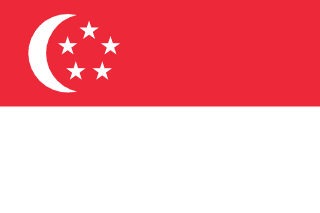
| National Colours | Red, White |
Cuisine
- Chicken Rice
- Laksa
- Rendang
- Nasi Lemak
Tourism Highlights
- Gardens by the Bay
- Marina Bay Sands
- Sentosa Island
- Singapore Zoo
Natural Wonders
- Singapore Botanic Gardens
- Southern Ridges
Notable People
Lee Kuan Yew, Goh Chok Tong
Fun Facts
- Singapore is one of the world's most livable and cleanest cities.
- It has a highly efficient public transportation system (MRT).
- The national motto, Majulah Singapura, translates to 'Onward Singapore'.
Military
| Branches | Singapore Armed Forces (SAF) |
|---|---|
| Personnel (Approx.) | 59,000 |
International Relations
| UN Member Since | 1965 |
|---|---|
| Organizations | ASEAN |
| UNESCO Sites | 1 — Singapore Botanic Gardens |
Infrastructure & Environment
| Driving Side | Right |
|---|---|
| Electrical | 230V, 50 Hz (Type G) |
| Internet Users | 94.4% |
| Mobile Subscriptions | 170.8 per 100 people |
| CO₂ Emissions | 58.9 Mt |
| Renewable Energy | 1.1% |
Environmental Issues
- Land scarcity and reclamation
- Waste management and recycling
- Coastal resilience against sea-level rise
Communications
| International Calling Code | +65 |
|---|---|
| Internet TLD | .sg, .新加坡, .சிங்கப்பூர் |
| Postal Code Format | ###### |
Emergency Services
External Links


 The EARF Engine