










Europe
Slovenia
Republic of Slovenia
"I feel SLOVEnia"
Overview
The Republic of Slovenia is a country located in Central Europe, known for its diverse geography, which ranges from the Alpine peaks of the Julian Alps to the Mediterranean coast of the Adriatic Sea. It is bordered by Italy to the west, Austria to the north, Hungary to the northeast, and Croatia to the south and southeast. With a population of approximately 2.1 million people, Slovenia is characterized by its rich natural environment, extensive forests, and a high quality of life. Ljubljana, the capital and largest city, serves as the country's primary cultural and economic hub.
Travel Advisory
Government & Politics
| Government Type | Parliamentary Republic |
|---|---|
| System | Unitary Republic |
| President | Nataša Pirc Musar |
| Prime Minister | Janez Janša |
| Legislature (Unicameral) | National Assembly |
| Independence | 1991-06-25 from Yugoslavia |
| Constitution | 1991 |
Slovenia is a parliamentary republic with a unitary system of government. Its political landscape is characterized by a multi-party system, with political discourse often revolving around EU integration, economic policy, and environmental sustainability. The country has a strong commitment to democratic institutions and rule of law.
Slovenia maintains robust and strategic relationships with its immediate neighbors, particularly Italy, Austria, and Croatia, due to shared economic and cultural ties. As a core member of the European Union and NATO, its foreign policy is heavily aligned with Western European security and economic frameworks.
People, Language & Religion
| Official Languages | Slovene |
|---|---|
| Regional Languages | Italian |
| Native Name SLV | Slovenija |
| Demonym (Male) | Slovene |
| Ethnic — Slavic | Significant presence |
| Ethnic — Italian | Minority |
| Ethnic — Slovene | Majority |
| Religion — Catholicism | Significant following |
| Religion — Christianity | Predominant |
Economy
| GDP (Nominal) | $79.6B USD |
|---|---|
| GDP (PPP) | $126.2B USD |
| GDP per Capita | $37,376 USD |
| GDP per Capita (PPP) | $59,245 USD |
| GDP Growth Rate | 2.5% |
| Gini Coefficient | 0.247 |
| Human Development Index 0.91 · Very High | |
| Unemployment Rate | 3.2% |
| Inflation Rate | 2.4% |
| Public Debt (% GDP) | 16.2% |
| Main Industries | Tourism, Manufacturing (machinery, automotive), Services (finance, IT) |
| Main Exports | Machinery and equipment, Chemical products, Vehicles |
| Main Imports | Energy sources, Raw materials, Consumer goods |
| Export Partners | Germany, Italy, Austria |
| Import Partners | Germany, Italy, Austria |
| Currency | Euro (€) [EUR] |
Demographics
| Population | 2,130,986 |
|---|---|
| Urban Population | 56% |
| Median Age | 40 years |
| Life Expectancy | 82.3 years |
| Fertility Rate | 1.52 |
| Infant Mortality | 1.8 per 1,000 births |
| Literacy Rate | 99% |
Geography & Climate
The country's geography is highly varied, encompassing three main zones. The northern part is dominated by the Julian Alps and Karst Plateau, providing rugged, mountainous terrain. The central region features rolling hills and extensive forests, while the south is defined by the Adriatic coastline and the Mediterranean influence. Major river systems, including the Sava and Soča, traverse the landscape, supporting diverse ecosystems.
| Terrain | Mountainous, Alpine, and Coastal |
|---|---|
| Total Area | 20,273 km² |
| Coastline | 150 km |
| Exclusive Economic Zone | 15,000 km² |
| Landlocked | No |
| Highest Point | Triglav (2,864 m) |
| Lowest Point | Adriatic Sea (0 m) |
| Major Rivers | Sava River, Soča River |
| Major Lakes | Lake Bled, Lake Bohinj |
| Major Cities | Ljubljana, Maribor, Kranj, Celje |
| Natural Resources | Forestry products, Hydroelectric potential, Mineral deposits (limited) |
| Climate | Temperate Continental/Mediterranean |
Slovenia exhibits a diverse climate profile. The Alpine regions, such as the Julian Alps, feature a cold, humid temperate climate. The central and northern areas show a temperate continental climate, while the southern coastal region (Slovene Littoral) has a distinct Mediterranean climate, characterized by hot, dry summers and mild, wet winters.
History
Ancient & Early History
The region has been inhabited since prehistoric times, with evidence of early settlements dating back thousands of years. Historically, it was part of various empires, including the Roman Empire, which established key infrastructure and settlements along its routes.
Colonial Period
Following the decline of Roman influence, the area was controlled by various powers, including the Lombards, Byzantines, and later the Venetian Republic, which exerted significant influence over the coastal regions. The region was later incorporated into the Habsburg Monarchy.
Independence
Slovenia declared its independence on June 25, 1991, following the dissolution of the Socialist Federal Republic of Yugoslavia (SFRY). This declaration marked the beginning of its modern sovereign statehood.
Modern Era
The country transitioned through periods of Yugoslav membership and subsequent struggle for self-determination. After achieving independence, Slovenia rapidly integrated into Western European structures, joining the European Union and adopting the Euro currency.
Recent History
In the 21st century, Slovenia has focused on economic stability and sustainable development, leveraging its strong natural resources and strategic location within the EU market. It maintains a high standard of living and a commitment to environmental protection.
Culture & National Symbols
Slovenian culture is a blend of Alpine, Mediterranean, and Slavic influences. The country is renowned for its traditional folk music, vibrant festivals, and unique culinary traditions. The emphasis on nature and outdoor activities is deeply embedded in the national identity.
| National Anthem | Zdaj Slovenija — "Zdaj Slovenija, v boju za svobodo" |
|---|---|
| National Animal | Brown Bear |
| National Bird | White Stork |
| National Flower | Carnation |
| National Tree | Beech |
| National Sport | Alpine Skiing |
| National Dish | Kremšnita (Cream Cake) |
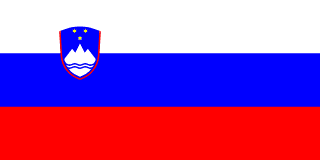
| National Colours | White, Blue, Red |
Cuisine
- Kremšnita (Cream Cake)
- Štruklji (Baked dumplings)
- Jota (Bean and sauerkraut stew)
Tourism Highlights
- Lake Bled and Bled Castle
- Julian Alps hiking and skiing
- Piran Old Town (Venetian influence)
- Coastal resorts
Natural Wonders
- Julian Alps
- Lake Bohinj
- Soča River Gorge
Notable People
Primož Trubar, Janez Janša, Alenka Bratušek
Fun Facts
- Slovenia is one of the most green and environmentally conscious countries in Europe.
- It is the only country in the EU that has a significant Mediterranean coastline.
Military
| Branches | Army, Air Force, Navy |
|---|---|
| Personnel (Approx.) | 7,000 |
International Relations
| UN Member Since | 1992 |
|---|---|
| Organizations | European Union (EU), NATO |
| UNESCO Sites | 10 — Julian Alps, Piran Old Town, Stari Trimar |
Infrastructure & Environment
| Driving Side | Right |
|---|---|
| Electrical | 230V, 50 Hz (Type F (Schuko)) |
| Internet Users | 90.8% |
| Mobile Subscriptions | 130.9 per 100 people |
| CO₂ Emissions | 13.3 Mt |
| Renewable Energy | 23.4% |
Environmental Issues
- Sustainable forestry management
- Waste management in urban centers
- Balancing tourism development with ecological preservation
Communications
| International Calling Code | +386 |
|---|---|
| Internet TLD | .si |
| Postal Code Format | SI- #### |
Emergency Services
External Links


 The EARF Engine