


Africa
South Africa
Republic of South Africa
"I am the rainbow nation"
Overview
South Africa, officially the Republic of South Africa (RSA), is a large country located at the southern tip of the African continent. Its geography is characterized by diverse biomes, ranging from coastal plains and temperate grasslands to semi-arid Karoo deserts and mountainous regions. The country is bordered by Namibia, Botswana, Zimbabwe, Mozambique, and Eswatini, and includes the landlocked kingdom of Lesotho. With a population exceeding 62 million people, South Africa is a major economic and cultural hub in Southern Africa. The country's administrative capital is Pretoria, while Cape Town serves as the legislative capital, and Bloemfontein is the judicial capital.
Travel Advisory
Government & Politics
| Government Type | Parliamentary Republic |
|---|---|
| System | Federal Parliamentary Republic |
| President | Cyril Ramaphosa |
| President | Cyril Ramaphosa |
| Legislature (Bicameral) | Parliament of South Africa |
| Independence | 1910-05-31 from British Empire (Union of South Africa) |
| Constitution | 1996 |
South Africa is a federal parliamentary republic with a complex constitutional framework designed to manage its deep historical divisions. The government structure is designed to ensure checks and balances between the executive, legislative, and judicial branches. Its political history is defined by the struggle against racial segregation and the eventual establishment of a multiracial democracy.
South Africa is a key player in Southern African development and global governance, often advocating for the interests of the Global South. It maintains strong economic ties with developed nations while also participating actively in regional blocs like SADC and global forums like BRICS.
People, Language & Religion
| Official Languages | English, Afrikaans, Zulu, Xhosa |
|---|---|
| Regional Languages | Sepedi, Tswana, Ndebele |
| Native Name AFR | South Africa |
| Native Name ENG | South Africa |
| Native Name NBL | Sewula Afrika |
| Native Name NSO | Afrika-Borwa |
| Native Name SOT | Afrika Borwa |
| Native Name SSW | Ningizimu Afrika |
| Native Name TSN | Aforika Borwa |
| Native Name TSO | Afrika Dzonga |
| Native Name VEN | Afurika Tshipembe |
| Native Name XHO | Mzantsi Afrika |
| Native Name ZUL | Ningizimu Afrika |
| Demonym (Male) | South African |
| Ethnic — White | 8% |
| Ethnic — Indian | 4% |
| Ethnic — Coloured | 10% |
| Ethnic — Black African | 78% |
| Religion — Hindu | 3% |
| Religion — Islamic | 5% |
| Religion — Christianity | 70% |
| Religion — African Traditional Religions | 15% |
Economy
| GDP (Nominal) | $427.2B USD |
|---|---|
| GDP (PPP) | $1029.9B USD |
| GDP per Capita | $6,598 USD |
| GDP per Capita (PPP) | $15,906 USD |
| GDP Growth Rate | 2.5% |
| Gini Coefficient | 0.541 |
| Human Development Index 0.705 · High | |
| Unemployment Rate | 32.4% |
| Inflation Rate | 3.2% |
| Public Debt (% GDP) | 82.8% |
| Main Industries | Mining, Finance, Tourism, Agriculture, Manufacturing |
| Main Exports | Platinum, Gold, Diamonds, Iron Ore, Motor Vehicles |
| Main Imports | Machinery, Petroleum Products, Chemicals, Foodstuffs |
| Export Partners | China, United States, Germany |
| Import Partners | China, United States, Germany |
| Currency | South African rand (R) [ZAR] |
Demographics
| Population | 64,747,319 |
|---|---|
| Urban Population | 63.8% |
| Median Age | 28.5 years |
| Life Expectancy | 66.3 years |
| Fertility Rate | 2.21 |
| Infant Mortality | 24.2 per 1,000 births |
| Literacy Rate | 91.2% |
Geography & Climate
The country's geography is defined by its dramatic coastline along the Atlantic and Indian Oceans, and its diverse interior plateaus. Major geographical features include the Drakensberg mountain range, the Cape Fold Belt, and the vast Karoo semi-desert. The country is divided into nine provinces, each contributing unique ecological and topographical features, from lush rainforests to arid scrubland.
| Terrain | Coastal plains, mountain ranges (Drakensberg, Cape Fold Belt), semi-desert (Karoo), and high plateaus. |
|---|---|
| Total Area | 1,221,037 km² |
| Coastline | 2,798 km |
| Exclusive Economic Zone | 1,221,037 km² |
| Landlocked | No |
| Highest Point | Thabani Ntlenyana (3,468 m) |
| Lowest Point | Indian Ocean (0 m) |
| Major Rivers | Orange River, Limpopo River, Umzimvubu River |
| Major Lakes | Lake Tugela, Lake Berg |
| Major Cities | Johannesburg, Cape Town, Durban |
| Natural Resources | Gold, Diamonds, Platinum, Coal, Iron Ore, Water, Biodiversity |
| Climate | Subtropical/Temperate |
South Africa exhibits a highly varied climate, ranging from Mediterranean in the Western Cape to semi-arid in the Karoo and tropical in parts of KwaZulu-Natal. The interior plateau experiences temperate conditions, while the coastal areas benefit from maritime influences, leading to mild winters and warm summers.
History
Ancient & Early History
The region has been inhabited by various groups for millennia, including the Khoisan people, who are among the continent's earliest inhabitants. Archaeological evidence points to sophisticated early human settlements, predating the arrival of major classical empires in the area.
Colonial Period
The area was first encountered by European explorers in the 17th century, leading to the establishment of Dutch and British colonial interests. The region was governed by various powers, culminating in the establishment of the Union of South Africa in 1910, which consolidated British rule over the diverse populations.
Independence
While the Union of South Africa was established in 1910, the modern democratic era began with the dismantling of apartheid. The country transitioned to a non-racial democracy following the release of Nelson Mandela and the end of apartheid in the early 1990s.
Modern Era
The post-apartheid era has been marked by significant political and economic transitions, aiming to build a unified, democratic state. Key challenges include addressing deep socio-economic inequalities, managing resource distribution, and fostering economic growth across its diverse provinces.
Recent History
In recent years, South Africa has faced global economic headwinds, including high unemployment and energy crises. The political landscape remains dynamic, with ongoing efforts to reform state-owned enterprises and improve governance structures to ensure sustainable development.
Culture & National Symbols
South Africa is renowned for its incredible cultural diversity, often dubbed the 'Rainbow Nation.' This is reflected in its vibrant arts scene, music (including genres like Afrobeat and Kwaito), and festivals. The culture is a rich blend of indigenous African traditions, European colonial influences, and Asian diasporic heritage.
| National Anthem | Nkosi Sikeletha — "Nkosi Sikeletha" |
|---|---|
| National Animal | Springbok |
| National Bird | Kingfisher |
| National Flower | Protea |
| National Tree | Yellowwood |
| National Sport | Rugby Union |
| National Dish | Braai (BBQ) |
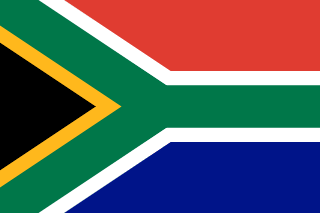
| National Colours | Green, Gold, Black |
Cuisine
- Braai (South African BBQ)
- Bobotie (Curried minced meat bake)
- Bunny Chow (Curry bread, popular in Durban)
Tourism Highlights
- Table Mountain (Cape Town)
- Garden Route
- Kruger National Park (Wildlife Safari)
- Drakensberg Mountains
Natural Wonders
- Table Mountain
- Kgalagadi Transfrontier Park
- Skeleton Coast
Notable People
Nelson Mandela, Desmond Tutu, Steve Biko
Fun Facts
- South Africa is the only country on the African continent with coastlines on both the Atlantic and Indian Oceans.
- The country's national motto, ǃke e: ǀxarra ǁke, translates to 'I am the rainbow nation'.
Military
| Branches | South African National Defence Force (SANDF) |
|---|---|
| Personnel (Approx.) | 89,000 |
International Relations
| UN Member Since | 1994 |
|---|---|
| Organizations | BRICS, SADC |
| UNESCO Sites | 3 — Robben Island, Cape Town, Garden Route National Park |
Infrastructure & Environment
| Driving Side | Left |
|---|---|
| Electrical | 230V, 50 Hz (Type M, Type N) |
| Internet Users | 78.4% |
| Mobile Subscriptions | 179.3 per 100 people |
| CO₂ Emissions | 440.2 Mt |
| Renewable Energy | 9.7% |
Environmental Issues
- Water scarcity and management
- Biodiversity loss due to habitat fragmentation
- Air pollution in major industrial centers
Communications
| International Calling Code | +27 |
|---|---|
| Internet TLD | .za |
| Postal Code Format | #### |
Emergency Services
External Links


 The EARF Engine