






Europe
Spain
Kingdom of Spain
"Further Beyond ( Plus Ultra)"
Overview
Spain, officially the Kingdom of Spain, is a sovereign nation located in Southwestern Europe, forming the majority of the Iberian Peninsula. Its territory extends into North Africa, encompassing the autonomous cities of Ceuta and Melilla. The country is characterized by a diverse geography, ranging from the rugged Pyrenees mountains in the north to the Mediterranean coastlines and the Atlantic Ocean. With a population of approximately 47.3 million people, Spain is one of the largest and most populous economies in the European Union. Its major urban centers include Madrid, Barcelona, and Valencia, making it a cultural and economic crossroads.
Travel Advisory
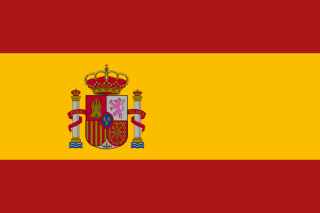
Government & Politics
| Government Type | Parliamentary Constitutional Monarchy |
|---|---|
| System | Constitutional Monarchy |
| King | King Felipe VI |
| President of the Government | Pedro Sánchez |
| Legislature (Bicameral) | Cortes Generales |
| Independence | null from null |
| Constitution | 1978 |
Spain is a decentralized parliamentary constitutional monarchy composed of 17 autonomous communities. Its political system is characterized by a high degree of regional autonomy, allowing communities like Catalonia and the Basque Country significant self-governance. The political landscape is multi-party, often leading to complex coalition governments at the national level.
As a core member of the European Union and NATO, Spain maintains strong diplomatic and economic ties with its European neighbors. It plays an active role in Mediterranean diplomacy and has historically maintained complex relationships with North African nations, balancing its ties between Europe and Africa.
People, Language & Religion
| Official Languages | Spanish |
|---|---|
| Regional Languages | Catalan, Galician, Basque |
| Native Name SPA | España |
| Demonym (Male) | Spanish |
| Ethnic — Basques | Significant regional group |
| Ethnic — Catalans | Significant regional group |
| Ethnic — Castilians | Majority group |
| Religion — Islam | Significant minority (especially in Andalusia) |
| Religion — Catholicism | Majority religion |
Economy
| GDP (Nominal) | $1906.5B USD |
|---|---|
| GDP (PPP) | $2954.8B USD |
| GDP per Capita | $38,627 USD |
| GDP per Capita (PPP) | $59,868 USD |
| GDP Growth Rate | 2.5% |
| Gini Coefficient | 0.334 |
| Human Development Index 0.9 · Very High | |
| Unemployment Rate | 10.4% |
| Inflation Rate | 2.7% |
| Public Debt (% GDP) | 105.6% |
| Main Industries | Automotive Manufacturing, Tourism, Food Processing, Chemicals |
| Main Exports | Motor Vehicles, Chemical Products, Food Products, Machinery |
| Main Imports | Petroleum Products, Machinery, Raw Materials, Chemicals |
| Export Partners | Germany, France, United States, China |
| Import Partners | Germany, France, United States, China |
| Currency | Euro (€) [EUR] |
Demographics
| Population | 49,355,143 |
|---|---|
| Urban Population | 80.5% |
| Median Age | 43 years |
| Life Expectancy | 83.9 years |
| Fertility Rate | 1.1 |
| Infant Mortality | 2.6 per 1,000 births |
| Literacy Rate | 99% |
Geography & Climate
Spain occupies the majority of the Iberian Peninsula, bordered by France, Andorra, and Portugal. Its geography is defined by diverse mountain ranges, including the Pyrenees, the Sierra Nevada, and the Iberian System. The country possesses extensive coastlines along the Atlantic Ocean, the Mediterranean Sea, and the Strait of Gibraltar. Key geographical features include the Guadalquivir River basin and the arid plateaus of the Meseta Central.
| Terrain | Mountainous, plateau, and coastal |
|---|---|
| Total Area | 505,992 km² |
| Coastline | 3,500 km |
| Exclusive Economic Zone | 1,500,000 km² |
| Landlocked | No |
| Highest Point | Mulhacén (3,479 m) |
| Lowest Point | Mediterranean Sea (0 m) |
| Major Rivers | Tajo (Tagus), Guadiana, Ebro |
| Major Lakes | Embalse de El Atabal |
| Major Cities | Madrid, Barcelona, Valencia, Seville, Zaragoza |
| Natural Resources | Oil and Gas, Coal, Water (irrigation), Minerals (lead, zinc) |
| Climate | Mediterranean/Temperate |
Spain exhibits a highly varied climate, dominated by the Mediterranean climate along its eastern and southern coasts, characterized by hot, dry summers and mild, wet winters. The northern mountainous regions, such as the Pyrenees, feature a temperate oceanic climate with significant snowfall. Inland areas often display a continental climate with greater temperature extremes.
History
Ancient & Early History
The Iberian Peninsula was home to various ancient civilizations, including the Phoenicians, who established trade routes, and the Celts. Later, the region was heavily influenced by the Roman Empire, which established extensive infrastructure and Romanization across the peninsula. Following the decline of Rome, the Visigothic Kingdom emerged before the arrival of the Umayyad Caliphate.
Colonial Period
The Islamic period, beginning with the Umayyad conquest in the 8th century, established Al-Andalus, a sophisticated and culturally rich Islamic state that lasted for centuries. This period saw the flourishing of science, architecture, and trade. Following the *Reconquista* (the Christian reconquest), various Christian kingdoms gradually consolidated power until the unification under the Catholic Monarchs in the 15th century.
Independence
Spain did not undergo a single modern independence movement; rather, its modern statehood was solidified through the transition from the Franco dictatorship following the death of Francisco Franco in 1975. The 1978 Constitution established the current democratic framework.
Modern Era
The 20th century saw Spain through periods of civil war and subsequent authoritarian rule under Francisco Franco (1939–1975). The transition to democracy in the late 20th century was marked by the establishment of the 1978 Constitution, which decentralized power and recognized the distinct identities of its autonomous communities.
Recent History
In recent decades, Spain has become a major player in the Eurozone and the EU, focusing on renewable energy and tourism. Geopolitical tensions have seen the country navigate internal regional demands and external pressures, particularly concerning migration and energy security.
Culture & National Symbols
Spanish culture is renowned globally for its vibrant festivals, passionate flamenco music, and intricate Moorish architecture. The country is a major center for art, literature, and gastronomy, drawing millions of tourists annually. The celebration of festivals like La Tomatina and the annual running of the bulls in Pamplona are globally recognized cultural events.
| National Anthem | Marcha Real — "Al grito de guerra, ¡España!" |
|---|---|
| National Animal | Lizard (Gecko) |
| National Bird | Roc |
| National Flower | Orange Blossom |
| National Tree | Olive Tree |
| National Sport | Football (Soccer) |
| National Dish | Paella |
| National Colours | Red, Yellow |
Cuisine
- Paella (rice dish)
- Tapas (small savory snacks)
- Jamón Ibérico (cured ham)
- Tortilla Española (potato omelet)
Tourism Highlights
- The Alhambra (Granada)
- Sagrada Familia (Barcelona)
- Andalusia's Moorish architecture
- The Balearic Islands (Ibiza, Mallorca)
Natural Wonders
- Doñana National Park
- Pyrenees Mountain Range
- Sierra Nevada Mountains
Notable People
Pablo Picasso, Salvador Dalí, Federico García Lorca, Ernest Hemingway
Fun Facts
- Spain is the only country in the EU that has a significant portion of its territory in North Africa.
- The country's constitution of 1978 established a unique model of decentralized governance.
- The Pyrenees mountains form a natural border with France.
Military
| Branches | Army, Navy, Air Force, Guardia Civil (Civil Guard) |
|---|---|
| Personnel (Approx.) | 199,000 |
International Relations
| UN Member Since | 1956 |
|---|---|
| Organizations | European Union (EU), NATO |
| UNESCO Sites | 40 — Alhambra, Sagrada Familia, Doñana National Park |
Infrastructure & Environment
| Driving Side | Right |
|---|---|
| Electrical | 230V, 50 Hz (Type F (Schuko), Type C) |
| Internet Users | 95.8% |
| Mobile Subscriptions | 130.3 per 100 people |
| CO₂ Emissions | 220.1 Mt |
| Renewable Energy | 19% |
Environmental Issues
- Water scarcity and drought (especially in the south)
- Coastal erosion
- Agricultural runoff and pollution
Communications
| International Calling Code | +34 |
|---|---|
| Internet TLD | .es |
| Postal Code Format | ##### |
Emergency Services
External Links



 The EARF Engine