










Europe
Sweden
Kingdom of Sweden
"Visit the Original Sweden"
Overview
Sweden, officially the Kingdom of Sweden, is a prominent Nordic country situated in Northern Europe, forming a significant part of the Scandinavian Peninsula. It shares land borders with Norway to the west and north, and Finland to the east. With an area of 450,295 km², it is the largest country in the Nordic region and the fifth-largest in Europe. The population is estimated at over 10 million people, with the capital and largest urban center being Stockholm. The country is characterized by its diverse geography, ranging from coastal areas to vast inland forests, and a high degree of social development.
Travel Advisory
Government & Politics
| Government Type | Constitutional Monarchy |
|---|---|
| System | Parliamentary Democracy |
| King | King Carl XVI Gustaf |
| Prime Minister | Ulf Kristersson |
| Legislature (Unicameral) | Riksdag |
| Independence | null from null |
| Constitution | 1809 |
Sweden operates as a constitutional monarchy with a parliamentary democracy. The Riksdag is the unicameral legislature, and the government is formed by the Prime Minister, who must command the confidence of the Riksdag. The political landscape is characterized by a multi-party system, with major parties including the Moderate Party, the Social Democrats, and the Green Party, often leading to complex coalition governments.
Sweden maintains strong, cooperative relationships with its Nordic neighbors and is a committed member of the international community. It has historically prioritized neutrality but has recently strengthened its defense ties, notably through its accession to NATO, signaling a major shift in its geopolitical alignment and commitment to collective security.
People, Language & Religion
| Official Languages | Swedish |
|---|---|
| Regional Languages | Minority languages (e.g., Sami) |
| Native Name SWE | Sverige |
| Demonym (Male) | Swedish |
| Ethnic — Sami | Minority |
| Ethnic — Swedish | Majority |
| Religion — Christianity | Majority (Lutheran) |
Economy
| GDP (Nominal) | $669B USD |
|---|---|
| GDP (PPP) | $768.6B USD |
| GDP per Capita | $63,133 USD |
| GDP per Capita (PPP) | $72,529 USD |
| GDP Growth Rate | 2.5% |
| Gini Coefficient | 0.293 |
| Human Development Index 0.94 · Very High | |
| Unemployment Rate | 8.7% |
| Inflation Rate | 0.7% |
| Public Debt (% GDP) | 35% |
| Main Industries | Manufacturing (automotive, machinery), Forestry and paper production, Technology and ICT, Shipping |
| Main Exports | Motor vehicles, Machinery, Wood pulp and paper, Iron and steel products |
| Main Imports | Energy (oil, gas), Chemicals, Electronics, Foodstuffs |
| Export Partners | Germany, China, United States |
| Import Partners | Germany, Norway, United Kingdom |
| Currency | Swedish krona (kr) [SEK] |
Demographics
| Population | 10,596,620 |
|---|---|
| Urban Population | 89.1% |
| Median Age | 39 years |
| Life Expectancy | 84.1 years |
| Fertility Rate | 1.43 |
| Infant Mortality | 2 per 1,000 births |
| Literacy Rate | 99% |
Geography & Climate
Located in Northern Europe, Sweden occupies a large portion of the Scandinavian Peninsula. Its geography is characterized by extensive forests, numerous lakes, and a long, indented coastline. Major geographical features include the Scandinavian Mountains (Scandes) running through the spine of the country, and the Baltic Sea to the south.
| Terrain | Forested, mountainous (Scandes), and lacustrine |
|---|---|
| Total Area | 450,295 km² |
| Coastline | 1,120 km |
| Exclusive Economic Zone | 220,000 km² |
| Landlocked | No |
| Highest Point | Kebnekaise (1,309 m) |
| Lowest Point | Baltic Sea (0 m) |
| Major Rivers | Torne River, Lule River |
| Major Lakes | Vänern, Vättern |
| Major Cities | Stockholm, Gothenburg, Malmö |
| Natural Resources | Forestry products (timber), Iron ore, Copper, Hydroelectric potential |
| Climate | Humid Continental / Subarctic |
Sweden experiences a temperate climate moderated by its northern latitude. The climate varies significantly from the mild, maritime conditions of the southern coast to the harsh, subarctic conditions of the northern Lapland. Winters are typically cold and snowy, while summers are relatively short and mild.
History
Ancient & Early History
Archaeological evidence suggests continuous human habitation in the region for millennia. The area was historically influenced by the Baltic trade routes and was part of the Iron Age cultures, predating the rise of major empires in the region.
Colonial Period
Sweden's historical power peaked during the 17th century, when it established a major Baltic empire, controlling significant territories and engaging in extensive trade and military conflicts with neighboring powers like Denmark and Poland. This period saw the establishment of powerful merchant guilds and a centralized state structure.
Independence
While the modern state structure evolved over centuries, Sweden's current national identity was solidified following the decline of the Swedish Empire and the subsequent constitutional reforms that established a more limited monarchy.
Modern Era
The 19th and 20th centuries saw Sweden undergo rapid industrialization and social reform. It transitioned into a highly advanced welfare state, adopting policies that emphasized universal healthcare, education, and social security, establishing itself as a global leader in social democracy.
Recent History
In recent decades, Sweden has maintained its commitment to democratic institutions and economic stability. It has been a key player in the European Union's security discussions and has modernized its defense capabilities while promoting sustainable development and gender equality globally.
Culture & National Symbols
Swedish culture is globally recognized for its design aesthetic, often termed 'Scandinavian design,' which emphasizes minimalism, functionality, and natural materials. The country has a rich literary tradition, exemplified by Nobel laureates, and a strong emphasis on arts and design in daily life.
| National Anthem | Du gamla jag ger — "The old one I give" |
|---|---|
| National Animal | Elk |
| National Bird | Common Raven |
| National Flower | Wild Rose |
| National Tree | Pine |
| National Sport | Ice Hockey |
| National Dish | Köttbullar (Meatballs) |
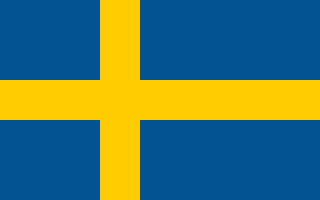
| National Colours | Blue, Yellow |
Cuisine
- Köttbullar (Meatballs)
- Smörgåsbord (Buffet spread)
- Lutskost (Curd cheese)
Tourism Highlights
- Stockholm's Gamla Stan (Old Town)
- The archipelago coastlines
- The Swedish Lapland wilderness
- The Vigeland Sculpture Park
Natural Wonders
- The Swedish Lapland
- Vänern and Vättern Lakes
Notable People
Astrid Lindgren, Ingmar Bergman, Carl Linnaeus
Fun Facts
- Sweden has one of the highest levels of gender equality globally.
- The country is famous for its commitment to environmental sustainability and renewable energy.
Military
| Branches | Swedish Armed Forces (Army), Swedish Navy, Swedish Air Force |
|---|---|
| Personnel (Approx.) | 15,000 |
International Relations
| UN Member Since | 1946 |
|---|---|
| Organizations | European Union (Associate), OECD |
| UNESCO Sites | 10 — Gamla Stan (Stockholm), Visby Old Town |
Infrastructure & Environment
| Driving Side | Right |
|---|---|
| Electrical | 230V, 50 Hz (Type C, Type F) |
| Internet Users | 95.8% |
| Mobile Subscriptions | 140.7 per 100 people |
| CO₂ Emissions | 37.8 Mt |
| Renewable Energy | 57.9% |
Environmental Issues
- Sustainable forestry management
- Climate change adaptation in the Arctic
- Waste management and circular economy initiatives
Communications
| International Calling Code | +46 |
|---|---|
| Internet TLD | .se |
| Postal Code Format | SE-### ## |
Emergency Services
External Links




 The EARF Engine