










Middle East
Turkey
Republic of Turkey
"Peace at home, peace in the world"
Overview
Turkey, officially the Republic of Türkiye, is a transcontinental country situated primarily in Anatolia in Western Asia, with a smaller portion, East Thrace, located in Southeast Europe. It is bordered by the Black Sea to the north, and by several nations including Georgia, Armenia, Azerbaijan, Iran, Iraq, Syria, Greece, and Bulgaria. The country's vast geography and strategic location have historically made it a crossroads of civilizations, connecting Europe and Asia. The population is estimated to be over 85 million people, with the majority identifying as ethnic Turks, while the Kurdish population constitutes the largest ethnic minority. Ankara serves as the capital, though Istanbul remains the largest and primary economic and financial hub.
Travel Advisory
Government & Politics
| Government Type | Unitary Presidential Republic |
|---|---|
| System | Republic |
| President | Recep Tayyip Erdoğan |
| Prime Minister | Recep Tayyip Erdoğan |
| Legislature (Unicameral) | Grand National Assembly of Turkey (TBMM) |
| Independence | 1923-10-29 from Ottoman Empire |
| Constitution | 1982 |
Turkey operates as a unitary presidential republic, characterized by a strong executive branch led by the President. The political landscape is historically complex, balancing secularism with deep religious and ethnic identities. Key political debates revolve around the balance between centralized state power, regional autonomy, and the preservation of secular law (laïcité). The country's geopolitical position makes it a critical player in the intersection of European, Middle Eastern, and Asian interests.
Turkey maintains complex and multifaceted foreign relations, acting as a bridge between Europe and Asia. It is a founding member of NATO and a key partner in EU accession discussions, while simultaneously engaging deeply with Russia, China, and the Middle East. Its foreign policy is often characterized by a blend of strategic autonomy, military projection, and humanitarian intervention, making it a pivotal actor in regional security dynamics.
People, Language & Religion
| Official Languages | Turkish |
|---|---|
| Regional Languages | Kurdish, Arabic, Greek |
| Native Name TUR | Türkiye |
| Demonym (Male) | Turkish |
| Ethnic — Arab | Significant minority |
| Ethnic — Greek | Minority |
| Ethnic — Kurdish | Largest minority |
| Ethnic — Turkish | Majority |
| Religion — Alevi | Significant minority |
| Religion — Muslim | Majority (Sunni Islam) |
| Religion — Christian | Significant minority (Orthodox, Catholic) |
Economy
| GDP (Nominal) | $1597.3B USD |
|---|---|
| GDP (PPP) | $3889.3B USD |
| GDP per Capita | $18,599 USD |
| GDP per Capita (PPP) | $45,288 USD |
| GDP Growth Rate | 3.5% |
| Gini Coefficient | 0.437 |
| Human Development Index 0.805 · High | |
| Unemployment Rate | 8.5% |
| Inflation Rate | 34.9% |
| Public Debt (% GDP) | 26.6% |
| Main Industries | Automotive manufacturing, Textiles, Construction, Tourism, Agriculture |
| Main Exports | Vehicles, Machinery, Textiles, Chemical products, Agricultural goods |
| Main Imports | Energy products, Raw materials, Machinery components, Foodstuffs |
| Export Partners | Germany, USA, UK, France |
| Import Partners | Russia, China, Germany |
| Currency | Turkish lira (₺) [TRY] |
Demographics
| Population | 85,878,556 |
|---|---|
| Urban Population | 89.5% |
| Median Age | 35 years |
| Life Expectancy | 77.4 years |
| Fertility Rate | 1.48 |
| Infant Mortality | 8 per 1,000 births |
| Literacy Rate | 99% |
Geography & Climate
The country's geography is highly diverse, encompassing the rugged Anatolian Plateau, the fertile coastal plains, and the mountainous regions of the Taurus and Pontic ranges. Its transcontinental nature means it straddles the junction of Europe and Asia, giving it varied topography from Mediterranean beaches to high-altitude plateaus. Major river systems, such as the Kızılırmak and Yeşilırmak, traverse the central Anatolian region, while the Aegean and Black Seas define its western and northern boundaries.
| Terrain | Plateau, Mountainous, Coastal Plains |
|---|---|
| Total Area | 783,562 km² |
| Coastline | 2,800 km |
| Exclusive Economic Zone | 2,800,000 km² |
| Landlocked | No |
| Highest Point | Ağrı Dağı (Mount Ararat) (5,137 m) |
| Lowest Point | Mediterranean Sea (0 m) |
| Major Rivers | Kızılırmak, Yeşilırmak, Seyhan, Fırat (Euphrates) |
| Major Lakes | Van Gölü (Lake Van) |
| Major Cities | Istanbul, Ankara, İzmir, Antalya |
| Natural Resources | Petroleum and natural gas, Coal, Iron ore, Copper, Agricultural land |
| Climate | Mediterranean/Continental |
Turkey exhibits diverse climate zones, ranging from the Mediterranean climate along the southern and western coasts, characterized by hot, dry summers and mild, wet winters. Inland areas, particularly in Eastern Anatolia, experience a continental climate with extreme temperature variations. The Black Sea coast has a humid subtropical climate, while the Aegean region features a classic Mediterranean pattern.
History
Ancient & Early History
The region of Anatolia was home to some of the world's earliest civilizations, including the Hittites, who established a major empire in the Bronze Age. Later, the area was crucial to the development of Greek culture, notably through the city-states of Ionia and the Hellenistic period. The Roman Empire expanded its influence across Anatolia, leaving behind monumental architectural and urban remains.
Colonial Period
Following the decline of the Byzantine Empire, the region was subjected to various powers, including the Seljuk Turks and the Ottoman Empire. The Ottoman Empire dominated the area for centuries, establishing a vast caliphate that controlled much of the modern Middle East and the Balkans, profoundly shaping the region's demographics and political structure.
Independence
The modern Turkish Republic was proclaimed on November 29, 1923, by Mustafa Kemal Atatürk, following the collapse of the Ottoman Empire and the subsequent Turkish War of Independence. Atatürk implemented sweeping secular and nationalist reforms, fundamentally transforming the state into a modern, secular republic.
Modern Era
The 20th century saw Turkey navigate complex geopolitical pressures, including the tensions of the Cold War and the conflicts in its neighboring regions. The country has maintained a strong military tradition and has been a key member of NATO. Economically, it has transitioned from an agrarian society to a major industrial and service economy, though it remains susceptible to regional instability.
Recent History
In recent decades, Turkey has experienced significant economic growth alongside periods of high inflation and political volatility. Its foreign policy has become increasingly assertive, balancing relationships between Western powers and rising global actors. The country continues to invest heavily in infrastructure and energy projects, solidifying its role as a major regional power.
Culture & National Symbols
Turkish culture is a rich synthesis of Byzantine, Ottoman, and regional influences. It is renowned for its vibrant bazaars, intricate tilework, and historical architecture, particularly visible in Istanbul's Sultanahmet district. The country has a deep tradition in arts, including classical music, poetry, and elaborate craftsmanship, reflecting its status as a historical crossroads.
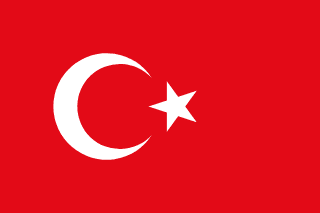
| National Anthem | İstiklal Marşı (The March of Independence) — "Korkma, sönmez bu şafaklarda yüzen al sancak; (Do not fear, this red flag floating at dawn shall not fade;)" |
|---|---|
| National Animal | Grey Wolf |
| National Bird | Eagle |
| National Flower | Carpet Flower |
| National Tree | Oak |
| National Sport | Football (Soccer) |
| National Dish | Kebap |
| National Colours | Red, White |
Cuisine
- Kebap (Grilled meats)
- Meze (Appetizer assortment)
- Baklava (Sweet pastry)
- Turkish coffee
Tourism Highlights
- Cappadocia (Hot air ballooning and cave dwellings)
- Pamukkale (Travertine terraces)
- Ephesus (Ancient Roman ruins)
- Istanbul (Bazaars and mosques)
Natural Wonders
- Pamukkale Travertines
- Cappadocia Fairy Chimneys
- Ağrı Dağı (Mount Ararat)
Notable People
Mustafa Kemal Atatürk, Fethi Sekin, Tansu Çiller
Fun Facts
- Turkey is the only country in the world that spans two continents (Asia and Europe).
- The Bosphorus Strait, which runs through Istanbul, connects the Black Sea to the Sea of Marmara, making it a vital international shipping lane.
Military
| Branches | Land Forces, Navy, Air Force |
|---|---|
| Personnel (Approx.) | 512,000 |
International Relations
| UN Member Since | 1952 |
|---|---|
| Organizations | NATO, G20 |
| UNESCO Sites | 12 — Hagia Sophia, Ephesus, Pamukkale |
Infrastructure & Environment
| Driving Side | Right |
|---|---|
| Electrical | 220V, 50 Hz (Type F (Schuko), Type C) |
| Internet Users | 89.8% |
| Mobile Subscriptions | 107.8 per 100 people |
| CO₂ Emissions | 460 Mt |
| Renewable Energy | 12% |
Environmental Issues
- Water scarcity and management
- Coastal pollution
- Wildfire risk due to climate change
Communications
| International Calling Code | +90 |
|---|---|
| Internet TLD | .tr |
| Postal Code Format | ##### |
Emergency Services
External Links




 The EARF Engine