





Middle East
United Arab Emirates
"الله، الوطن، الرئيس (God, Nation, President)"
Overview
The United Arab Emirates (UAE) is a federal republic located in the Arabian Peninsula, situated in the Western Asia region of the Middle East. It is a federation composed of seven emirates, with Abu Dhabi serving as the capital. Geographically, the UAE is bordered by Oman to the east and northeast, and by Saudi Arabia to the southwest, while its coastlines face the Persian Gulf and the Gulf of Oman. The nation is renowned for its rapid economic development, transforming into a global hub for trade, finance, and tourism. Arabic is the official language, though English is widely used in business and daily life, reflecting its international character.
Travel Advisory
Government & Politics
| Government Type | Federal Absolute Monarchy |
|---|---|
| System | Federal Federation |
| President | Sheikh Mohamed bin Zayed Al Nahyan |
| Prime Minister | Sheikh Mohammed bin Rashid Al Maktoum |
| Legislature (Bicameral (though often advisory)) | Federal National Council (FNC) |
| Independence | 1971-12-2 from United Arab Emirates (Formation) |
The UAE operates as a federal system where power is distributed among the seven emirates, though the federal government maintains significant authority in key areas like defense, foreign policy, and currency. The system is characterized by strong centralized leadership and a focus on economic stability and global connectivity. The ruling families of the emirates play a central role in governance and national policy.
The UAE maintains highly strategic and diversified foreign relations, balancing ties between Western powers, Asian economic giants (especially China and India), and regional partners. It is a key member of the Gulf Cooperation Council (GCC) and plays an active role in international diplomacy, often mediating regional conflicts and promoting global stability.
People, Language & Religion
| Official Languages | Arabic |
|---|---|
| Regional Languages | English |
| Native Name ARA | دولة الإمارات العربية المتحدة |
| Demonym (Male) | Emirati |
| Ethnic — Emirati | Majority |
| Ethnic — Expatriates | Significant minority |
| Religion — Islam | Majority |
| Religion — Hinduism | Minority |
| Religion — Christianity | Minority |
Economy
| GDP (Nominal) | $552.3B USD |
|---|---|
| GDP (PPP) | $871.7B USD |
| GDP per Capita | $50,274 USD |
| GDP per Capita (PPP) | $79,344 USD |
| GDP Growth Rate | 3.5% |
| Gini Coefficient | 0.264 |
| Human Development Index 0.93 · Very High | |
| Unemployment Rate | 2.2% |
| Inflation Rate | 1.3% |
| Public Debt (% GDP) | 1.8% |
| Main Industries | Oil and Gas, Finance and Banking, Tourism, Logistics and Trade |
| Main Exports | Petroleum Products, Natural Gas, Gold, Manufactured Goods |
| Main Imports | Foodstuffs, Water, Machinery, Consumer Goods |
| Export Partners | China, India, Japan, Europe |
| Import Partners | India, China, Pakistan |
| Currency | United Arab Emirates dirham (د.إ) [AED] |
Demographics
| Population | 11,513,149 |
|---|---|
| Urban Population | 86% |
| Median Age | 28 years |
| Life Expectancy | 83.1 years |
| Fertility Rate | 1.21 |
| Infant Mortality | 3.8 per 1,000 births |
| Literacy Rate | 98.8% |
Geography & Climate
Located on the Arabian Peninsula, the UAE's geography is dominated by low-lying coastal plains and vast desert interiors. The country's shape is highly linear, stretching along the Persian Gulf. Key geographical features include the dramatic coastal developments, the massive man-made infrastructure, and the natural desert formations, which are crucial for its limited grazing and resource extraction.
| Terrain | Coastal plains, desert, and mountainous interior (limited) |
|---|---|
| Total Area | 83,600 km² |
| Coastline | 200 km |
| Exclusive Economic Zone | 2,000,000 km² |
| Landlocked | No |
| Highest Point | Jebel Hafeet (1,242 m) |
| Lowest Point | Arabian Sea/Persian Gulf (0 m) |
| Major Rivers | Ain Al Khatim |
| Major Lakes | Liwa Oasis Lakes |
| Major Cities | Dubai, Abu Dhabi, Sharjah, Ajman |
| Natural Resources | Oil, Natural Gas, Potable Water (via desalination), Sand |
| Climate | Arid/Desert |
The UAE experiences an arid desert climate, characterized by extreme heat during the summer months and mild, pleasant temperatures in the winter. Rainfall is extremely scarce, making water management and desalination critical to the nation's infrastructure and survival. Coastal areas benefit from maritime moderation, leading to slightly higher humidity.
History
Ancient & Early History
The region was historically inhabited by nomadic Bedouin tribes and was part of the ancient trade routes connecting the Arabian interior with the Indian Ocean. Archaeological evidence points to early settlements and maritime activity, particularly along the coastlines.
Colonial Period
The area was historically under the influence of various regional powers, including the British Empire, which established protectorates to secure vital shipping lanes and oil interests. The Trucial States were administered under British treaties for much of the 20th century.
Independence
The modern UAE was formed on December 2, 1971, when the seven Trucial States—Abu Dhabi, Dubai, Sharjah, Ajman, Umm Al Quwain, Fujairah, and Ras Al Khaimah—formed a federation, marking the end of British rule and the beginning of independent nationhood.
Modern Era
The discovery and exploitation of vast oil and natural gas reserves fundamentally transformed the economies of the constituent emirates. This wealth fueled rapid, state-directed modernization, infrastructure development, and the establishment of global commercial centers, particularly in Dubai.
Recent History
In recent decades, the UAE has positioned itself as a global leader in technology, sustainable development, and international diplomacy. It has actively diversified its economy away from oil, focusing on knowledge-based industries, renewable energy, and attracting global talent.
Culture & National Symbols
The UAE is a melting pot of cultures, evident in its diverse population and vibrant urban centers. Traditional Emirati culture, deeply rooted in Bedouin heritage, is preserved through falconry, pearl diving, and traditional souqs. Modern life, however, is characterized by cutting-edge architecture and global consumerism.
| National Anthem | Al Watan — "Oh, homeland, oh, land of the Emirates" |
|---|---|
| National Sport | Football (Soccer) |
| National Dish | Machboos |
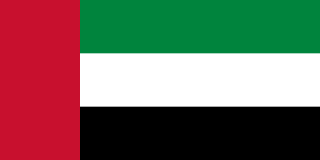
| National Colours | Green, White, Black |
Cuisine
- Machboos (spiced rice dish)
- Harees (wheat and meat porridge)
- Luqaimat (sweet dumplings)
Tourism Highlights
- Burj Khalifa (Dubai)
- The Louvre Abu Dhabi
- Jumeirah Beach
- Desert Safari experiences
Natural Wonders
- Liwa Oasis
- Jebel Hafeet Mountain
Notable People
Mohammed bin Zayed Al Nahyan, Mohammed bin Rashid Al Maktoum
Fun Facts
- The UAE has invested heavily in sustainable infrastructure and smart city technology.
- It is one of the most globally connected and least bureaucratic nations.
Military
| Branches | UAE Armed Forces, UAE Air Force, UAE Navy |
|---|---|
| Personnel (Approx.) | 63,000 |
International Relations
| UN Member Since | 1971 |
|---|---|
| Organizations | Gulf Cooperation Council (GCC) |
| UNESCO Sites | 0 |
Infrastructure & Environment
| Driving Side | Right |
|---|---|
| Electrical | 230V, 50 Hz (Type G, Type D) |
| Internet Users | 100% |
| Mobile Subscriptions | 203.2 per 100 people |
| CO₂ Emissions | 200.6 Mt |
| Renewable Energy | 1% |
Environmental Issues
- Water scarcity and desalination dependency
- Heat island effect in urban centers
- Coastal development impact on marine life
Communications
| International Calling Code | +971 |
|---|---|
| Internet TLD | .ae, امارات. |
Emergency Services
External Links




 The EARF Engine