







Asia
Vietnam
Socialist Republic of Vietnam
"Independence – Freedom – Happiness"
Overview
Vietnam, officially the Socialist Republic of Vietnam, is a country situated at the eastern edge of mainland Southeast Asia. It is bordered by China to the north, Laos and Cambodia to the west, and shares extensive maritime borders with Thailand, the Philippines, Indonesia, and Malaysia through the South China Sea. With an area of 331,212 km² and a population of approximately 97.3 million people, Vietnam is a rapidly developing nation with a rich history spanning from ancient kingdoms to modern socialist governance. Its geography is highly diverse, featuring coastal plains, mountainous regions, and extensive river deltas.
Travel Advisory
Government & Politics
| Government Type | Single-party socialist republic |
|---|---|
| System | Single-party state |
| President | Tô Lâm |
| General Secretary of the Communist Party of Vietnam | Lê Minh Hưng |
| Legislature (Unicameral) | National Assembly |
| Independence | 1976-07-02 from France (Colonial period) |
| Constitution | 1992 |
Vietnam is governed by the Communist Party of Vietnam (CPV), which maintains a dominant role in all aspects of political life. The state structure is a socialist republic, with the National Assembly serving as the highest organ of state power. While the economy is market-oriented, the political system remains highly centralized and controlled by the ruling party.
Vietnam maintains a policy of 'bamboo diplomacy,' emphasizing resilience and non-alignment. It cultivates strong economic ties with major global powers, including the United States, Japan, and South Korea, while maintaining strategic partnerships with China and Russia to balance its geopolitical interests in the South China Sea.
People, Language & Religion
| Official Languages | Vietnamese |
|---|---|
| Regional Languages | Khmer |
| Native Name VIE | Việt Nam |
| Demonym (Male) | Vietnamese |
| Ethnic — Tay | Minority |
| Ethnic — Thai | Minority |
| Ethnic — Viet | Approximately 86% |
| Ethnic — Khmer | Minority |
| Religion — Taoist | Minority |
| Religion — Cao Dai | Significant minority |
| Religion — Buddhist | Largest group |
| Religion — Catholic | Significant minority |
Economy
| GDP (Nominal) | $514.7B USD |
|---|---|
| GDP (PPP) | $1837.8B USD |
| GDP per Capita | $5,066 USD |
| GDP per Capita (PPP) | $18,088 USD |
| GDP Growth Rate | 6.5% |
| Gini Coefficient | 0.361 |
| Human Development Index 0.725 · High | |
| Unemployment Rate | 1.5% |
| Inflation Rate | 3.3% |
| Public Debt (% GDP) | 35% |
| Main Industries | Agriculture (Rice), Manufacturing (Electronics), Fishing, Tourism |
| Main Exports | Electronics, Textiles, Seafood, Coffee |
| Main Imports | Machinery, Petroleum Products, Raw Materials, Chemicals |
| Export Partners | United States, China, Japan |
| Import Partners | China, South Korea, Japan |
| Currency | Vietnamese đồng (₫) [VND] |
Demographics
| Population | 101,598,527 |
|---|---|
| Urban Population | 38.8% |
| Median Age | 30 years |
| Life Expectancy | 74.7 years |
| Fertility Rate | 1.9 |
| Infant Mortality | 12 per 1,000 births |
| Literacy Rate | 98% |
Geography & Climate
The country's geography is highly diverse, stretching from the mountainous spine of the Annamite Range in the west to the fertile coastal plains and river deltas. The Red River Delta in the north and the Mekong Delta in the south are crucial agricultural zones. The long coastline, particularly in the central region, is subject to dramatic geological features, including karsts and limestone formations.
| Terrain | Coastal plains, mountainous spine (Annamite Range), and major river deltas. |
|---|---|
| Total Area | 331,212 km² |
| Coastline | 3,200 km |
| Exclusive Economic Zone | 1,200,000 km² |
| Landlocked | No |
| Highest Point | Fansipan (2,110 m) |
| Lowest Point | Coastal sea level (0 m) |
| Major Rivers | Red River, Mekong River |
| Major Lakes | Trị An Lake |
| Major Cities | Ho Chi Minh City, Hanoi, Da Nang |
| Natural Resources | Rice, Coal, Petroleum, Natural Gas, Timber |
| Climate | Tropical Monsoon |
Vietnam experiences a tropical monsoon climate, characterized by distinct wet and dry seasons. The northern regions are influenced by seasonal typhoons and cold fronts, while the central coast receives heavy rainfall during the monsoon season. The southern Mekong Delta enjoys a tropical savanna climate with consistent warmth and high humidity.
History
Ancient & Early History
Vietnam's history traces back to the ancient kingdoms, notably the Kingdom of Âu Lạc and the subsequent powerful dynasties like the Lý and Trần. These early states were crucial in developing a distinct Vietnamese culture and identity, often resisting powerful neighbors.
Colonial Period
The region was subjected to various foreign influences, most notably the Chinese dynasties and later the French colonial administration (Indochina). The French period saw the establishment of modern infrastructure but also deep political and economic exploitation.
Independence
Vietnam achieved a period of independence following the defeat of the French in the mid-20th century. The country underwent a protracted period of conflict, culminating in reunification and the establishment of the Socialist Republic of Vietnam.
Modern Era
The modern era has been marked by periods of intense conflict, including the Vietnam War (American War), followed by reunification and the gradual transition toward a socialist-oriented market economy. Economic reforms, particularly since the *Đổi Mới* period, have driven rapid industrialization and integration into global trade.
Recent History
In recent decades, Vietnam has become one of Southeast Asia's fastest-growing economies, attracting significant foreign direct investment. The government has focused on infrastructure development, technological advancement, and maintaining political stability while navigating complex geopolitical relationships.
Culture & National Symbols
Vietnamese culture is a rich blend of indigenous traditions and influences from China, India, and France. Key cultural elements include the reverence for family, the importance of ancestor worship, and the vibrant festivals celebrating harvest and lunar new year. The art forms, such as water puppetry and traditional music, reflect deep historical roots.
| National Anthem | Tiến Quân Ca — "Tiến quân ca, tiến bước qua đường ra trận" |
|---|---|
| National Animal | Water Buffalo |
| National Flower | Lotus |
| National Tree | Coconut Palm |
| National Sport | Football (Soccer) |
| National Dish | Phở |
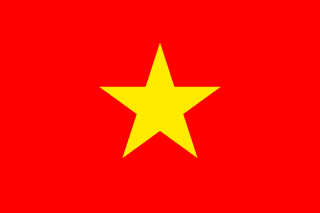
| National Colours | Red, Yellow |
Cuisine
- Phở (noodle soup)
- Bánh Mì (baguette sandwich)
- Gỏi Cuốn (fresh spring rolls)
- Bún Chả (grilled pork with noodles)
Tourism Highlights
- Ha Long Bay (UNESCO World Heritage Site)
- Hoi An Ancient Town (UNESCO World Heritage Site)
- Sapa (mountain trekking)
- Mekong Delta river cruises
Natural Wonders
- Ha Long Bay
- Mekong River Delta
- Phong Nha-Ke Bang National Park
Notable People
Ho Chi Minh, Vo Nguyen Giap
Fun Facts
- Vietnam is famous for its coffee production, particularly robusta beans.
- The country has a long and complex history of resistance against foreign powers.
- The Vietnamese language is tonal and belongs to the Austroasiatic language family.
Military
| Branches | People's Army of Vietnam (PAVN), Vietnam People's Police (VNP) |
|---|---|
| Personnel (Approx.) | 522,000 |
International Relations
| UN Member Since | 1977 |
|---|---|
| Organizations | ASEAN |
| UNESCO Sites | 1 — Hạ Long Bay |
Infrastructure & Environment
| Driving Side | Right |
|---|---|
| Electrical | 220V, 50 Hz (Type A, Type C) |
| Internet Users | 84.2% |
| Mobile Subscriptions | 127.6 per 100 people |
| CO₂ Emissions | 430.8 Mt |
| Renewable Energy | 24.2% |
Environmental Issues
- Coastal erosion and sea-level rise
- Pollution from rapid industrialization
- Deforestation in mountainous regions
Communications
| International Calling Code | +84 |
|---|---|
| Internet TLD | .vn |
| Postal Code Format | ###### |
Emergency Services
External Links


 The EARF Engine