







Live stream unavailable
This camera is offline or temporarily unavailable. It may be under maintenance, having technical trouble, or it may have been removed by the provider. Listings are monitored continuously and this page updates when the stream returns.


Kure Port
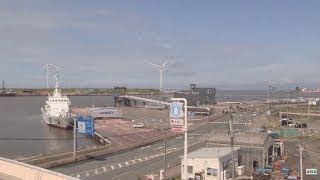
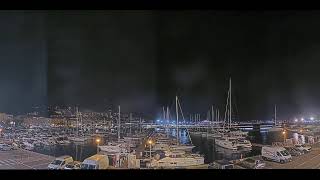
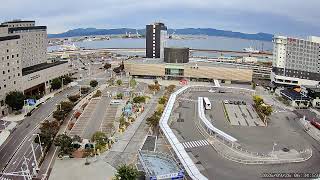
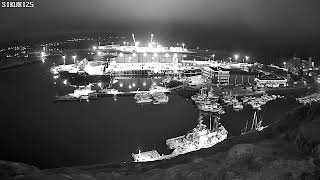
This live cam from Kure City, Hiroshima Prefecture, offers a captivating view of the Kure Maritime Self-Defense Force Base alongside ferries passing through Kure Port. Enjoy real-time glimpses of daily maritime activity and the dynamic energy of this historic port city.
Kure, Hiroshima, Japan
 JP
JP- Kure, Japan
- 呉市
- Kure, Hiroshima Prefecture
Kure is a port city located in Hiroshima Prefecture, Japan, situated approximately twenty kilometres south-east of Hiroshima city. It faces the Seto Inland Sea and is bordered by steep hillsides to the north, with Mount Yasumi bisecting its major commercial and industrial centers. The city incorporates sparsely inhabited outlying islands such as Kurahashi-jima and Toyoshima within its jurisdiction. Administratively, Kure holds the status of a Core city, having gained increased local autonomy in 2016 after previously becoming a Special City in 2000.
The area was historically part of ancient Aki Province and served as an important seaport for the Hiroshima Domain during the Edo period. The Kure Naval District was established in 1889, leading to rapid industrial growth through shipbuilding and steel production. Kure was formally incorporated on October 1, 1902, following the merger of several towns and villages. It served as the headquarters of the Kure Naval District until the end of the Pacific War, during which it acted as the Imperial Japanese Navy's largest naval base.
The city retains a strong industrial and naval heritage, hosting the second-oldest naval dockyard in Japan and remaining an important base for the Japan Maritime Self-Defense Force. Notable sites include the Yamato Museum, which displays a one-to-ten scale model of the battleship Yamato, and the JMSDF Kure Museum. The city continues to host the dockyards of Japan Marine United and numerous shore-based facilities, including training centers and a major hospital for the regional district.
Kure attracts visitors as a tourism center with attractions such as the Irifuneyama Memorial Museum and the Kurahashi-cho Nagato Museum of Shipbuilding History. Cultural events include the Kure Port Festival and the Kure Fireworks above the Sea held in late July or early August. The city also features shrines like Kameyama Shrine and parks such as Nagasako Park. Its historical significance draws interest, particularly regarding its role in naval history and the bombing of Kure during World War II.
As of 2021, the population was recorded at 212,159, though estimates from April 2023 placed it at 208,024. The economy includes manufacturing plants for companies such as Disco Corporation and Mitsubishi Hitachi Power Systems. Transportation access is provided by the Kure Line railway and highways like the Higashihiroshima-Kure Expressway. Kure has a humid subtropical climate with hot summers and cool winters, making it accessible via Hiroshima Airport, located less than an hour away by car.
 The EARF Engine