Live stream unavailable
This camera is offline or temporarily unavailable. It may be under maintenance, having technical trouble, or it may have been removed by the provider. Listings are monitored continuously and this page updates when the stream returns.

Basílica de Guadalupe
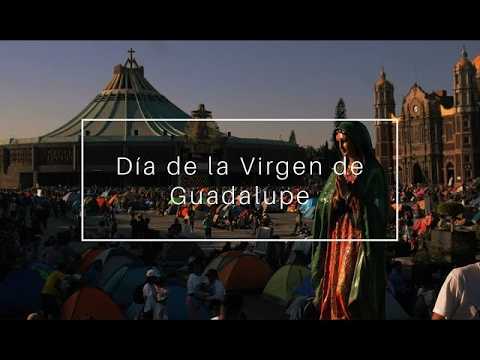
This live stream offers a real-time view of the Basílica de Guadalupe, one of Mexico City’s most iconic religious and cultural landmarks. Situated in the heart of the capital, the basilica serves as a major pilgrimage site for devotees of the Virgin of Guadalupe, featuring intricate neoclassical architecture and expansive plazas filled with statues, fountains, and historic monuments.
Mexico City, Mexico
 MX
MX- Ciudad de México
- CDMX
Mexico City serves as the capital and largest city of Mexico, situated within the Valley of Mexico on the high Mexican Central Plateau at an altitude of 2,240 meters. It holds the distinction of being the most populous city in North America and one of the world's leading cultural and financial centers. Administratively, the city is divided into 16 boroughs, known as alcaldías, which are further subdivided into approximately 2,150 neighborhoods called colonias. This urban structure supports its role as a primate city and a major hub for commerce and governance in the region.
The city's origins trace back to Tenochtitlan, a Mexica settlement founded around 1325 on islands in Lake Texcoco. Following the 1521 siege, the site was nearly destroyed and rebuilt according to Spanish urban standards, becoming the capital of New Spain. In 1524, the municipality was established as México Tenochtitlán, later officially known as Ciudad de México from 1585 onward. The territory surrounding the city became the Federal District in 1824, a status that lasted until January 2016 when it was renamed Ciudad de México, granting the city greater political autonomy.
The urban landscape is defined by its colonial-era Centro Histórico, which sits atop the ruins of the Aztec capital. The city center features the Mexico City Metropolitan Cathedral and the viceregal palace on the Zócalo. Notable districts include Coyoacán, home to a UNESCO World Heritage Site university campus, and Chapultepec, containing sites related to architect Luis Barragán. Other areas like La Villa de Guadalupe host the Basilica of Our Lady of Guadalupe, while Magdalena Contreras offers forested eco-parks, reflecting the city's diverse geographical and historical layers.
Culturally, Mexico City is recognized as an Alpha world city and a center for progressive policies, including same-sex marriage and legal abortion. The city has adopted various mottos, such as Capital en Movimiento, and is colloquially referred to as CDMX or simply México in local contexts. Its heritage includes the informal demonym chilango for residents and a history of political evolution from colonial rule to modern democratic reforms. The city attracts visitors with its rich history, blending indigenous foundations with Spanish colonial architecture and vibrant contemporary arts scenes.
As of 2020, Mexico City proper had a population of 9,209,944, while the greater metropolitan area housed approximately 22 million people. The city accounted for 15.8% of Mexico's GDP in recent years, with the metropolitan area contributing about 22%. It is classified as the second-largest Spanish-speaking city proper in the world after Lima. The urban agglomeration remains one of the largest in the Western Hemisphere, serving as a critical economic engine and a densely populated metropolis that continues to grow and evolve.
 The EARF Engine