Live stream unavailable
This camera is offline or temporarily unavailable. It may be under maintenance, having technical trouble, or it may have been removed by the provider. Listings are monitored continuously and this page updates when the stream returns.


Buccanos Beach Club
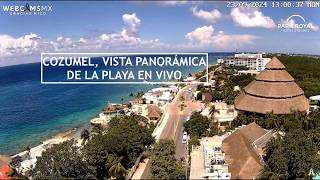
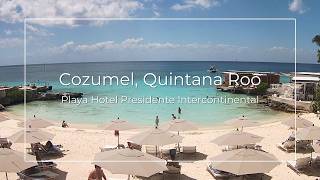
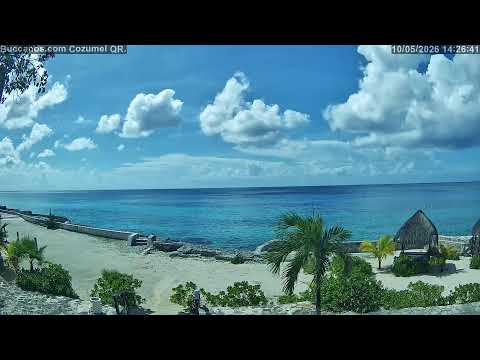
This live webcam overlooks the stunning Caribbean coastline from Buccanos Beach Club on the island of Cozumel, Mexico. Situated along the island's peaceful western shore near San Miguel de Cozumel, the camera provides a real-time view of crystal-clear turquoise waters, gentle waves, passing boats, and the ever-changing tropical weather throughout the day. Whether you're planning a holiday, checking current beach conditions, or simply unwinding with a scenic ocean view, this live stream offers a relaxing window into one of the Caribbean's most popular island destinations. Renowned for its world-class coral reefs and exceptional underwater visibility, Cozumel attracts divers and snorkellers from around the globe. Beyond its coastline, the island is home to vibrant local markets, authentic Mexican restaurants, waterfront cafés, and ancient Mayan archaeological sites, blending natural beauty with a rich cultural heritage.
Cozumel, Quintana Roo, Mexico
 MX
MX- Cozumel Island
- Isla Cozumel
- Isla de Cozumel
Cozumel is an island and municipality located in the Caribbean Sea off the eastern coast of Mexico's Yucatán Peninsula, opposite Playa del Carmen. Separated from the mainland by the Cozumel Channel and near the Yucatán Channel, it forms part of the state of Quintana Roo. The municipality includes two small mainland areas: the ecotourism park of Xel-Ha and the Calica limestone quarry. With a total land area of 647.33 square kilometers, it is Mexico's largest Caribbean island and its third-largest island overall.
The name Cozumel derives from the Mayan "Cuzamil," meaning "the island of swallows." Archaeological evidence shows occupation from the Late Preclassic period until the Spanish arrival in the early 16th century. The island flourished from about 1250 CE as a vital port and pilgrimage center for worshippers of the Maya goddess Ixchel. San Gervasio served as its most important city within a broader maritime trade network. In 2023, the Mexican government designated Cozumel a Pueblo Mágico, recognizing its cultural and historical importance.
The island features flat limestone terrain with karst topography and mangrove forests housing endemic species. Its highest point is less than 15 meters above sea level, dotted with cenotes formed by water percolating through soft soil. Cozumel is surrounded by diverse coral reefs that are part of the Mesoamerican Barrier Reef System. These reefs support over 1,000 marine species and include protected areas like the Arrecifes de Cozumel National Park and the Isla Cozumel Biosphere Reserve.
Tourism is a primary draw, with diving being the main attraction due to the extensive reef systems. The island serves as a popular port for cruise lines, particularly during the winter season when multiple large ships may arrive daily. Visitors access the island via ferries from Playa del Carmen or by air through Cozumel International Airport. The local economy benefits significantly from this tourism, although conservation efforts aim to balance visitor impact with reef health.
The population of Cozumel is 88,626 according to the 2020 census, with the majority residing in San Miguel. The climate is tropical savanna, characterized by a short dry season and a lengthy wet season where September and October are the wettest months. Temperatures remain relatively stable year-round, averaging 22.9 °C in January. The island experiences high humidity, averaging 83%, with recorded extremes ranging from 9.2 °C to 39.2 °C.
 The EARF Engine